You know what my problem is? My problem is that I'm lazy. I was going to do some sort of April Fools type thing, where I said I was going to switch the format of the blog from reviewing books to doing, I don't know, stock tips - but it seemed like a lot of work, and I can't even reliably post on the schedule that no one is actually holding me to, so.
Anyway. I read books this week.
Elizabeth Moon - The Echoes of Betrayal
The most recent of the Pakesenarrion books. These continue to be excellent books, strong writing, fantastic characters, especially the women. This one was a little slow, I thought. I finally decided that it was slow because it isn't the last book in the trilogy, it's the third book in a four book series. (Hopefully four books - the internet doesn't say one way or the other) As such, it suffers, a little, from middle book syndrome - there's material that needs to be gotten through in order to arrive at the climax, but the climax is postponed until a later book. It's still good, but I felt it dragged a little in the middle.
Trigger warning - there is a scene of miscarriage.
Jo Walton - Among Others
This is Walton's semi-autobiographical novel about growing up as a sci fi reading girl in Wales and England. It is a fantasy story, involving fairies (perhaps) and magic (perhaps), but what it really is is a love letter to the science fiction genre, and to libraries, and to fandom. The tone is highly confessional, and felt very true to the 14 year old protagonist. The story is related via diary entries, and the book is peppered with references to the books that Mori is reading - almost entirely science fiction, with some Plato thrown in for good measure. It's set at the end of 1979 and the beginning of 1980, which was a good period for sci fi.
The plot hinges on the existence of fairies and the ability of some people to do magic. However, the fairies are difficult to pin down, and magic, as presented in the book, is entirely circumstantial. In the opening scene of the book, Mori and her sister put some flowers into a pool of water outside an iron works, in order to rid the taint of the factory. The next day, the newspapers announce that the iron works will be closing down. Is there a causal relationship between the flowers and the decision by the company to shutter the factory? Mori and her sister think so, but the only evidence they can offer is that the fairies told them to put the flowers into the water, and Mori and her sister are the only ones who can see and hear the fairies. So.
That all sounds fiendishly complicated, but, really, the book is not about the plot - the plot exists to provide structure to the aforementioned love letter. Which is delightful (or, as Mori and her friends say, Brill!), and entirely worth reading - assuming that you are able to tap into your inner 14 year old geek fan - the sort of reader who, when confronted with a review which suggests that Lord Foul's Bane is "like Tolkien at his best!", becomes incensed, because nothing could possibly come close to Tolkien. (I had a friend who refused to read The Fionavar Tapestry because of such a review.) That is the heart of the book, that uncomplicated love of finding new books by old favorites, and then sharing them with others. The fairies? Entirely incidental, as they should be.
Trigger warning - a scene of near incest.
Zoran Drvenkar - Sorry
This is a German import. The premise is that four friends form a company which apologizes on behalf of other companies - offering the right words to employees unfairly fired, defusing complicated situations with hostile takeovers, that sort of thing. The four say what the executives ought to have said, but were unable to. They are good at it. And then, a serial killer learns about their company, and decides that this is exactly what he needs to begin his first killing spree - someone to apologize to his victims for him.
The premise was encouraging, but perhaps the book loses something in translation. First, the narrative shifts from first person (I, me) to second person (you) to third person (he, she, they), which is disconcerting (especially since the serial killer bits are in second person, as if the reader is some how complicit in the murder - ugh.)
Second, it's a revenge book as much as it is a mystery novel. The serial killer is "justified" in his actions, because he is exacting revenge for fairly heinous wrongs committed against him when he was a child. The presentation of his justification is unpleasant and fairly graphic (you can consider this a trigger warning), and seems unnecessary in its length, and its placement in the novel - it removes the mystery from the story, turning this from a detective novel into a horror thriller. The only mystery becomes "how many of the 4 friends will die before the novel ends?" - which is horrible in its own right, since the four friends had nothing to do with the crimes against the killer in the first place.
I did not finish this book.
Lenten book:
Dan Berger, Chesa Boudin, and Kenyon Farrow, eds - Letters from Young Activists
I picked this up for free somewhere. Following the 2004 elections, Berger, Boudin, and Farrow, upset at the state of the radical youth movement, decided to marshal the troops. They solicited and collected letters from a wide range of leftist radicals - labor radicals, and gender warriors, and elements of the QUILTBAG movement, and immigrant rights advocates, and race warriors, and just a whole rainbow of young, passionate authors struggling for equality on many levels. This collection is the result. The letters are hopeful, and despairing. They are wise, and naive. They are angry, and loving, and sad, and joyful. The letters encourage, and excoriate. In short, there's a lot in this book, and much - indeed, most - of it is delightful on one level or another. It's well worth a read.
That being said, I won't be hanging onto this book. It was a delight to read, but it does not, as the Quakers say, speak to my condition - I am, perhaps, too old (I'm over 30, and thus can't be trusted!). While I appreciate and support the views expressed by the letter writers, my activism is differently focused. I shall put it where it will do the most good - on the free book table on campus. Perhaps some young radical will be inspired - I can hope.
Showing posts with label Lenten Project. Show all posts
Showing posts with label Lenten Project. Show all posts
Sunday, April 1, 2012
Sunday, March 25, 2012
A great big wrap-up of the week post, 3/25/2012
So, I did go to the library on Monday, but I didn't bring home any books for myself. I did grab and peruse Kevin Smith's Tough Sh*t (the * is actually in the title), but his autobiographical material wasn't interesting enough to counterbalance the profanity. And the autobiographical material was pretty interesting. I'm just saying.
Three books this week:
Cassandra Clark - Parliament of Spies
Medieval England is the setting for this mystery/spy novel. Hildegard is a nun who serves her Mother Superior as an investigator/spy. I gather that this book is several volumes into the series, but that didn't seem to matter too much, except for one point, which I'll come back to.
Hildegard travels to a parliament called to vote on granting extra funds to Richard II, to face an invasion threat from France. I don't know enough about British medieval history to say how accurate the novel is in that regard, but it's not really all that important. Hildegard is charged by Alexander Neville, an archbishop and brother of her Mother Superior, with solving a murder, and figuring out which of the members of parliament are likely to vote in favor of Richard II, and which are not.
Clark twines three plot lines together - the murder, the possibility of spies in parliament, and a personal plot line involving someone who readers of the series might be surprised to see alive (but, for me, was something of a distraction, since I've never read any of the earlier novels). Naturally, all of the plot lines ultimately converge. Throughout the book, I felt like I was several steps ahead of Hildegard on the crux of the plot lines - indeed, she doesn't figure out the key connection until the epilogue - and that bothered me to no end. Hildegard is supposed to be a genius, on some level - I shouldn't be able to figure out the twist before her.
I did enjoy the various characters, however, and might have liked the book even more if I had read the earlier works - then, I would have the critical connections with the characters, so that I would care about their travails.
Daniel O'Malley - The Rook
More spy stuff. O'Malley weaves a complex tale of spies and the supernatural in England. Myfanwy Thomas wakes up in a park in London, surrounded by dead bodies, all of whom are wearing latex gloves. She has no memory of who she is or how she got where she is. In her coat pocket, she finds an epipen and a letter from herself. "Dear You, the body you are currently wearing used to be mine," it begins. From there, Myfanwy discovers that she was/is a member of a powerful secret society devoted to protecting Britain from supernatural threats. Indeed, she is a Rook - a member of the ruling court (Two Rooks, two Chevaliers, Two Bishops, a Lord and a Lady - there's a whole chess theme going on there), in charge of domestic affairs. Her former self has left a whole paper trail of letters explaining everything her former self thinks her current self might need to know. Her former self is occasionally correct about that, and often completely wrong...
So, the premise is brilliant. Charlie Stross plays with similar stuff (the spy agency defending against super natural threats), but his protagonists are ordinary humans while O'Malley's are all super powered to one extent or another. O'Malley combines an interesting mix of first and third person point of view, with the series of letters backing up the on going experiences of Myfanwy. Also, the characters of Myfanwy before and after memory loss are radically different - the unfolding of the narrative as Myfanwy learns who she was and is - well, it's very well written, frankly.
The tone of the novel is alternately wry and horrific. The plot is fascinatingly twisty. The characters are delightful, and very well rendered. I look forward to more writing from O'Malley. Rumor has it that he's working on a novel set in the Ottoman Empire - I will read the hell out of that, I suspect.
John Marco - Starfinder
This is the Lenten book for last week. (My mom reminds/informs me that I'm actually at least one book short, that we're five weeks into Lent. If this is last week's book, and I pick a new one for the week that starts today, I'm still a book short. But I think I started a week late, right? Anyway, this is last week's book.) I should say that I'm running into a problem. I don't have as many "huh, I haven't read this" books on my shelf as I thought. Further, the books I unpacked and said "hey, I want to read that again!"; well, I'm unlikely to want to get rid of those, right? Further, a lot of the books we own are part of a series of books, so even if I say "this isn't the best book in the series," I'll want to keep it as part of the series. Finally, there are books that I might not want to keep, but which my wife does.
Ok. This book is the first Skylords novel. Moth and Fiona live in Calio, a city built on the edge of an empire, in the foothills of a mountain range beyond which no one has ever gone (or, at least, not and come back). Rendor, Fiona's grandfather is the Governor of the city, and obsessed with flying, of crossing the mountains, and challenging the Skylords, who most people consider to be mythical beings. Leroux, Moth's guardian claims to have been across the mountains and had adventures. When Leroux dies, Moth receives a troubling inheritance. He and Fiona head off across the mountains to find the source of Leroux's stories, and find themselves in a huge adventure.
The novel is YA. The characters start out as fairly large tropes - the orphan boy, the poor little rich girl, the noble dying guardian, the obsessed villain - but Marco builds from those basic forms quickly and very well. The plot is not overly complex, but is well written and satisfying. I actually have fifty or so pages left to go - it's possible that the book will end appallingly badly - with a strong "to be continued..." or something of that nature - but unless it does, I imagine I'll want to hold onto it. I think my eldest might enjoy it, actually...
Three books this week:
Cassandra Clark - Parliament of Spies
Medieval England is the setting for this mystery/spy novel. Hildegard is a nun who serves her Mother Superior as an investigator/spy. I gather that this book is several volumes into the series, but that didn't seem to matter too much, except for one point, which I'll come back to.
Hildegard travels to a parliament called to vote on granting extra funds to Richard II, to face an invasion threat from France. I don't know enough about British medieval history to say how accurate the novel is in that regard, but it's not really all that important. Hildegard is charged by Alexander Neville, an archbishop and brother of her Mother Superior, with solving a murder, and figuring out which of the members of parliament are likely to vote in favor of Richard II, and which are not.
Clark twines three plot lines together - the murder, the possibility of spies in parliament, and a personal plot line involving someone who readers of the series might be surprised to see alive (but, for me, was something of a distraction, since I've never read any of the earlier novels). Naturally, all of the plot lines ultimately converge. Throughout the book, I felt like I was several steps ahead of Hildegard on the crux of the plot lines - indeed, she doesn't figure out the key connection until the epilogue - and that bothered me to no end. Hildegard is supposed to be a genius, on some level - I shouldn't be able to figure out the twist before her.
I did enjoy the various characters, however, and might have liked the book even more if I had read the earlier works - then, I would have the critical connections with the characters, so that I would care about their travails.
Daniel O'Malley - The Rook
More spy stuff. O'Malley weaves a complex tale of spies and the supernatural in England. Myfanwy Thomas wakes up in a park in London, surrounded by dead bodies, all of whom are wearing latex gloves. She has no memory of who she is or how she got where she is. In her coat pocket, she finds an epipen and a letter from herself. "Dear You, the body you are currently wearing used to be mine," it begins. From there, Myfanwy discovers that she was/is a member of a powerful secret society devoted to protecting Britain from supernatural threats. Indeed, she is a Rook - a member of the ruling court (Two Rooks, two Chevaliers, Two Bishops, a Lord and a Lady - there's a whole chess theme going on there), in charge of domestic affairs. Her former self has left a whole paper trail of letters explaining everything her former self thinks her current self might need to know. Her former self is occasionally correct about that, and often completely wrong...
So, the premise is brilliant. Charlie Stross plays with similar stuff (the spy agency defending against super natural threats), but his protagonists are ordinary humans while O'Malley's are all super powered to one extent or another. O'Malley combines an interesting mix of first and third person point of view, with the series of letters backing up the on going experiences of Myfanwy. Also, the characters of Myfanwy before and after memory loss are radically different - the unfolding of the narrative as Myfanwy learns who she was and is - well, it's very well written, frankly.
The tone of the novel is alternately wry and horrific. The plot is fascinatingly twisty. The characters are delightful, and very well rendered. I look forward to more writing from O'Malley. Rumor has it that he's working on a novel set in the Ottoman Empire - I will read the hell out of that, I suspect.
John Marco - Starfinder
This is the Lenten book for last week. (My mom reminds/informs me that I'm actually at least one book short, that we're five weeks into Lent. If this is last week's book, and I pick a new one for the week that starts today, I'm still a book short. But I think I started a week late, right? Anyway, this is last week's book.) I should say that I'm running into a problem. I don't have as many "huh, I haven't read this" books on my shelf as I thought. Further, the books I unpacked and said "hey, I want to read that again!"; well, I'm unlikely to want to get rid of those, right? Further, a lot of the books we own are part of a series of books, so even if I say "this isn't the best book in the series," I'll want to keep it as part of the series. Finally, there are books that I might not want to keep, but which my wife does.
Ok. This book is the first Skylords novel. Moth and Fiona live in Calio, a city built on the edge of an empire, in the foothills of a mountain range beyond which no one has ever gone (or, at least, not and come back). Rendor, Fiona's grandfather is the Governor of the city, and obsessed with flying, of crossing the mountains, and challenging the Skylords, who most people consider to be mythical beings. Leroux, Moth's guardian claims to have been across the mountains and had adventures. When Leroux dies, Moth receives a troubling inheritance. He and Fiona head off across the mountains to find the source of Leroux's stories, and find themselves in a huge adventure.
The novel is YA. The characters start out as fairly large tropes - the orphan boy, the poor little rich girl, the noble dying guardian, the obsessed villain - but Marco builds from those basic forms quickly and very well. The plot is not overly complex, but is well written and satisfying. I actually have fifty or so pages left to go - it's possible that the book will end appallingly badly - with a strong "to be continued..." or something of that nature - but unless it does, I imagine I'll want to hold onto it. I think my eldest might enjoy it, actually...


Monday, March 19, 2012
Monday Review Post, 3/19/2012
There's a settling in process that comes with moving. The boxes get unpacked, you find quirks in the apartment, in the neighborhood, in the car, in your schedule. You start figuring out where the best laundromat is, where the closest grocery store is, where the cheapest gas is. Meanwhile, the rest of life doesn't stop while you're doing all of those things, and so things slip a little. Which is how you end up with a review as late as this. Sorry.
Three books last week, if you count the lent book.
Jason Heller - Taft 2012
William Howard Taft, 27th president of the United States, sandwiched between Teddy Roosevelt and Woodrow Wilson. Heller tweaks history a little, and has Taft vanish during Roosevelt's inauguration. He reappears in 2011, just in time to throw the 2012 electoral campaign into turmoil.
Heller is engaged in some light political satire here. He uses the character of Taft as a foil for modern life - Taft is shocked at clothing, at the way that race relations have shifted (less shocked, perhaps, than pleasantly surprised), at food prices, at what we consider to BE food. Ultimately (and I don't think I'm giving anything away here), Taft is induced to run as a third party candidate in the 2012 election, and so we get some musing on electoral politics (especially presidential elections). The concept is interesting, and Taft is a great character to play with here. However, I think Heller's satire is a little too light. The right-wing television pundit is too nice, the race is too genteel, the public is too understanding. I think, mostly, the issue is that Heller focuses almost entirely on the character of Taft, rather than on the world that he's dropped Taft into. This takes the edge off a little. Good satire should have an edge, it needs some bitterness, and a little bite - this lacks that.
There is a website, however, which has "Taft" blogging about the election - http://taft2012.com/ - that's worth a look. Heller has a good handle on the "Taft" voice. (Unfortunately, there hasn't been a lot of activity on the site yet.)
Christopher Phillips - Constitution Cafe
Phillips has an interesting project here. Following the ideas of Thomas Jefferson regarding the necessity to re-evaluate the US Constitution on a regular basis, Phillips traveled around the US talking to several groups of people about the Constitution, asking them to propose changes to the text so that it better suits our current needs - so that it makes a "more perfect union." Phillips talks to groups as divergent as a 6th grade classroom and a group of women in prison, some Tea Party members and some illegal immigrants. As a snapshot of the current "state of the Union", the book is well worth a look. The project is well worth considering as well - I can see a history curriculum based around re-thinking the Constitution; understanding where the language came from, what drove the framers and etc, with extensive reading from the Federalist Papers and the Anti-Federalist papers... hmmm. Not this semester, but...
That being said, the premise was more interesting than the book as a whole. I didn't like Phillips' writing particularly, and thought his editorial voice was a little ... overwhelming at times. Some of his historical asides were glosses rather than in depth snippets, and his presentation of Jefferson was a little one sided (Phillips is a big Jefferson fan). Also, I think there needs to be an appendix with the whole text of the proposed new Constitution. Perhaps also a full text of the current Constitution as well?
Lenten book:
Ed Greenwood - The Kingless Land
Greenwood is the author of the Forgotten Realms setting for AD&D. This is an attempt to create a new world, not, perhaps, focused on role playing. Greenwood's world building is clearly on display - new critters, new places, new languages! In the end, though, world building isn't worth anything if there aren't strong characters to people the world, and that is what I found here. I uttered the Eight Deadly Words (I don't care what happens to these characters/people), and did not finish the book. I won't be keeping it.
Three books last week, if you count the lent book.
Jason Heller - Taft 2012
William Howard Taft, 27th president of the United States, sandwiched between Teddy Roosevelt and Woodrow Wilson. Heller tweaks history a little, and has Taft vanish during Roosevelt's inauguration. He reappears in 2011, just in time to throw the 2012 electoral campaign into turmoil.
Heller is engaged in some light political satire here. He uses the character of Taft as a foil for modern life - Taft is shocked at clothing, at the way that race relations have shifted (less shocked, perhaps, than pleasantly surprised), at food prices, at what we consider to BE food. Ultimately (and I don't think I'm giving anything away here), Taft is induced to run as a third party candidate in the 2012 election, and so we get some musing on electoral politics (especially presidential elections). The concept is interesting, and Taft is a great character to play with here. However, I think Heller's satire is a little too light. The right-wing television pundit is too nice, the race is too genteel, the public is too understanding. I think, mostly, the issue is that Heller focuses almost entirely on the character of Taft, rather than on the world that he's dropped Taft into. This takes the edge off a little. Good satire should have an edge, it needs some bitterness, and a little bite - this lacks that.
 |
| This is a man who knows about bites. And a little about bitterness. |
Christopher Phillips - Constitution Cafe
Phillips has an interesting project here. Following the ideas of Thomas Jefferson regarding the necessity to re-evaluate the US Constitution on a regular basis, Phillips traveled around the US talking to several groups of people about the Constitution, asking them to propose changes to the text so that it better suits our current needs - so that it makes a "more perfect union." Phillips talks to groups as divergent as a 6th grade classroom and a group of women in prison, some Tea Party members and some illegal immigrants. As a snapshot of the current "state of the Union", the book is well worth a look. The project is well worth considering as well - I can see a history curriculum based around re-thinking the Constitution; understanding where the language came from, what drove the framers and etc, with extensive reading from the Federalist Papers and the Anti-Federalist papers... hmmm. Not this semester, but...
That being said, the premise was more interesting than the book as a whole. I didn't like Phillips' writing particularly, and thought his editorial voice was a little ... overwhelming at times. Some of his historical asides were glosses rather than in depth snippets, and his presentation of Jefferson was a little one sided (Phillips is a big Jefferson fan). Also, I think there needs to be an appendix with the whole text of the proposed new Constitution. Perhaps also a full text of the current Constitution as well?
Lenten book:
Ed Greenwood - The Kingless Land
Greenwood is the author of the Forgotten Realms setting for AD&D. This is an attempt to create a new world, not, perhaps, focused on role playing. Greenwood's world building is clearly on display - new critters, new places, new languages! In the end, though, world building isn't worth anything if there aren't strong characters to people the world, and that is what I found here. I uttered the Eight Deadly Words (I don't care what happens to these characters/people), and did not finish the book. I won't be keeping it.
Friday, March 9, 2012
Aaaaand we're back
Internet is up and running as of Wednesday. All of our stuff is out of the old apartment and into the new apartment. I've read books and such. Here's a snippet view; expect a fuller review, maybe later today, maybe later this weekend.
First, from the library this week:
Jason Heller - Taft 2012
Heller is doing something interesting here. He suggests that President Taft vanished from the White House during President Wilson's inauguration (which he didn't, incidentally - Taft went on to become Chief Justice of the Supreme Court, and his son and grandson were both significant Senators), and that he reappeared in 2012, just in time to influence the 2012 presidential elections. So, Heller is doing a little alt hist (how would the world be different if Taft had vanished) and a lot of political satire (but it's oddly gentle satire - not nearly biting enough). I'm actually reading this now, because I couldn't resist. Taft is, actually, one of my favorite presidents.
Elizabeth Moon - Echoes of Betrayal
The most recent of the Paksanarrion novels.
Second, snippet reviews:
Myke Cole - Shadow Ops: Control Point
Magic and the US military - very interesting premise, and a lot better than it could have been. Fascinating contrast with other "magic training" stories - this is not the Hogwarts model, folks!
Walter Mosley - Devil in a Blue Dress
Pretty good for a first novel, or at least a first novel in a series. I think Mosley falls into a couple of cliches, but I think the book is overall solid, and I really like Easy Rawlins as a character. Side note - some previous reader appended comments throughout, and said previous reader was an ass. And, possibly, an asshole, which isn't quite the same thing.
A. Lee Martinez - Chasing the Moon
A surprisingly delightful novel, much much better than I thought it would be round about the middle of the book. Heavily character driven, not a lot of plot, but a strong and satisfying ending.
And the Lenten book for the week:
Connie Willis - Bellwether
As my wife says, this one is kinda cheating, because it's almost inconceivable that I would willingly part with this book. But I decided to start with an "easy keeper," to establish a benchmark. So. It's a good book, and I'll tell you about it later, but the end result is, I'm keeping the book.

First, from the library this week:
Jason Heller - Taft 2012
Heller is doing something interesting here. He suggests that President Taft vanished from the White House during President Wilson's inauguration (which he didn't, incidentally - Taft went on to become Chief Justice of the Supreme Court, and his son and grandson were both significant Senators), and that he reappeared in 2012, just in time to influence the 2012 presidential elections. So, Heller is doing a little alt hist (how would the world be different if Taft had vanished) and a lot of political satire (but it's oddly gentle satire - not nearly biting enough). I'm actually reading this now, because I couldn't resist. Taft is, actually, one of my favorite presidents.
Elizabeth Moon - Echoes of Betrayal
The most recent of the Paksanarrion novels.
Second, snippet reviews:
Myke Cole - Shadow Ops: Control Point
Magic and the US military - very interesting premise, and a lot better than it could have been. Fascinating contrast with other "magic training" stories - this is not the Hogwarts model, folks!
Walter Mosley - Devil in a Blue Dress
Pretty good for a first novel, or at least a first novel in a series. I think Mosley falls into a couple of cliches, but I think the book is overall solid, and I really like Easy Rawlins as a character. Side note - some previous reader appended comments throughout, and said previous reader was an ass. And, possibly, an asshole, which isn't quite the same thing.
A. Lee Martinez - Chasing the Moon
A surprisingly delightful novel, much much better than I thought it would be round about the middle of the book. Heavily character driven, not a lot of plot, but a strong and satisfying ending.
And the Lenten book for the week:
Connie Willis - Bellwether
As my wife says, this one is kinda cheating, because it's almost inconceivable that I would willingly part with this book. But I decided to start with an "easy keeper," to establish a benchmark. So. It's a good book, and I'll tell you about it later, but the end result is, I'm keeping the book.
Sunday, February 26, 2012
Lenten Project
 |
| Eeep! Surprisingly Nude Bookcase! |
Anyway, the semi-nude bookcase is courtesy of the relocation we're in the process of. Currently, there is a huge stack of boxes in the living room of the new apartment - I should really take a photo of that for you too. Which brings me to my Lenten project this year. Each week of Lent, I will read (at least) one book that I already own, and I will then assess whether I'll keep the book or get rid of it. (ouch!) The whole process of moving has already resulted in 5 (count them!) grocery sacks of books which we've donated to the local library sale. Potentially, I will offer my discards to you, my readers, if there's interest - otherwise, to the library they will go.
*The text books - as a a professor, text book companies see me as a gatekeeper for my students' wallets. If they can convince me to choose a book for my class, then my students are compelled to buy that book, which is, obviously, good for the text book companies. So, they mail me (and every other professor with the power to choose books for their classes) free copies of their books. And I mostly ignore them, because I've already chosen my texts.** So, that stack is a stack of free text books that is on it's way back to campus to get deposited in the text book room in the department - the department has a room full of text books that they can give out to new professors trying to decide what books they want, or to students who need a text but can't afford them and etc. Which is pretty cool, frankly.
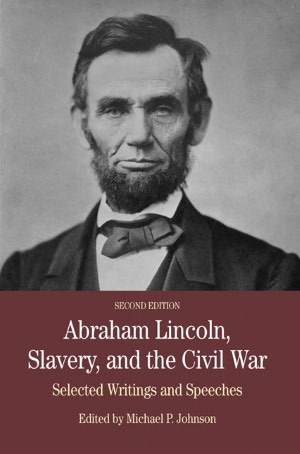
** My texts this semester:
 |
| Cultural History |
 |
| Political History |
 |
| Military History |
I'm using a lot of Bedford/St. Martin readers this semester, because I like their selection of primary sources, and I like the way that their editors frame the material. And because the readers are fairly cheap individually. My students only need to buy one of these books each. I also recommend they pick up this one:
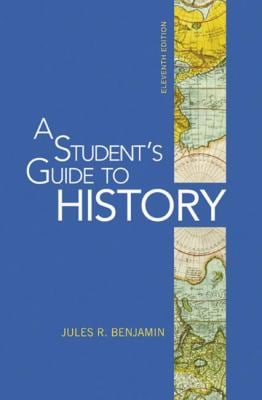
This is the single best text on studying history I've ever read - it's just amazing what Benjamin packs into it; instructions on taking notes, ideas on how to write basic papers, how to do comparisons between different types of sources, how to write essay type tests, how to write multiple choice type tests, how to do footnotes ... it's brilliant, and you really need a copy.

Students who want a traditional text are advised to consider this one. It's fairly unremarkable as far as text books go, but it's a Bedford/St.Martin - consistency isn't always a bad thing. I advise students to find three or four fellow students to split the cost of the text book - I have no idea how many, if any, students do as I advise, but it's good advice.
I believe my footnote is now officially longer than the post it's a footnote for.
Subscribe to:
Posts (Atom)
Subscribe To


 Posts
All Comments
Posts
All Comments