Friday, August 19, 2011

Friday Library Post, 8/19/2011

Three books this week. Incidentally, I go back to work in a couple of weeks, so my reading will probably drop off a little then. Such is life.

J.D. Robb - Conspiracy in Death


This is part of Robb's (aka Nora Roberts) "in Death" series. It's set in the near future (which is a problem), and follows the exploits of Lieutenant Eve Dallas, of the New York Police. In this book, Dallas tackles a serial killer who is harvesting organs from street people.

I had read the first (for me) of this series, Holiday in Death, during one of my research trips, earlier this summer. It was a trashy book, but somewhat better, I thought, than the other ones I was reading that week. This week, this book sort of pales in comparison to what else I've been reading, and it feels especially trashy. It was a fun read, and I don't want to put you off of the book, or the series - just go in knowing that it's not high literature, and you may want something deeper to clean your palate afterwards.

I had two problems with the book. First, Roberts writes romance novels, and she doesn't want to totally lose her romance audience in these books. As a result, every couple of chapters culminates in a steamy sex scene between Dallas and her husband, Rourke (just one name, like Madonna). That begins to feel a little excessive by the end of the book. Also, I don't know Roberts' romance novels, but I'm beginning to wonder if she dances on the edge of the whole "it's not rape if you enjoyed it after" romance trope - several of the sex scenes felt a little non-consensual at the beginning, although Dallas gets into them before they're done. Rourke seems to think that a roll in the hay is always good for what ails Dallas, and Robb seems to agree - it's a little off putting.

My second problem is that the book is set in the near future - but it was written in the recent past (1999). So some of the stuff that Robb presents as fabulously future-y ... isn't, so much. Further, it's clear that Robb doesn't have a particularly rosy view of human nature. In the future, there are still street people in New York. People are still doing the same drugs (with different names). Politics are the same (Liberals v. Conservatives, over the same issues, using the same tactics). It's a little depressing, frankly.

That being said, as I said above, I don't want to put you off. It was a perfectly fine book, all things considered, and I'll be grabbing another when I head out for research in the future.

Trevanian - Shibumi


By contrast, we have this book, which I do want to put you off of. A little background. Trevanian is apparently something of a celebrity, publishing under a pseudonym (one name, like Madonna - it's a theme!) in such a wide variety of genres that some people speculated that the name was actually a cover for a consortium of authors. It turns out, no, Trevanian was actually Rodney Whitaker, a professor of film studies at the University of Texas, Austin. At least, when he published his first two novels. His wiki is here. The thing which isn't in the wiki is the fact that Dr. Whitaker was a huge pompous ass.

Ok, that needs some support. The novel is about Nicholai Hel, this super assassin who works for anyone willing to pay to eliminate terrorists. Hel is a huge pompous ass - although Russian-German by birth, he's Japanese by upbringing, and it's clear that he doesn't think that any other nation comes close to Japan as a worthwhile place to live. He's cold, he uses people, he's an altogether unpleasant person. Ok, I can see him as an anti-hero, perhaps, and it's not fair of me to accuse Trevanian of being an ass just because his character is an ass. Trevanian could just have written a really good ass of a character - that would make him a good writer, not an ass.

No, what marks Trevanian as an ass is this rich little footnote:

In the course of this book, Nicholai Hel will avail himself of the tactics of Naked/Kill*, but these will never be described in detail. In an early book, the author portrayed a dangerous ascent of a mountain. In the process of converting this novel into a vapid film, a fine young climber was killed. In a later book, the author detailed a method for stealing paintings from any well-guarded museum. Shortly after the Italian version of this book appeared, three paintings were stolen in Milan by the exact method described, and two of these were irreparably mutilated.Simple social responsibility now dictates that he avoid exact descriptions of tactics and events which, although they might be of interest to a handful of readers, might contribute to the harm done to (and by) the uninitiated. 
In a similar vein, the author shall keep certain advanced sexual techniques in partial shadow, as they might be dangerous, and would certainly be painful, to the neophyte.
*Hel can kill people using anything. At one point, he kills a bunch of people with a comb, a plastic cup and a magazine.

So, the author is an ass. The hero is an ass as well. That's not, perhaps, enough to warn you away from this book. How about this - the book was published in 1979, and it has not aged well. The use of giant mainframe computers with punch cards, for instance. Interesting, perhaps, as a historical artifact. The attitudes are painful too - the casual misogyny (the violence towards women is unnecessary, and contributes nothing to the plot), and the casual antisemitism (both against Jews and Arabs; also not necessary to the plot). The bizarre cultural chauvenism (Hel is totally focused on Japanese culture and how it is superior to all other cultures - but he's not Japanese - he's a white guy who is more Japanese than the Japanese - cultural appropriation? Racism? A little of both? Hard to say.) The long section describing caving in the Basque mountains - purely to set up a later description of caving with evil evil bad guys in the background later. The use of foreign language without translation or gloss. I dunno - by that point, the whole book was setting my teeth on edge. I finished it, but I didn't like it much, and I won't be reading any more by Trevanian.

I did like one of his characters, Bernard Le Cagot, a Basque poet and freedom fighter. Le Cagot swore, colourfully, on the various balls of Catholic saints - the perforated balls of St. Stephen, the four balls of Jesus, Mary, and Joseph, by the perfidious balls of Judas - like that. It was an endearing thing. I'd read more about Le Cagot, perhaps.

Charles Stross - Rule 34


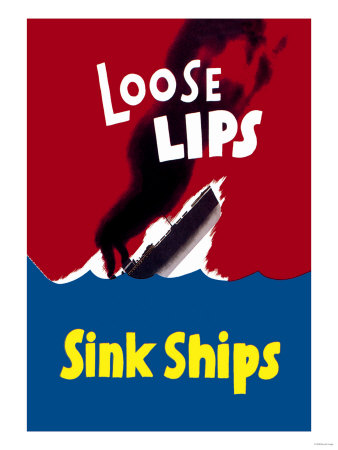
No sign of WWII propaganda posters. Oh well. This was a perfect antidote to Trevanian. Stross is a smart guy, but he doesn't seem forced to prove it to his readers quite as forcefully as Trevanian. So that was nice.

It's a murder mystery. It's set a little way into the future - it's not clear quite how far into the future, but not too far, maybe a decade or two. Like Robb, Stross seems to have a dim view of human nature - folks are still up to the same sort of fiscal shenanegans - but he posits that, at some point between now and then, we get our act together and start prosecuting ethics violations by businesses. So that's nice. The mystery involves internet memes, and porn (that's clear from the title, you may recall), and spam. It sort of follows Halting State, in that it's set in the same version of futureEdinburgh, where everyone uses virtual reality all the time, and the cops use it to do their jobs better. I like the future Stross presents, it appeals.

Something that starts out a little off putting, but eventually fades into the background - Stross has written the book entirely in 2nd person - "you, your, you've," etc. There are multiple points of view, but it's "you" all the way through. At first, that feels a little odd, but you get used to it.

A satisfying police procedural. I figured out the murderer before the end, which is nice, but the joy of a police procedural is that you get to watch the cops figure it out, through intuition and good research. Stross does the genre proud. I think it is likely he will re-visit Edinburgh in the (near) future, and I'll take that trip with him when he does.

Thursday, August 18, 2011

Many Things for Thursday

First up, I'd like to point you to this post by Juliet McKenna on the Representation of Women in Fantasy. McKenna is an outstanding fantasy author who has no problem doing unspeakable things to her characters. She clearly operates under the Bujold theory of writing, which is "think of the worst thing you could possibly do to your character, then do that, and watch them wriggle out of it. Then think of the next worst thing, and do that..." McKenna is out promoting a new book, doing the blog tour thing. I've found her books somewhat hard to find in local libraries - not sure why, although perhaps the fact that she's British and thus doesn't do much promotion here in the States has something to do with it. I own her first series - The Tales of Einarinn - and it's lovely.


Why, you may ask, am I so interested in the issue of women in speculative fiction? Three reasons, basically. One, a better representation of women in the genre that I like makes for better stories for me to read. Two, I have two daughters, one of whom reads speculative fiction (the other of which is only 7 months old, and so doesn't read anything yet), and I want them both to be exposed to strong and realistic female characters in the fiction they read, to make up for  the lack (or, ideally, to support the existence) of strong female figures in the non-fiction they may encounter. Three, my dissertation topic focuses on the political actions of women at the end of WWII - I am basically interested in stories of strong women where ever I find them.


Second thing. The Help - I reviewed it a while back, it's currently on Amazon's best seller list (because of the movie which has just come out), I enjoyed it a lot, and I know several of you enjoyed it too. The Association of Black Women Historians would like to remind us all that The Help is a work of fiction:


An Open Statement to the Fans of The Help:
On behalf of the Association of Black Women Historians (ABWH), thisstatement provides historical context to address widespread stereotypingpresented in both the film and novel version of The Help. The book hassold over three million copies, and heavy promotion of the movie willensure its success at the box office. Despite efforts to market the bookand the film as a progressive story of triumph over racial injustice, TheHelp distorts, ignores, and trivializes the experiences of black domesticworkers. We are specifically concerned about the representations of blacklife and the lack of attention given to sexual harassment and civil rightsactivism.
During the 1960s, the era covered in The Help, legal segregation andeconomic inequalities limited black women's employment opportunities. Upto 90 per cent of working black women in the South labored as domesticservants in white homes. The Help's representation of these women is adisappointing resurrection of Mammy-a mythical stereotype of black womenwho were compelled, either by slavery or segregation, to serve whitefamilies. Portrayed as asexual, loyal, and contented caretakers of whites,the caricature of Mammy allowed mainstream America to ignore the systemicracism that bound black women to back-breaking, low paying jobs whereemployers routinely exploited them. The popularity of this most recentiteration is troubling because it reveals a contemporary nostalgia for thedays when a black woman could only hope to clean the White House ratherthan reside in it.
Both versions of The Help also misrepresent African American speech andculture. Set in the South, the appropriate regional accent gives way to achild-like, over-exaggerated "black" dialect. In the film, for example,the primary character, Aibileen, reassures a young white child that, "Youis smat, you is kind, you is important." In the book, black women refer tothe Lord as the "Law," an irreverent depiction of black vernacular. Forcenturies, black women and men have drawn strength from their communityinstitutions. The black family, in particular provided support and thevalidation of personhood necessary to stand against adversity. We do notrecognize the black community described in The Help where most of theblack male characters are depicted as drunkards, abusive, or absent. Suchdistorted images are misleading and do not represent the historicalrealities of black masculinity and manhood.
Furthermore, African American domestic workers often suffered sexualharassment as well as physical and verbal abuse in the homes of whiteemployers. For example, a recently discovered letter written by CivilRights activist Rosa Parks indicates that she, like many black domesticworkers, lived under the threat and sometimes reality of sexual assault.The film, on the other hand, makes light of black women's fears andvulnerabilities turning them into moments of comic relief.
Similarly, the film is woefully silent on the rich and vibrant history ofblack Civil Rights activists in Mississippi. Granted, the assassination ofMedgar Evers, the first Mississippi based field secretary of the NAACP,gets some attention. However, Evers' assassination sends Jackson's blackcommunity frantically scurrying into the streets in utter chaos anddisorganized confusion-a far cry from the courage demonstrated by theblack men and women who continued his fight. Portraying the most dangerousracists in 1960s Mississippi as a group of attractive, well dressed,society women, while ignoring the reign of terror perpetuated by the KuKlux Klan and the White Citizens Council, limits racial injustice toindividual acts of meanness.
We respect the stellar performances of the African American actresses inthis film. Indeed, this statement is in no way a criticism of theirtalent. It is, however, an attempt to provide context for this popularrendition of black life in the Jim Crow South. In the end, The Help is nota story about the millions of hardworking and dignified black women wholabored in white homes to support their families and communities. Rather,it is the coming-of-age story of a white protagonist, who uses myths aboutthe lives of black women to make sense of her own. The Association ofBlack Women Historians finds it unacceptable for either this book or thisfilm to strip black women's lives of historical accuracy for the sake ofentertainment.
Ida E. Jones is National Director of ABWH and Assistant Curator at HowardUniversity. Daina Ramey Berry, Tiffany M. Gill, and Kali Nicole Gross areLifetime Members of ABWH and Associate Professors at the University ofTexas at Austin. Janice Sumler-Edmond is a Lifetime Member of ABWH and isa Professor at Huston-Tillotson University.
Suggested Reading:Fiction:Like one of the Family: Conversations from A Domestic's Life, Alice ChildressThe Book of the Night Women by Marlon JamesBlanche on the Lam by Barbara NeeleyThe Street by Ann PetryA Million Nightingales by Susan Straight
Non-Fiction:Out of the House of Bondage: The Transformation of the PlantationHousehold by Thavolia GlymphTo Joy My Freedom: Southern Black Women's Lives and Labors by Tera HunterLabor of Love Labor of Sorrow: Black Women, Work, and the Family, fromSlavery to the Present by Jacqueline Jones Living In, Living Out: AfricanAmerican Domestics and the Great Migration by Elizabeth Clark-LewisComing of Age in Mississippi by Anne Moody
Any questions, comments, or interview requests can be sent to:ABWHTheHelp@gmail.com>
It is, of course, possible to respond to this statement with indignation - "I really liked the book, how can you say such mean things about it" - but that is unproductive, I think. Ideally, if you enjoyed the book, it should make you interested in looking at other representations of the period in question. To that end, I am glad that the ABWH has provided some additional reading, both fiction and non-fiction.

Final thing:

From my facebook friends list over the weekend:

http://www.workman.com/blog/2011/08/oh-my-god-becky-look-at-her-book/

Oh, wait, one more thing! Here's this thing about independent book stores, thriving in this painfully thin economy. Couple of thoughts - the article is spot on about starting book groups in big box stores. My wife and I organized a small group in our local big box, back in VA. Despite enthusiastic buy in from one of the PR folks, and the fact that my wife worked in the store, we never got signs, we couldn't guarantee access to a space to meet, there was no official recognition, or support (no 20% off the book the group is reading, or anything like that). Bah. Second - my parents just did a book promotion thing. (Did I mention that my parents have written a book? They totally did - Chinese Characters, a collection of informative e-mails from their year teaching in China. It's pretty cool!) They couldn't get access to big box stores, but our little local bookstore gave them space, put books on the shelves, advertised the event - it was a good time! Independent bookstores for the win!

Wednesday, August 17, 2011

Hickey of the Beast Wednesday, 8/17/2011

(This is a link)

Chapter 23

Plot plot plot...

Connie figures out that her younger brother, Julio, is having the same dreams she is, more or less (which, I think, we all figured out several chapters ago, but we have the excuse of not being recently awakened from scary dreams ourselves, so...). The images are geared down to his level, and he isn't seeing real people, but he registers a cloud which is eating people. Connie calms him down:

 Police are there to make sure nothing bad happens to people. And being eaten is bad, right?" He nodded. "So there you go. Nobody's getting eaten. That cloud's just your mind showing you a scary movie. That's all." I stroked his hair, and held up the other hand Boy Scout style. "I promise, if anything's out there trying to eat people, someone will make it stop."
That part was, well, more or less true. I would've felt a lot better if "someone" hadn't been me, though.
Isn't that the point, though? I mean, isn't that what growing up is all about - the idea that, eventually, the "someone" who has to do something - wash the dishes, scrub the floor, take out the trash, kill the incubus - that "someone" is just as likely to be you as it is anyone else? Being grown up means killing your own incubi.

Also note that Connie's history teacher is, btw, a lesbian in a committed relationship with kids. Izzy slips that in as a total aside, because she's cool like that.

Monday, August 15, 2011

Monday Library Post, 8/15/2011

Three books today.

Jasper Fforde - One of our Thursdays is Missing


Fforde is a very odd man and he writes very odd novels. This is part of the Thursday Next series, and, beyond that, I know nothing - I grabbed it because I already know I like Jasper Fforde and Thursday Next.

Paolo Bacigalupi - Ship Breaker


I've tried a couple of Bacigalupi's books before, and for some reason I never finish them before they're due back. This is a YA novel, so maybe I'll be able to finish it in time. Bacigalupi writes in a post-apocalyptic world where bio-engineered foods have resulted in a world wide famine. This book is about people living on the fringes of society in Texas, making a living by busting up ships that drift in to shore from the Gulf of Mexico. His books tend to be depressing musings on human nature under considerable pressure.

Charles Stross - Rule 34

Rule 34: On the internet, if you can imagine it, there is porn for it. (that link, btw, is totally Safe For Work - it goes to an xkcd comic) In 2023, Liz Kavenaugh of the Edinburgh police department works with the Innovative Crime Investigation Unit - or the Rule 34 Squad - which keeps track of internet memes to see if people are getting up to actual illegal stuff. It's a murder mystery on the internet. Stross is good at these, so I'm looking forward to it. And I'm watching for a reference to this poster, which he swears he hasn't included in every book he writes...

Friday, August 12, 2011

Friday Review, 8/12/2011

Four books this week.

Pierre Pevel - The Alchemist in Shadows


This is the sequel to last year's The Cardinals Blades. Pevel is a French writer, and these books are translated. I don't know how much of what troubled me about the book is due to the translation and how much is due to the fact that Pevel is French. At any rate, although I really enjoyed the book, I had two fairly significant problems with it as well.

First, some plot. The story revolves around the same group of rapier wielding swashbucklers as the last book. The Cardinal's Blades are a small group of elite soldier-types who serve Cardinal Richelieu as spies and troubleshooters and all the sorts of things small groups of elite soldier-types are generally used for. Doing things that no one else can do, that sort of thing. Anyway, at the beginning of the book, there is a woman, a woman who has spied for many nations, including France and Spain (where the dragons are, you know) and England. She works for herself, and sells information to the most interested party for the highest price she can get. She has evidence of a plot against the French throne, and will only give it up in exchange for formal protection by the Cardinal, which would require a formal pardon by the king, which the king is unlikely to give, because it would piss off the Parlement, the traditional Parisian court system. The main story is about the Blades unraveling this plot.

That's my first problem with the book - it feels like a series of loosely linked vignettes - short stories which have been patched together with some interstitial bits to make a novel. It's even possible that this is the case - the first story about how the Blades fight the nasty Spanish dracs (dragon type things that walk like men) the second story about how they track down some subversive elements in the French aristocracy, and the third story about how they save the French throne - but the patches seem a little shaky. It was jarring.

The second problem I had with the book is that the pacing is odd. That may actually be due to the short stories bolted together aspect - each story has rising action and a climax - but for most of the book, it felt like everything was dragging very slowly. Lots and lots of talking, not a lot of action. And then, in the last few chapters, BOOM, action all over the place, so much it was hard to keep track of who was where, doing what to whom with what implement.

All that aside, the book was quite enjoyable. The characters were interesting, the plot was compelling, everything worked, mostly. Just, you know, don't read it right before bed, unless you're suffering from insomnia.

China Mieville - Embassytown


This is a book about postmodern linguistic theories about the meaning of language. What is language? Do words mean anything in and of themselves, or are they just convenient tags we hang on things we observe? Mieville attempts (with considerable success) to wrestle with these ideas. What is reality? To what extent do we define reality by the way we use language? That is the other major concept in this book.

Setting. Humans have traveled far away from Earth (Terre) by tapping into a sort of sub-space. There are some humans who can manipulate this sub-space - the immer - which, Mieville contends, is the reality which underpins the universe. The universe in question is the third universe, but the immer does not change. Immersers, who can manipulate the immer, can manipulate reality in the universe as well - a skill that immers call "floaking". Avice Benner Cho - the heroine of the book - is moderately skilled at floaking - twitching the universe just a little so that she doesn't have to work very hard. Convincing authorities (for instance) that she has permission to be places where she does not, in fact, have permission to be.

Avice lives in Embassytown, a small human settlement on Ariekei - a planet on the fringes of explored space, quite difficult to get to via the immer, and inhabited by the Hosts (or, to non-Embassytown dwellers, the Ariekei). The Hosts are a strange alien race who speak with two voices simultaneously, and who cannot understand people who do not also speak with two voices (but only one brain). Embassytown breeds Ambassadors, perfectly identical cloned twins who are trained to speak as one. Through the Ambassadors, humans can speak to the Hosts, exchanging Human technology for Hostish bioengineering.

In addition to their strange speech, the Hosts have no concept of figurative speech. The words in their language have intrinsic meaning. In order to make use of figures of speech such as similes, they must construct complex situations to which they can then, at a later date, refer. For instance, there is a rock outside of town which has been split in two and then cemented back together. The Hosts did this so that they can say "this situation is like the rock which was split apart and the put back together" - if the rock did not exist, the Hosts literally could not think of concepts which were like that rock.

Everything comes to pieces when the government of Bremen - theoretically in charge of Embassytown - attempts to make a power-grab by sending their own Ambassador in. From there, things become increasingly complex and dense and complicated. But, in the end, the book is about language, and meaning, and reality. Do words mean things? If so, do we alter reality by using specific words for specific things? Hard to say, but interesting to explore.

This book was a little tough to wrap my head around. There was a strong feeling of Mieville being smarter than his audience, being "more postmodern than thou," but it wasn't overwhelming, and it didn't make the book unreadable (as linguistic games often do). It wasn't, however, a puzzle like Kraken - there was no sense of Mieville inviting his audience into a shared exploration. It was more straightforward in its narrative structure, even as it was more abstruse in its content. So, it might make your head hurt, and it will probably make you think, but it's a good story, and you may enjoy it despite all of that.

Robert Allison - The American Revolution


I grabbed this because I wanted to see how you could possibly cover the American Revolution in less than 100 pages. I'm sorry to say that, frankly, you can't. Allison gives it a valiant effort, but the event was such a nuanced thing, with complex meanings and sub-events and twists and such, that to pack it all into a tiny book like this means you are stripping away too much. Frankly, when I finished, I was disappointed. Not so much in Allison, or even in the book, but in Oxford University for publishing the book. Oxford has been publishing some huge, 900-1000 page historical bricks, each detailing a small time period in World or European or Asian or American history. These are invaluable to the historian. They are frequently written in engaging prose, such that the layperson could, with only a little effort, read them - even enjoy them. This book is like one of those books seen through a telescope the wrong way around - tiny, and not very helpful.

I did think of one use, though. Say you needed to appear knowledgeable (but not TOO knowledgeable) about the American Revolution, but only had an afternoon to get that way. I'm envisioning something from Mission:Impossible, where you need to infiltrate a cadre of, I don't know, college freshmen, with only a limited amount of time to prepare everything. This book would be invaluable in that case. Or, I suppose, if you needed to take a test on the American Revolution, and had been sleeping through the first half of the semester - this book might help there too. Otherwise, don't bother.

N.K. Jemisin - The Hundred Thousand Kingdoms

Ok, I don't know why I didn't think I would like this book, because it has stuff in it that I like a lot. It has complex politics. It has strong characters (especially the heroine,  Yeine). It has complicated religion. It has backstabbing, and a castle on the top of an impossibly tall stone spire. It has a compelling world which is well crafted (although we don't see much of it in this book). It has a delightfully convoluted plot (not aided by the fact that Yeine does not know how to tell a story. Note, it is Yeine who lacks this skill - Jemisin is a fine story teller, but her narrator is woefully unreliable.) and a satisfying conclusion (although it is the first of a trilogy). I don't know why I didn't think I would like it, but I didn't, and I was wrong.

Yeine is summoned to Sky, the ruling city of the Hundred Thousand Kingdoms. Her grandfather, patriarch of the Arameri family (to which Yeine is related through her mother), and also (sort of) ruler of the Kingdoms, and also (sort of) high priest, has summoned Yeine. When she arrives, she discovers that Dakarta (her grandfather) wishes her to be his heir. Sort of. One of three, and thus part of some byzantine contest to determine who will take Dakarta's (sort of) throne. Yeine discovers things about her family that she does not like, things about herself that she does not imagine, and things about her gods that she almost cannot comprehend. In the end, everything comes out sort of ok.

I'm really looking forward to the next book, which will present its narrative from the point of view of someone antagonistic in this first novel. I suspect that Jemisin will attempt to rehabilitate this character, both in terms of the world and in the eyes of the audience - making hir sympathetic to the audience while zie repents of hir sins from the first novel. I love that sort of thing!

Some potential triggers - there are some mentions of rape, and some consensual sex which borders on rape. There's some torture as well. Yeine's family is not very nice, and her world is not all that pretty, on a lot of levels (largely because her not very nice family has been running things for quite some time).

Wednesday, August 10, 2011

Hickey of the Beast Wednesday, 8/10/2011

(Link goes here)

Chapter 22

In this chapter, Connie does some research. Her scoobies are all away, so she has to do it herself. She turns up some interesting stuff:

Good old Isaiah had been something called a "Swedenborgian," which the book basically said meant believing God wasn't three separate people, that you got into Heaven through doing good works instead of just believing in God, and that everyone could get into Heaven as long as they lived a good life, even if they weren't Christian. Like I said, crazy's pretty relative.
Swedenborgian? Seriously? Izzy, you rock!


Isaiah had talked about how the glory of God was to be found in the beauty of Nature, and how boys who had someplace to live an active outdoor life would grow up into worthy citizens of this new Republic. He'd probably been spinning in his grave for at least fifty years by now—though I'm sure a lot of people who went out to the forest called on God, and maybe some of them even saw him. Especially in the Seventies.
Ha!

So. The upshot - someone is clearly summoning an incubus, it probably has something to do with Isaiah's gardens, especially next to the chapel, and Connie has not actually learned anything about stopping incubi yet. For all that the chapter lacked action, I think I liked it better than the past three - perhaps there's just a better level of snark here, which I appreciate. Perhaps I'm just a sucker for obscure colonial Christian sects.

Monday, August 8, 2011

Library Monday, 8/8/2011

Tonight at the library, a homeschool steel drum band. Where else can you go to see that sort of entertainment for free? Also, I wish I had a camera with me. There's a pair of shelf sets in the YA section, where the YA librarian (who is also the Children's librarian, and she's hella cool) puts books of some note, or books on a theme, or something of that nature. Today, she had one side of the shelf all in red covered books, and the other side all in blue covered books. It was pretty awesome, in a quixotic sort of way.

Four books this week.

J.D. Robb - Conspiracy in Death


I read Holiday in Death during one or the other of my research trips, and kinda liked it. This is the book right after that one, so I grabbed it.

Peter Carey - Parrot and Olivier in America


This is supposedly a very funny book set in the United States at about the time of the French Revolution. I'm a little leery, because the author's name is much much bigger than the title of the book (which bodes ill), but the description (picaresque, historical) appeals - we shall see.

Carrie Vaughn - After the Golden Age


Carrie Vaughn trades in werewolves for super heroes - Celia West is the non-superpowered child of the two biggest superheroes on the planet, and this is a book about how she deals. It could be funny, we shall see.

Trevanian - Shibumi


So, on the new book shelf there was a sequel to this book, by someone else. The principle character sounds interesting (he's an assassin! he's very good at what he does! It's hard to explain why I thought the character looked appealing, actually. I like assassins? In print, that is.), so I thought I should read the first book first. Finding it took some doing. I'm a little leery of this one too, because one named author? But we shall see.

I would like to call your attention to a series of related posts re: the use of the term Mary Sue in casual criticism of books. Here's Holly Black's take on it, here's a post from Zoe Marriott, which inspired Holly Black's post, and here's something by Sarah Brennan, inspired by Zoe Marriott's post. I have used the term in the past, specifically in regard to John Sandford's "Prey" books - in that context, I mean that Sandford seems to be engaging in some wish fulfillment through his primary character. However, Ms. Black, Marriott, and Brennan suggest that, in general, the term is use to dismiss strong female characters. The suggest that this is wrong on a number of levels, and in the context of their objections, I agree, and shall endeavor not to use it in that way.

Followers