Four books this week:
Robert T. Jeschonek - My Favorite Band Does Not Exist - DNF. 1) The author was trying too hard to be meta. There were three stories - the main story about a boy on the run, the secondary story about a fake band that he made up on the internet (to amuse himself? Perhaps?), and a tertiary story, a fantasy novel that the lead singer of the band and the boy on the run are both reading. Presumably these three stories would eventually mesh, but I didn't care about any of the three enough to find out. 2) Every Single Character had a stupid name. And a quirky schtich. It got very tiresome. 3) One of the stories within a story featured too cute renamings of months and states - Pensyltucky and such. The whole thing was just too too tedious, and so I gave up on it, less than half way through.
Thomas Frank - Pity the Billionaire - A screed, as I predicted. Franks is entertaining, but he slants his facts to suit his bias. For instance, in the first chapter he suggests that the current obsession with fiscal austerity in the midst of an economic downturn is the first time the US government has been obsessed with balance the budget during a Depression since Hoover. But FDR pushed for a balanced budget, both in his campaign against Hoover, and through his first two terms in office - he almost derailed the New Deal recovery as a result. Franks also over estimates the power of the president to effect change, especially at the legislative level. Look - it's absurd to compare Obama to Hoover, because he clearly isn't. I'm not saying we didn't need an FDR 4 years ago (or now; now would be good too), but what we got was Truman - he means well, he talks a really good game, but he's hampered by a hostile Congress and a desire to play by "the rules". The Skocpol and Williams I reviewed last week did a much better job of explaining the Tea Party, and Franks presented really the most basic and surface-y presentation of the current political situation otherwise. Still, it was a fun read, and sometimes you just want to feel angry and connected.
Michael Thomas Ford - Jane Vows Revenge - A romp. The third in the Jane Austen as vampire series. This features a whirlwind trip through the architectural highlights of Europe, a murder deliberately reminiscent of Agatha Christie, and some remarkably tender moments as Jane struggles with her sense of identity as a vampire, as a potential wife, and as Jane Austen, vampire. (I think it's clear that "identity" is the theme for this summer's reading list - I swear I'm not picking them out on purpose! It's like the arrow in the FedEx logo, seriously.) Possibly a conclusion to the trilogy, but there are enough loose ends (satisfying, but loose) that there could easily be future books in the series. I would not be unhappy either way - a strong and satisfying ending to the book, if not the series. I would have liked a historical note, though - Ford has a running theme of Jane remembering when she first visited these places, and meeting people who remember her, or seeing photos of herself - some notes on the actual events would be nice.
Andrew Fukada - The Hunt - Audio Book. This was very interesting. After my review a couple of weeks ago of the Sherlock Holmes, I was offered this book to review. I accepted, and it arrived in the mail promptly (like, the next day, which was a little freaky). Consider this full disclosure - I did receive a copy of the audio book from the publisher.
Let's dive in, shall we? The premise - vampires have overrun the world. Humans live either in farms maintained by vampires or in strictly maintained secrecy among the vampires. Apparently, vampires can't tell that you're a human if you are very very careful about personal cleanliness and such. Actually, though, humans don't live in farms anymore, because they've been eaten - delicacies eaten to extinction. So the only humans still kicking around at the beginning of the book are those living in carefully controlled hiding. Gene is one of these humans (they are called heepers or heapers - audio books have certain limitations in this regard - throughout the book - why is never revealed). His family has been gone since he was in his early teens - his dad was the last one to die. Gene maintains a facade that he is a vampire (a person, as they are described throughout) One day, the king of the vampires announces a hunt - there IS a small group of heepers still maintained in carefully controlled captivity, and a carefully selected group will be given the honor of hunting them down and eating them - how exciting! The hunters will be chosen by lottery. Naturally, Gene is selected, or else there is no plot.
Gene and a group of other vampires are sent out to the Heeper Institute, where they will have a week of training, followed by a hunt which is expected to last two or three hours. The heepers will be released at dawn, the hunters will be released at dusk, and the fun will ensue. Gene must figure out how to hide who he is and survive the experience, since he clearly can't hunt with the vampires.
Things I liked:
1) Fukada did a really nice job of world-building. He doesn't come right out and say that the vampires represent an apocalypse, but he crafts a post-apocalyptic world around them, in which technology is declining, and population is declining. Everything is described from Gene's limited point of view, and Gene knows almost nothing about the world outside of his limited experience - this was really well done. I especially liked the idea that vampires express themselves differently - they do not laugh, for instance. Instead, when they are amused, their wrists itch, and so they scratch them. "Necking" is done by putting one's elbow into one's mate's arm pit - odd, but consistent. Good stuff.
2) The use of humans as a metaphor for oppressed minority groups "passing" in the dominant society. Is Gene gay in a modern high school, pretending to be straight? Is he black in the 1950s, pretending to be white? Fukada plays this to the hilt - the physical aspects of "passing", but also the mental gymnastics - pretending to hate the very thing you are, until you start to actually hate the thing you are. This was also really well done.
3) A very minor thing, re: the audio-book-ness of the book - I liked that the narrator sounded like he was wearing false fangs as he read. Added a certain something.
Those things kept me from giving up, because the things I did not like were:
1) The gratuitous descriptions of vampires eating animal flesh. Lots of blood, lots of saliva, lots of messy adjectives - the first time, ok, that's setting. Repeated descriptions - a little gross.
2) Equally gross scenes of vampires dying in sunlight - flesh and eyeballs melting - the whole description just becoming too much, and taking too long - becoming icky, and then becoming absurd, and then becoming icky again. Yergh.
3) Gene is described as smart, but written as a moron. This, more than anything else, bugged the crap out of me. I suppose he was smart in comparison to the vampires, who are highly evolved physically at the expense of their intellect, but still - it took the boy FOREVER to figure out basic clues, and he kept wandering off to do other things rather than investigate basic things which were placed Right In Front of him. Gah. At points, I yelled at the book, which is never a good sign.
4) This is, I think, a peculiarity of the audio genre, but the pacing was very slow. I think, were I to have been reading the book myself, this wouldn't have bugged me, but action scenes took forEVER - lots and lots of monologueing, not enough doing. If it were on the page, it would have been a page turner, but when you read aloud, everything slows down - because you have to process the material and then translate it into speech, and then the audience has to process the material again. This made the last two discs of the book agonizing, because there was a lot of action - chasing, and fighting, and running, and escaping and such.
Finally, the book ends without a satisfying conclusion. There will be a sequel - this is not a case of loose ends, this is a solid case of cliff hanger. I do want to find out what happens with Gene, but I think it's good that I will have to wait for the sequel - I need time to recover from the vampire feeding and dying scenes.
Monday, June 11, 2012
Tuesday, June 5, 2012
Library Post, 6/5/2012
Two books this week:
Christopher Fowler - A Memory of Blood
Part of the Bryant and May series of police procedurals. I don't think I've reviewed one of these here yet - if I think it will help after I've finished the book, I'll point you to some reviews of his earlier books in the series. Bryant and May are a couple of very odd police detectives in London who solve crimes that are for one reason or another embarrassing to the police department. This book addresses one of those cases.
David Crystal - The Story of English in 100 Words
I caught the end of an interview with Crystal some time ago. The book sounds fascinating - part dictionary, part history. I'm hoping for something like Bill Bryson's Mother Tongue.


Monday, June 4, 2012
Monday Review Post, 6/54/2012
Aaaaand, I'm back. I'd love to say that I was off saving the world or something noble like that, but it's just that the week got away from me early last week, and when I caught up, it seemed silly to post about it.
I've read a bunch of books over the past two weeks. I'm going to refer you to my establishing post, in which I said that I would thumbnail some of the books and only do big reviews of one or two each week. Consider yourself thus referred.
Jana Oliver - Soul Thief - sequel to The Demon Hunter's Daughter. Not a bad second book. The use of accents bugged the heck out of me, and the book doesn't end, as the first one didn't end - problematic. Still a solid piece of world building, and I will find the third book.
Scott Westerfeld - Goliath - a solid conclusion to a stellar trilogy. I love love LOVE the illustrations, and the feel of the book made reading these a tactile pleasure. Strong characters throughout, nice world building, nice alt-hist, interesting ... well, I would call it steampunk, but it wasn't really, was it? Darwin-punk, perhaps. The steam was in the background, because the heroes were the Darwinists. interesting Darwin-punk. Go, read these books.
Robert Sawyer - WWW: Wake - a nice establishing book, introduction to some strong characters. Sawyer writes strong female characters. I loved the "Americans in Canada" schtick - made me homesick. All three books have been published - this is an old series - so I'll pick up the second one. Oh - a fascinating trip through the discussion of identity, because everything cycles back to that at the moment. A book about learning who you are and how you fit into the world, even if you are the self-aware embodiment of the internet.
Mary Robinette Kowal - Shades of Milk and Honey - This book was AMAZING, and if you like Jane Austen, and/or magic, and/or regency romances, you must must must read this book. Right now. Kowal bills it as the novel that Austen would have written if she lived in a world where formalized magic worked. So. It's very much an Austen novel about social relations, finding the right spouse, making your family proud, and etc. It's got jilted lovers, young men who are not what they are pretending to be, for good and for ill, a semi-detached father, a hypochondriacal mother, a sensible daughter and a silly one - it's very Austenesque. Plus, it has glamour - exactly the sort of decorative magic that the regency world would have cultivated - completely artistic and functionally useless, fantastically expensive, yet totally lower class. Oh, and there's a duel. I know at least three people in my readership who will adore this book, and probably two others who will enjoy the heck out of it - you know who you are, and this book is worth hunting down.
In the theme of judging books by covers - this book has a Very Serious Cover, so you can pretend to be reading Serious Literature while on the bus - a decided plus.
Theda Skocpol and Vanessa Williams - The Tea Party and the Remaking of Republican Conservatism
A big serious book about the Tea Party movement. This is that rarity in academic books - full of academic rigor - charts, footnotes (extensive footnotes), details of complicated social science studies - and yet entirely readable. This is what makes Skocpol a luminary in the poli-sci and political/cultural history fields - she can write without covering the whole thing in bafflegab and jargon.
So. The motto for the Slactiverse is "It's usually more complicated than that," but we're, for the most part, lefties, and, as such, we've been pretty dismissive of the Tea Party (when it comes up at all) as either a bunch of old folks who have been duped by a convincing astroturfing (that is, a fake grass-roots movement) effort by the elites on the Right, or a bunch of old folks who have stewed in their hatred and bigotry and then been duped by a convincing astroturfing effort. Skocpol and Williams are not in agreement with the aims of the movement, but they contend, quite effectively, with the idea that the Tea Party is a top-down astro turfed
group. Their studies show, fairly conclusively, that there is a strong disconnect between the efforts to direct the Tea Party by elites on the Right and the movement on the ground. The Tea Party IS a grass roots movement, but it is ALSO being directed (with varying levels of success) from the top down. It IS more complicated than that.
Skocpol and Williams are legitimately impressed by the ability of the people on the ground - the actual Tea Partiers - to understand the legislative ins and outs of Congress. They are also appalled by the lack of solid knowledge about what legislation is actually intended to do that the Tea Partiers display. They end their work by almost bemoaning the fact that leftists have a firm grasp of the facts, but no idea of how to influence political change, while Tea Partiers have a strong grasp of influence, but no grasp of the facts at all - if only these two elements could be merged somehow...
Anyway, it's an important book, it's very very well written, and if you want to have any idea of what the heck is happening in American politics right now, I suggest you at least take a look at it.
Lizzie Stark - Leaving Mundania
This is a serious book about larping - live action role playing. It is fairly deep, but not all that broad. There were elements of larp that I thought could have been better covered - the whole Vampire:The Masquerade/White Wolf/Theater of the Mind's Eye could have been better addressed, for instance - but what Stark does look at, she looks at in exactly enough depth. I'm biased - I'm a total geek, as you all know - but I think Stark does a good job of explaining what larp is for someone who doesn't already know. She describes a couple of long running games - Avatar Systems/Nexus, and Knight Realms - explores the ways in which larp can be used by "mundanes" for education purposes (she spends some time with the US military, exploring their training facilities - perhaps looking at some of the emergency training which she mentions but doesn't explore would have been good also, but the military bit is illustrative), and then goes off to Scandanavia, where they take larp VERY seriously - it's an art form, and it really didn't sound all that much fun based on Stark's descriptions. Stark also takes the ultimate plunge and runs a larp - and not a half-way effort, with a "murder mystery" from a box - she helps to write and run a Cthulhu larp with a bunch of complete larp novices. Yikes! It sounded like everyone had fun, though.
In between the descriptions of various larp and larp-like activities, Stark provides fascinating background on several people important to the modern larp movement in the US. She also traces the historical roots of larping back to Tudor England and to Prussian military training - that, alone, is worth looking at the book for.
There were gaps. I would love to know more about the zombie boffer larps. Also, where should we put non-larp games like zombies vs. humans - the sort of large scale "getting to know you" game that gets run on college campuses every September - or like Quidditch, where college kids run around holding brooms and pretending to play J.K. Rowling's iconic wizarding sport? What about renaissance faires? These aren't larp, per se, but they have larp elements - there's room for more exploration here. But, what Stark does look at, as I say, she dives deep - and, like a narrow, deep river, the book moves really quickly. It's a serious book about a sort of silly thing, but in the end, it's more complicated than that. For established larpers, a must read, for the curious, highly recommended. And, check out this cover:
I've read a bunch of books over the past two weeks. I'm going to refer you to my establishing post, in which I said that I would thumbnail some of the books and only do big reviews of one or two each week. Consider yourself thus referred.
Jana Oliver - Soul Thief - sequel to The Demon Hunter's Daughter. Not a bad second book. The use of accents bugged the heck out of me, and the book doesn't end, as the first one didn't end - problematic. Still a solid piece of world building, and I will find the third book.
Scott Westerfeld - Goliath - a solid conclusion to a stellar trilogy. I love love LOVE the illustrations, and the feel of the book made reading these a tactile pleasure. Strong characters throughout, nice world building, nice alt-hist, interesting ... well, I would call it steampunk, but it wasn't really, was it? Darwin-punk, perhaps. The steam was in the background, because the heroes were the Darwinists. interesting Darwin-punk. Go, read these books.
Robert Sawyer - WWW: Wake - a nice establishing book, introduction to some strong characters. Sawyer writes strong female characters. I loved the "Americans in Canada" schtick - made me homesick. All three books have been published - this is an old series - so I'll pick up the second one. Oh - a fascinating trip through the discussion of identity, because everything cycles back to that at the moment. A book about learning who you are and how you fit into the world, even if you are the self-aware embodiment of the internet.
Mary Robinette Kowal - Shades of Milk and Honey - This book was AMAZING, and if you like Jane Austen, and/or magic, and/or regency romances, you must must must read this book. Right now. Kowal bills it as the novel that Austen would have written if she lived in a world where formalized magic worked. So. It's very much an Austen novel about social relations, finding the right spouse, making your family proud, and etc. It's got jilted lovers, young men who are not what they are pretending to be, for good and for ill, a semi-detached father, a hypochondriacal mother, a sensible daughter and a silly one - it's very Austenesque. Plus, it has glamour - exactly the sort of decorative magic that the regency world would have cultivated - completely artistic and functionally useless, fantastically expensive, yet totally lower class. Oh, and there's a duel. I know at least three people in my readership who will adore this book, and probably two others who will enjoy the heck out of it - you know who you are, and this book is worth hunting down.
In the theme of judging books by covers - this book has a Very Serious Cover, so you can pretend to be reading Serious Literature while on the bus - a decided plus.
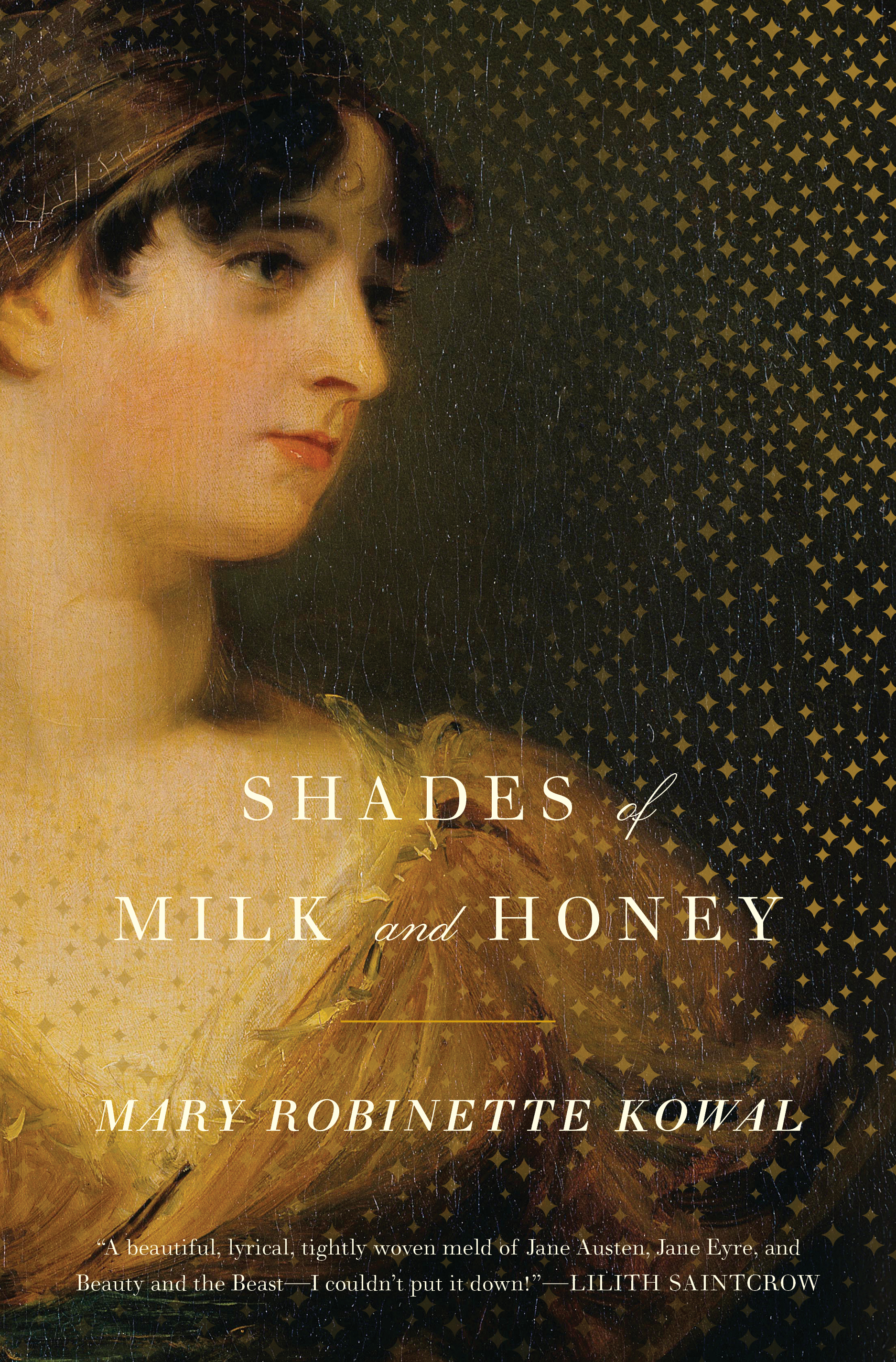 |
| See - totally serious cover! |
Theda Skocpol and Vanessa Williams - The Tea Party and the Remaking of Republican Conservatism
A big serious book about the Tea Party movement. This is that rarity in academic books - full of academic rigor - charts, footnotes (extensive footnotes), details of complicated social science studies - and yet entirely readable. This is what makes Skocpol a luminary in the poli-sci and political/cultural history fields - she can write without covering the whole thing in bafflegab and jargon.
So. The motto for the Slactiverse is "It's usually more complicated than that," but we're, for the most part, lefties, and, as such, we've been pretty dismissive of the Tea Party (when it comes up at all) as either a bunch of old folks who have been duped by a convincing astroturfing (that is, a fake grass-roots movement) effort by the elites on the Right, or a bunch of old folks who have stewed in their hatred and bigotry and then been duped by a convincing astroturfing effort. Skocpol and Williams are not in agreement with the aims of the movement, but they contend, quite effectively, with the idea that the Tea Party is a top-down astro turfed
group. Their studies show, fairly conclusively, that there is a strong disconnect between the efforts to direct the Tea Party by elites on the Right and the movement on the ground. The Tea Party IS a grass roots movement, but it is ALSO being directed (with varying levels of success) from the top down. It IS more complicated than that.
Skocpol and Williams are legitimately impressed by the ability of the people on the ground - the actual Tea Partiers - to understand the legislative ins and outs of Congress. They are also appalled by the lack of solid knowledge about what legislation is actually intended to do that the Tea Partiers display. They end their work by almost bemoaning the fact that leftists have a firm grasp of the facts, but no idea of how to influence political change, while Tea Partiers have a strong grasp of influence, but no grasp of the facts at all - if only these two elements could be merged somehow...
Anyway, it's an important book, it's very very well written, and if you want to have any idea of what the heck is happening in American politics right now, I suggest you at least take a look at it.
Lizzie Stark - Leaving Mundania
This is a serious book about larping - live action role playing. It is fairly deep, but not all that broad. There were elements of larp that I thought could have been better covered - the whole Vampire:The Masquerade/White Wolf/Theater of the Mind's Eye could have been better addressed, for instance - but what Stark does look at, she looks at in exactly enough depth. I'm biased - I'm a total geek, as you all know - but I think Stark does a good job of explaining what larp is for someone who doesn't already know. She describes a couple of long running games - Avatar Systems/Nexus, and Knight Realms - explores the ways in which larp can be used by "mundanes" for education purposes (she spends some time with the US military, exploring their training facilities - perhaps looking at some of the emergency training which she mentions but doesn't explore would have been good also, but the military bit is illustrative), and then goes off to Scandanavia, where they take larp VERY seriously - it's an art form, and it really didn't sound all that much fun based on Stark's descriptions. Stark also takes the ultimate plunge and runs a larp - and not a half-way effort, with a "murder mystery" from a box - she helps to write and run a Cthulhu larp with a bunch of complete larp novices. Yikes! It sounded like everyone had fun, though.
In between the descriptions of various larp and larp-like activities, Stark provides fascinating background on several people important to the modern larp movement in the US. She also traces the historical roots of larping back to Tudor England and to Prussian military training - that, alone, is worth looking at the book for.
There were gaps. I would love to know more about the zombie boffer larps. Also, where should we put non-larp games like zombies vs. humans - the sort of large scale "getting to know you" game that gets run on college campuses every September - or like Quidditch, where college kids run around holding brooms and pretending to play J.K. Rowling's iconic wizarding sport? What about renaissance faires? These aren't larp, per se, but they have larp elements - there's room for more exploration here. But, what Stark does look at, as I say, she dives deep - and, like a narrow, deep river, the book moves really quickly. It's a serious book about a sort of silly thing, but in the end, it's more complicated than that. For established larpers, a must read, for the curious, highly recommended. And, check out this cover:
 |
| That's pretty bad ass. |
Saturday, May 26, 2012
A Saturday Post, 5/26/2012
Here is an article about the Melungeons, who inspired the Tufa in The Hum and the Shiver, the Alex Bledsoe book that I picked up on Tuesday. Thanks to my wife for noticing it and pointing me towards it.
Wednesday, May 23, 2012
A game!
Stolen from hapax
So, here I am in my office at home, and a shimmering time-space vortex has suddenly appeared -- as they do -- to engulf me and send me I know not whence.
I have only one minute to grab what I can before being transported into... a vaguely medieval Europe-ish fantasy land? A twenty-fourth century starship? An arid wasteland of lurking horrors? What to pack?
Ok. One minute. I'm in my office. To my right is my briefcase which contains some pens, some course handouts that didn't need to be handed out, a memory card, and a deck of playing cards. I'll dump the handouts, but pens are useful, playing cards will keep me from getting bored (and might help me pay my way, if the people I meet are [appalling bad] gamblers). Also, it's a WWII airplane spotter deck - that could be useful, right? If the future, the memory card could be useful? Probably not, but it doesn't take up much space.
Into the bag, I'll toss the camera in front of me - if nothing else, it will help me prove where I've been when (if) I get back.
The desk is (as usual) a mess, so finding anything useful quickly will be difficult. There's a paper opener and a novelty baseball bat - defense? Maybe?
There's a jug of juice behind me (the toddler likes to move things around in the house) - that will be useful for drinking, plus it's re-fillable.
The easily grabbable books in this room are shockingly not useful, unless I get transported to some sort of role-playing convention, or a science fair. Poor planning on my part - I really should have a full collection of Foxfire books close to hand in case of emergencies like this. Also - a medkit of some sort. I do have a wide selection of CDs available - I'll grab a couple of those. They're shiny, so they might be worth something, depending on where I end up.
Almost out of time. I've got a roll of duct tape and a role of library tape, several rolls of ribbon, and some scissors. I've got tea bags - organic, catnip tea bags. Oh! The multi-tool (Leeloo Dallas, Multitool!) is in that box! Also, some sparkly costume jewelry. And a solar charger, but none of the wires which would make it at all useful, so I'll leave that. I've got pictures of most of my family in my wallet, I've got my cell phone (who knows - Dr. Who can make cell phones work across time and space, I could get lucky). At least I'm wearing real clothes, not my pjs. I have shoes, and (my wife's tie dyed) socks. If I'm going somewhere cold, I'm going to freeze to death.
I think it's clear that, given this circumstance, I'm screwed - but, really, could you do any better? How about you? Look around you right now (no fair running to the kitchen or the garage or the Mad Lair of Secret Villainy if you're not already there) and tell me what you would pack! Toss a link into the comments.
Tuesday, May 22, 2012
Library Tuesday, 5/22/2012
So far, so good...
I've got three books this week:
Robert Sawyer - WWW:Wake
The first book in Sawyer's ghost in the machine trilogy - something in the internet "wakes up" and becomes sentient. It's been done before, but it hasn't been done by Sawyer before, and Sawyer is really quite a good writer. Now that the trilogy is complete, I think it's safe to start reading it...
Carol Carr - India Black
India Black is a madam - a whore - and a spy in mid-19th century London. The jacket material promises intrigue AND a little raunch - thought I'd see how it worked out.
Alex Bledsoe - The Hum and the Shiver
Bledsoe is the author of the series of hard-boiled detective fantasy novels (I reviewed Dark Jenny a couple of months ago), but this is something different. Set in the Smoky Mountains of Tennessee, Bledsoe is spinning a yarn about the Tufa - a group of apparently European people, but already in the Smokies when Europeans arrived, from no one is really sure where. They are a tiny minority, known for their music and, possibly, their magic. Bledsoe is telling the story of Bronwyn Hyatt, returned from military service in Iraq, and struggling with her identity (see, it keeps coming up!)
The Tufa are a made-up group but Bledsoe says they are based on the Melungeon people, a "tri-racial" group found all through the Appalachian mountains. Tri-racial, or Creole, groups are fascinating, because they represent some sort of voluntary or semi-voluntary community, comprised of run-away slaves, run-away European indentured servants (or voluntary exiles from Euro-American society) and indigenous populations, coming together to create something entirely new. Obviously, I didn't know that Bledsoe was playing with the Melungeon concept when I picked up the book, but it certainly makes me glad that I did, because the whole thing is delightfully complicated and fascinating.
Anyway, I recognize Bledsoe as a strong writer with excellent craft, and I'm excited to see what he does with this book.
Monday, May 21, 2012
Monday Review Post, 5/21/2012
So, last week there were a series of very good reasons why I couldn't go to the library on Monday. This week, there's a series of very good reasons why Tuesday makes a better library day. Next week, Monday is Memorial Day, and the libraries are closed. So what I'm thinking is, I start too many sentences with "so". And, also, that Tuesday makes a perfectly legitimate library day for the summer. Also also, if I move Review Day to Monday, I'm actually covering everything I've read for the actual week, so I'm going to try that for a change, and we'll see how that goes.
With that in mind, I give you the following reviews:
Gary Younge - Who Are We? And Should it Matter in the 21st Century?
The answer to Younge's first question is "That's complicated." and to the second is "Yes, of course, possible more so than previously."
This was a fascinating book about how human beings build their identities around issues of class, race, gender, and nationality. Younge talks about growing up Barbadian in England, about the rules for being officially Jewish in Israel, about why Barack Obama's election caused such a reaction on both the Right and the Left in the US (and elsewhere), and why young men who were Manchester United fans, who enjoy fish and chips, speak English, and have long family histories in England were willing to take explosives onto the Underground in London and blow themselves up. There's a lot more in the book, but that's a pretty good taste, I think. That's why the first question is complicated - there's a LOT there. For instance, Younge looks at the 2008 election in the US - the primary between Hillary Clinton and Barack Obama. There, there was a conflict between race as a primary identifier and gender as a primary identifier. Younge looks at the difficult question for black women - should they vote with their gender, or with their race, or was the question entirely irrelevant? He traces the dilemma back to the late 1860s, when there was considerable public debate over the 15th amendment to the US Constitution, which granted the right to vote to black men (but not women of any race). Some women suffragettes contended that it was more important to give the vote to women (regardless of race - they contended that it would be better for Irish women and Black women to be able to vote than Irish men or Black men.) Some Black suffragests (which isn't, apparently, a word) contended that it was more important for all Blacks, regardless of gender, to get the vote (that the vote was as important to Black women as Black men, but because they were Black, not because they were women.) It's really really complicated - and it still plays out in politics now - so the answer to Younge's second question seems fairly obvious.
The book is a very "thinky" book which has already prompted a couple of very very interesting discussions with friends. It's not a particularly preachy book - Younge doesn't tell his readers how they ought to think about identity - their own or others - beyond stating that they ought to think about identity. He does provide a useful tip for those wondering if a friend is gay or not - assume they are, because straight people will quickly make it clear that they are not (by talking about girl/boy friends, showing you pictures, etc). Basically, let other people define and reveal their own identity. In instances where outside forces attempt to define identity on a broad scale (as with the issue of "official" Judaism in Israel, or the nature of "French-ness"), problems arise.
As a book, the book is really well written. Younge includes enough academic rigor to satisfy the educated reader, but writes with a clear prose that the lay reader will be able to digest, with the notable exception of the introduction, which is a little dense, and filled with academic jargon. I think you can skip the intro if it seems off-putting.
Basically, this book will enliven your dinner parties, and you should really read it. And get your friends to read it too, so that you have something to talk about.
Ally Carter - I'd Tell You I Love You, But Then I'd Have to Kill You
(Long titles this week) I'm cheating, because I grabbed this last week, but it was SO fluffy that I had to read it right away. It's a boarding school novel, and it's a spy novel - it's James Bond meets Enid Blighton - it's delightful, very cute, and very very fluffy.
Carter does a fantastic job of marrying the very light genre of the boarding school novel (which is all about being a young woman away from home, with your friends who are also young women away from home, and falling in love with boys who don't go to your school, and giggling and pillow fights. Except there are no pillow fights. Animal House lied to us.) and the somewhat darker genre of the spy novel, which is all about identity, and hidden identity, and not being who you say you are, or think you are (see, it's all connected!), and not being sure if you can trust people that you really ought to be able to trust. On some level, the boarding school novel is about discovering who you are, and the spy novel is about hiding who you are, and the pairing really works quite well. (Kinda like boarding school novels and light horror - Hickey of the Beast?)
That being said, the book is really very fluffy - a quick afternoon's read with a little bit more thinking than perhaps you might initially expect.
Andrew Lane - Rebel Fire (Sherlock Holmes: The Legend Begins)
(I'm forcing the "long title" thing here a little.) Lane has been authorized by the Doyle family to write a series of novels about the young Sherlock Holmes. I know I've mentioned this before. His theory is that Sherlock could not have had a normal childhood, because the character as described by Doyle is clearly badly damaged. As Holmes says of himself (in the modernized version, Sherlock), he's a high functioning sociopath. Lane shows us how Sherlock gets damaged.
With that in mind, this book has some fairly hefty trigger warnings. There's a gruesome death scene midway through. The villain has a thing about leaches which is really kinda creepy. There are several scenes of fairly significant peril involving large animals and drowning. And, remember, Sherlock, as described by Doyle, is a pretty dark guy, with a strong tendency towards depression and, consequently, drug use. In this novel, we see all of that (well, no drug use) - damage, depression, and darkness. Also, Sherlock learns to play the violin.
Again, this is a book about identity - about growing up and figuring how you fit into the world, and pondering if you WANT to fit into the world. What is important - friends, family, nation - humanity? Like Carter's novel, this book is surprisingly deep.
It's also delightfully cinematic. I recently heard an interview with Stephen Moffat (who is one of the writer/producers of Sherlock) in which he argued that Holmes was perfect for television - Doyle conceived of a series of episodic short stories; complete by themselves, but containing and being contained by an over arching storyline. Lane takes this a step further - the action is remarkably suited to the screen, and I can't wait - it's almost inevitable.
To that end, I have a treat (if I can figure out how to make it work) - a representative of Macmillan Press contacted me to offer me a short clip of the audio book, with permission to pass that on to you, my tens of readers. The audio clip is pretty nice too, good voice actor, nice accents, I can easily conceive of listening to the whole book read by this reader, possibly while on a road trip. It's the prologue, so it's not going to spoil anything. It does feature a leach, so if that sort of thing freaks you out, maybe don't listen to it.
This link should take you to the Audio File. Please do let me know if you can't access the file.
(I should say, incidentally, for legal reasons, that my review has not been affected by this largess in anyway.)
Jenny Lawson - Let's Pretend This Never Happened
Jenny Lawson is better known as The Bloggess - she blogs here - and this is her first book. It's part memoir, and part compilation of blog posts, and it's all amazingly hilarious. But, be warned, it's the sort of hilarious where, if you laugh at it (and you can't not laugh at it - I challenge you to try), you're going to hell. Well, probably not immediately, though.
Lawson has become internet famous by leveraging her unique style of describing her life on line. Her style is highly confessional, and displays a tendency to deliberately misinterpret what people are saying, for humorous effect. Oh, and to over react to things, and to spin things into lengthy stories. Lawson is often the butt of her own stories, which takes the sting out of her snark a little (which it needs, because Lawson's snark is powerful strong). She bring all of that and more to her book, which is why, when the library told me this book had arrived on Saturday, I had to drop the serious academic book I was reading, and read this instead, because I knew the book was going to be AWESOME. And it is.
The book is about a whole bunch of things:
swimming squirrels
leukemia, and how Lawson may or may not be dying from it*
cats
taxidermy
growing up in rural West Texas
forks
depression
drug use
child birth and child rearing
getting married
a very happy wild boar, and
(among other things) how and how not to send pictures of your penis to your co-workers.
Mostly, though, this book is about identity. See, it's ALL connected! This is a book about growing up, figuring out who you are, deciding which bits of your seriously fucked up (Lawson swears. A lot. This is a warning) childhood you want to keep and which you don't. It's about figuring out how you fit into the world, and about how you don't fit, and about how you want to change to fit, and how you don't want to fit enough to change important parts of who you are. It's about discovering that women are not necessarily scary. And it's about cougars. The whole book is written in Lawson's delightfully scatty style, and it WILL make you laugh. Parts of it will probably also make you cry. Some parts will make you cringe in recognition, or in sympathy, or both. Parts of it may well be difficult to read - there are a plethora of potential triggers in this book, because Lawson is presenting large swathes of her life to her readers, more or less unfiltered, and some of it is pretty raw. In a lot of ways, Lawson is as damaged a person as Sherlock, and, like Sherlock, she has developed skills to work around her damage. Just like we all do, really. (Yes, I do believe I just compared Jenny Lawson to Sherlock Holmes...)
Anyway, the book is remarkable - a deeply emotional, and deeply satisfying, book. There are probably bits that you will like a great deal, and those will almost certainly make up for the bits you don't like as much (if they exist.) In a lot of ways, this may well be the best book I read this week.
*spoiler - she isn't.
That's it for this week, but watch this space for a contest announcement, and tomorrow's library post.
Subscribe to:
Posts (Atom)
Subscribe To


 Posts
All Comments