Two books this week:
Bob Tarte - Kitty Cornered
A book about having cats in the house, but the author of Enslaved by Ducks. I have cats, and books about cats are often funny.
Kathryn Schulz - Being Wrong
A book about being wrong, and why we need to be wrong in order to make any progress socially and scientifically. It played a big role in the sermon on Sunday.
Tuesday, June 19, 2012
Monday, June 18, 2012
Monday Review, 6/18/2012
If I don't write this now, there is a good chance it won't get written today, so I'm going to write it now, even though it would probably be improved by having a little bit more time to write than I have now.
I have finished one book this week.
Christopher Buckley - They Eat Puppies, Don't They?
A darkish satire about the interactions between lobbyists, defense contractors, and the US government. Walter "Bird" MacIntyre is hired by a defense contractor to drum up a war scare with China in order to convince Congress to approve spending on a new unmanned drone. MacIntyre does so, with the assistance of Angel Templeton, who works for the Institute for Continuing Conflict.
If you already like Christopher Buckley, you will probably enjoy this book. It has the usual selection of zany characters and snark about politics as usual in Washington. Buckley contends that a satirist must, on some level, love the thing si is satirizing, and perhaps that explains the mildness here - Buckley loves Washington politics as usual, and doesn't really want to see it change, even while recognizing that it needs to change, but if it changed he wouldn't have anything write about, so he writes his satire in such a way that it doesn't cause change. I don't know if that's fair - I just think the book could have been sharper. Perhaps the barbs are somewhat misdirected? Maybe Buckley isn't really interested in skewering. Perhaps he is too sympathetic to the lobbyists and the phony institutes. At any rate, if you don't already like Christopher Buckley, this is, perhaps, not the place to start reading. Thank You for Smoking has more bite and Little Green Men has zanier characters - either of those would be better.
I have finished one book this week.
Christopher Buckley - They Eat Puppies, Don't They?
A darkish satire about the interactions between lobbyists, defense contractors, and the US government. Walter "Bird" MacIntyre is hired by a defense contractor to drum up a war scare with China in order to convince Congress to approve spending on a new unmanned drone. MacIntyre does so, with the assistance of Angel Templeton, who works for the Institute for Continuing Conflict.
If you already like Christopher Buckley, you will probably enjoy this book. It has the usual selection of zany characters and snark about politics as usual in Washington. Buckley contends that a satirist must, on some level, love the thing si is satirizing, and perhaps that explains the mildness here - Buckley loves Washington politics as usual, and doesn't really want to see it change, even while recognizing that it needs to change, but if it changed he wouldn't have anything write about, so he writes his satire in such a way that it doesn't cause change. I don't know if that's fair - I just think the book could have been sharper. Perhaps the barbs are somewhat misdirected? Maybe Buckley isn't really interested in skewering. Perhaps he is too sympathetic to the lobbyists and the phony institutes. At any rate, if you don't already like Christopher Buckley, this is, perhaps, not the place to start reading. Thank You for Smoking has more bite and Little Green Men has zanier characters - either of those would be better.


Wednesday, June 13, 2012
Signal Boosting a call for assistance
A couple of months ago, I reviewed Saladin Ahmed's Throne of the Crescent Moon, which was amazing, and you should (if you haven't already) read it. Or read it again. Today, he posted this: http://www.saladinahmed.com/wordpress/pulp-pastiche-and-a-plea-for-patrons/
You should go and take a look.
You should go and take a look.
Tuesday, June 12, 2012
Tuesday Library Post: 6/12/2012
Three books this week:
A.J. Kazinski - The Last Good Man
Someone is murdering the 36 Righteous People, who, according to Jewish legend, keep G-d from destroying the world. This is a fascinating piece of Jewish legend that I've encountered before, but not as a murder mystery/police procedural. Could be very good!
Janice Cantore - Accused
More police procedural, and, possibly, romance? Cantore is a former police officer, using her experience to write novels - that can result in good books full of a high level of realism, or it can result in crappy books full of jargon - we shall see.
Ally Carter - Cross My Heart and Hope to Spy
More boarding school spy fiction! I heart Ally Carter. Umm, in a purely platonic way, as a reader for an author.
A.J. Kazinski - The Last Good Man
Someone is murdering the 36 Righteous People, who, according to Jewish legend, keep G-d from destroying the world. This is a fascinating piece of Jewish legend that I've encountered before, but not as a murder mystery/police procedural. Could be very good!
Janice Cantore - Accused
More police procedural, and, possibly, romance? Cantore is a former police officer, using her experience to write novels - that can result in good books full of a high level of realism, or it can result in crappy books full of jargon - we shall see.
Ally Carter - Cross My Heart and Hope to Spy
More boarding school spy fiction! I heart Ally Carter. Umm, in a purely platonic way, as a reader for an author.
Monday, June 11, 2012
Monday Reviews, 6/10/2012
Four books this week:
Robert T. Jeschonek - My Favorite Band Does Not Exist - DNF. 1) The author was trying too hard to be meta. There were three stories - the main story about a boy on the run, the secondary story about a fake band that he made up on the internet (to amuse himself? Perhaps?), and a tertiary story, a fantasy novel that the lead singer of the band and the boy on the run are both reading. Presumably these three stories would eventually mesh, but I didn't care about any of the three enough to find out. 2) Every Single Character had a stupid name. And a quirky schtich. It got very tiresome. 3) One of the stories within a story featured too cute renamings of months and states - Pensyltucky and such. The whole thing was just too too tedious, and so I gave up on it, less than half way through.
Thomas Frank - Pity the Billionaire - A screed, as I predicted. Franks is entertaining, but he slants his facts to suit his bias. For instance, in the first chapter he suggests that the current obsession with fiscal austerity in the midst of an economic downturn is the first time the US government has been obsessed with balance the budget during a Depression since Hoover. But FDR pushed for a balanced budget, both in his campaign against Hoover, and through his first two terms in office - he almost derailed the New Deal recovery as a result. Franks also over estimates the power of the president to effect change, especially at the legislative level. Look - it's absurd to compare Obama to Hoover, because he clearly isn't. I'm not saying we didn't need an FDR 4 years ago (or now; now would be good too), but what we got was Truman - he means well, he talks a really good game, but he's hampered by a hostile Congress and a desire to play by "the rules". The Skocpol and Williams I reviewed last week did a much better job of explaining the Tea Party, and Franks presented really the most basic and surface-y presentation of the current political situation otherwise. Still, it was a fun read, and sometimes you just want to feel angry and connected.
Michael Thomas Ford - Jane Vows Revenge - A romp. The third in the Jane Austen as vampire series. This features a whirlwind trip through the architectural highlights of Europe, a murder deliberately reminiscent of Agatha Christie, and some remarkably tender moments as Jane struggles with her sense of identity as a vampire, as a potential wife, and as Jane Austen, vampire. (I think it's clear that "identity" is the theme for this summer's reading list - I swear I'm not picking them out on purpose! It's like the arrow in the FedEx logo, seriously.) Possibly a conclusion to the trilogy, but there are enough loose ends (satisfying, but loose) that there could easily be future books in the series. I would not be unhappy either way - a strong and satisfying ending to the book, if not the series. I would have liked a historical note, though - Ford has a running theme of Jane remembering when she first visited these places, and meeting people who remember her, or seeing photos of herself - some notes on the actual events would be nice.
Andrew Fukada - The Hunt - Audio Book. This was very interesting. After my review a couple of weeks ago of the Sherlock Holmes, I was offered this book to review. I accepted, and it arrived in the mail promptly (like, the next day, which was a little freaky). Consider this full disclosure - I did receive a copy of the audio book from the publisher.
Let's dive in, shall we? The premise - vampires have overrun the world. Humans live either in farms maintained by vampires or in strictly maintained secrecy among the vampires. Apparently, vampires can't tell that you're a human if you are very very careful about personal cleanliness and such. Actually, though, humans don't live in farms anymore, because they've been eaten - delicacies eaten to extinction. So the only humans still kicking around at the beginning of the book are those living in carefully controlled hiding. Gene is one of these humans (they are called heepers or heapers - audio books have certain limitations in this regard - throughout the book - why is never revealed). His family has been gone since he was in his early teens - his dad was the last one to die. Gene maintains a facade that he is a vampire (a person, as they are described throughout) One day, the king of the vampires announces a hunt - there IS a small group of heepers still maintained in carefully controlled captivity, and a carefully selected group will be given the honor of hunting them down and eating them - how exciting! The hunters will be chosen by lottery. Naturally, Gene is selected, or else there is no plot.
Gene and a group of other vampires are sent out to the Heeper Institute, where they will have a week of training, followed by a hunt which is expected to last two or three hours. The heepers will be released at dawn, the hunters will be released at dusk, and the fun will ensue. Gene must figure out how to hide who he is and survive the experience, since he clearly can't hunt with the vampires.
Things I liked:
1) Fukada did a really nice job of world-building. He doesn't come right out and say that the vampires represent an apocalypse, but he crafts a post-apocalyptic world around them, in which technology is declining, and population is declining. Everything is described from Gene's limited point of view, and Gene knows almost nothing about the world outside of his limited experience - this was really well done. I especially liked the idea that vampires express themselves differently - they do not laugh, for instance. Instead, when they are amused, their wrists itch, and so they scratch them. "Necking" is done by putting one's elbow into one's mate's arm pit - odd, but consistent. Good stuff.
2) The use of humans as a metaphor for oppressed minority groups "passing" in the dominant society. Is Gene gay in a modern high school, pretending to be straight? Is he black in the 1950s, pretending to be white? Fukada plays this to the hilt - the physical aspects of "passing", but also the mental gymnastics - pretending to hate the very thing you are, until you start to actually hate the thing you are. This was also really well done.
3) A very minor thing, re: the audio-book-ness of the book - I liked that the narrator sounded like he was wearing false fangs as he read. Added a certain something.
Those things kept me from giving up, because the things I did not like were:
1) The gratuitous descriptions of vampires eating animal flesh. Lots of blood, lots of saliva, lots of messy adjectives - the first time, ok, that's setting. Repeated descriptions - a little gross.
2) Equally gross scenes of vampires dying in sunlight - flesh and eyeballs melting - the whole description just becoming too much, and taking too long - becoming icky, and then becoming absurd, and then becoming icky again. Yergh.
3) Gene is described as smart, but written as a moron. This, more than anything else, bugged the crap out of me. I suppose he was smart in comparison to the vampires, who are highly evolved physically at the expense of their intellect, but still - it took the boy FOREVER to figure out basic clues, and he kept wandering off to do other things rather than investigate basic things which were placed Right In Front of him. Gah. At points, I yelled at the book, which is never a good sign.
4) This is, I think, a peculiarity of the audio genre, but the pacing was very slow. I think, were I to have been reading the book myself, this wouldn't have bugged me, but action scenes took forEVER - lots and lots of monologueing, not enough doing. If it were on the page, it would have been a page turner, but when you read aloud, everything slows down - because you have to process the material and then translate it into speech, and then the audience has to process the material again. This made the last two discs of the book agonizing, because there was a lot of action - chasing, and fighting, and running, and escaping and such.
Finally, the book ends without a satisfying conclusion. There will be a sequel - this is not a case of loose ends, this is a solid case of cliff hanger. I do want to find out what happens with Gene, but I think it's good that I will have to wait for the sequel - I need time to recover from the vampire feeding and dying scenes.
Robert T. Jeschonek - My Favorite Band Does Not Exist - DNF. 1) The author was trying too hard to be meta. There were three stories - the main story about a boy on the run, the secondary story about a fake band that he made up on the internet (to amuse himself? Perhaps?), and a tertiary story, a fantasy novel that the lead singer of the band and the boy on the run are both reading. Presumably these three stories would eventually mesh, but I didn't care about any of the three enough to find out. 2) Every Single Character had a stupid name. And a quirky schtich. It got very tiresome. 3) One of the stories within a story featured too cute renamings of months and states - Pensyltucky and such. The whole thing was just too too tedious, and so I gave up on it, less than half way through.
Thomas Frank - Pity the Billionaire - A screed, as I predicted. Franks is entertaining, but he slants his facts to suit his bias. For instance, in the first chapter he suggests that the current obsession with fiscal austerity in the midst of an economic downturn is the first time the US government has been obsessed with balance the budget during a Depression since Hoover. But FDR pushed for a balanced budget, both in his campaign against Hoover, and through his first two terms in office - he almost derailed the New Deal recovery as a result. Franks also over estimates the power of the president to effect change, especially at the legislative level. Look - it's absurd to compare Obama to Hoover, because he clearly isn't. I'm not saying we didn't need an FDR 4 years ago (or now; now would be good too), but what we got was Truman - he means well, he talks a really good game, but he's hampered by a hostile Congress and a desire to play by "the rules". The Skocpol and Williams I reviewed last week did a much better job of explaining the Tea Party, and Franks presented really the most basic and surface-y presentation of the current political situation otherwise. Still, it was a fun read, and sometimes you just want to feel angry and connected.
Michael Thomas Ford - Jane Vows Revenge - A romp. The third in the Jane Austen as vampire series. This features a whirlwind trip through the architectural highlights of Europe, a murder deliberately reminiscent of Agatha Christie, and some remarkably tender moments as Jane struggles with her sense of identity as a vampire, as a potential wife, and as Jane Austen, vampire. (I think it's clear that "identity" is the theme for this summer's reading list - I swear I'm not picking them out on purpose! It's like the arrow in the FedEx logo, seriously.) Possibly a conclusion to the trilogy, but there are enough loose ends (satisfying, but loose) that there could easily be future books in the series. I would not be unhappy either way - a strong and satisfying ending to the book, if not the series. I would have liked a historical note, though - Ford has a running theme of Jane remembering when she first visited these places, and meeting people who remember her, or seeing photos of herself - some notes on the actual events would be nice.
Andrew Fukada - The Hunt - Audio Book. This was very interesting. After my review a couple of weeks ago of the Sherlock Holmes, I was offered this book to review. I accepted, and it arrived in the mail promptly (like, the next day, which was a little freaky). Consider this full disclosure - I did receive a copy of the audio book from the publisher.
Let's dive in, shall we? The premise - vampires have overrun the world. Humans live either in farms maintained by vampires or in strictly maintained secrecy among the vampires. Apparently, vampires can't tell that you're a human if you are very very careful about personal cleanliness and such. Actually, though, humans don't live in farms anymore, because they've been eaten - delicacies eaten to extinction. So the only humans still kicking around at the beginning of the book are those living in carefully controlled hiding. Gene is one of these humans (they are called heepers or heapers - audio books have certain limitations in this regard - throughout the book - why is never revealed). His family has been gone since he was in his early teens - his dad was the last one to die. Gene maintains a facade that he is a vampire (a person, as they are described throughout) One day, the king of the vampires announces a hunt - there IS a small group of heepers still maintained in carefully controlled captivity, and a carefully selected group will be given the honor of hunting them down and eating them - how exciting! The hunters will be chosen by lottery. Naturally, Gene is selected, or else there is no plot.
Gene and a group of other vampires are sent out to the Heeper Institute, where they will have a week of training, followed by a hunt which is expected to last two or three hours. The heepers will be released at dawn, the hunters will be released at dusk, and the fun will ensue. Gene must figure out how to hide who he is and survive the experience, since he clearly can't hunt with the vampires.
Things I liked:
1) Fukada did a really nice job of world-building. He doesn't come right out and say that the vampires represent an apocalypse, but he crafts a post-apocalyptic world around them, in which technology is declining, and population is declining. Everything is described from Gene's limited point of view, and Gene knows almost nothing about the world outside of his limited experience - this was really well done. I especially liked the idea that vampires express themselves differently - they do not laugh, for instance. Instead, when they are amused, their wrists itch, and so they scratch them. "Necking" is done by putting one's elbow into one's mate's arm pit - odd, but consistent. Good stuff.
2) The use of humans as a metaphor for oppressed minority groups "passing" in the dominant society. Is Gene gay in a modern high school, pretending to be straight? Is he black in the 1950s, pretending to be white? Fukada plays this to the hilt - the physical aspects of "passing", but also the mental gymnastics - pretending to hate the very thing you are, until you start to actually hate the thing you are. This was also really well done.
3) A very minor thing, re: the audio-book-ness of the book - I liked that the narrator sounded like he was wearing false fangs as he read. Added a certain something.
Those things kept me from giving up, because the things I did not like were:
1) The gratuitous descriptions of vampires eating animal flesh. Lots of blood, lots of saliva, lots of messy adjectives - the first time, ok, that's setting. Repeated descriptions - a little gross.
2) Equally gross scenes of vampires dying in sunlight - flesh and eyeballs melting - the whole description just becoming too much, and taking too long - becoming icky, and then becoming absurd, and then becoming icky again. Yergh.
3) Gene is described as smart, but written as a moron. This, more than anything else, bugged the crap out of me. I suppose he was smart in comparison to the vampires, who are highly evolved physically at the expense of their intellect, but still - it took the boy FOREVER to figure out basic clues, and he kept wandering off to do other things rather than investigate basic things which were placed Right In Front of him. Gah. At points, I yelled at the book, which is never a good sign.
4) This is, I think, a peculiarity of the audio genre, but the pacing was very slow. I think, were I to have been reading the book myself, this wouldn't have bugged me, but action scenes took forEVER - lots and lots of monologueing, not enough doing. If it were on the page, it would have been a page turner, but when you read aloud, everything slows down - because you have to process the material and then translate it into speech, and then the audience has to process the material again. This made the last two discs of the book agonizing, because there was a lot of action - chasing, and fighting, and running, and escaping and such.
Finally, the book ends without a satisfying conclusion. There will be a sequel - this is not a case of loose ends, this is a solid case of cliff hanger. I do want to find out what happens with Gene, but I think it's good that I will have to wait for the sequel - I need time to recover from the vampire feeding and dying scenes.
Tuesday, June 5, 2012
Library Post, 6/5/2012
Two books this week:
Christopher Fowler - A Memory of Blood
Part of the Bryant and May series of police procedurals. I don't think I've reviewed one of these here yet - if I think it will help after I've finished the book, I'll point you to some reviews of his earlier books in the series. Bryant and May are a couple of very odd police detectives in London who solve crimes that are for one reason or another embarrassing to the police department. This book addresses one of those cases.
David Crystal - The Story of English in 100 Words
I caught the end of an interview with Crystal some time ago. The book sounds fascinating - part dictionary, part history. I'm hoping for something like Bill Bryson's Mother Tongue.
Christopher Fowler - A Memory of Blood
Part of the Bryant and May series of police procedurals. I don't think I've reviewed one of these here yet - if I think it will help after I've finished the book, I'll point you to some reviews of his earlier books in the series. Bryant and May are a couple of very odd police detectives in London who solve crimes that are for one reason or another embarrassing to the police department. This book addresses one of those cases.
David Crystal - The Story of English in 100 Words
I caught the end of an interview with Crystal some time ago. The book sounds fascinating - part dictionary, part history. I'm hoping for something like Bill Bryson's Mother Tongue.
Monday, June 4, 2012
Monday Review Post, 6/54/2012
Aaaaand, I'm back. I'd love to say that I was off saving the world or something noble like that, but it's just that the week got away from me early last week, and when I caught up, it seemed silly to post about it.
I've read a bunch of books over the past two weeks. I'm going to refer you to my establishing post, in which I said that I would thumbnail some of the books and only do big reviews of one or two each week. Consider yourself thus referred.
Jana Oliver - Soul Thief - sequel to The Demon Hunter's Daughter. Not a bad second book. The use of accents bugged the heck out of me, and the book doesn't end, as the first one didn't end - problematic. Still a solid piece of world building, and I will find the third book.
Scott Westerfeld - Goliath - a solid conclusion to a stellar trilogy. I love love LOVE the illustrations, and the feel of the book made reading these a tactile pleasure. Strong characters throughout, nice world building, nice alt-hist, interesting ... well, I would call it steampunk, but it wasn't really, was it? Darwin-punk, perhaps. The steam was in the background, because the heroes were the Darwinists. interesting Darwin-punk. Go, read these books.
Robert Sawyer - WWW: Wake - a nice establishing book, introduction to some strong characters. Sawyer writes strong female characters. I loved the "Americans in Canada" schtick - made me homesick. All three books have been published - this is an old series - so I'll pick up the second one. Oh - a fascinating trip through the discussion of identity, because everything cycles back to that at the moment. A book about learning who you are and how you fit into the world, even if you are the self-aware embodiment of the internet.
Mary Robinette Kowal - Shades of Milk and Honey - This book was AMAZING, and if you like Jane Austen, and/or magic, and/or regency romances, you must must must read this book. Right now. Kowal bills it as the novel that Austen would have written if she lived in a world where formalized magic worked. So. It's very much an Austen novel about social relations, finding the right spouse, making your family proud, and etc. It's got jilted lovers, young men who are not what they are pretending to be, for good and for ill, a semi-detached father, a hypochondriacal mother, a sensible daughter and a silly one - it's very Austenesque. Plus, it has glamour - exactly the sort of decorative magic that the regency world would have cultivated - completely artistic and functionally useless, fantastically expensive, yet totally lower class. Oh, and there's a duel. I know at least three people in my readership who will adore this book, and probably two others who will enjoy the heck out of it - you know who you are, and this book is worth hunting down.
In the theme of judging books by covers - this book has a Very Serious Cover, so you can pretend to be reading Serious Literature while on the bus - a decided plus.
Theda Skocpol and Vanessa Williams - The Tea Party and the Remaking of Republican Conservatism
A big serious book about the Tea Party movement. This is that rarity in academic books - full of academic rigor - charts, footnotes (extensive footnotes), details of complicated social science studies - and yet entirely readable. This is what makes Skocpol a luminary in the poli-sci and political/cultural history fields - she can write without covering the whole thing in bafflegab and jargon.
So. The motto for the Slactiverse is "It's usually more complicated than that," but we're, for the most part, lefties, and, as such, we've been pretty dismissive of the Tea Party (when it comes up at all) as either a bunch of old folks who have been duped by a convincing astroturfing (that is, a fake grass-roots movement) effort by the elites on the Right, or a bunch of old folks who have stewed in their hatred and bigotry and then been duped by a convincing astroturfing effort. Skocpol and Williams are not in agreement with the aims of the movement, but they contend, quite effectively, with the idea that the Tea Party is a top-down astro turfed
group. Their studies show, fairly conclusively, that there is a strong disconnect between the efforts to direct the Tea Party by elites on the Right and the movement on the ground. The Tea Party IS a grass roots movement, but it is ALSO being directed (with varying levels of success) from the top down. It IS more complicated than that.
Skocpol and Williams are legitimately impressed by the ability of the people on the ground - the actual Tea Partiers - to understand the legislative ins and outs of Congress. They are also appalled by the lack of solid knowledge about what legislation is actually intended to do that the Tea Partiers display. They end their work by almost bemoaning the fact that leftists have a firm grasp of the facts, but no idea of how to influence political change, while Tea Partiers have a strong grasp of influence, but no grasp of the facts at all - if only these two elements could be merged somehow...
Anyway, it's an important book, it's very very well written, and if you want to have any idea of what the heck is happening in American politics right now, I suggest you at least take a look at it.
Lizzie Stark - Leaving Mundania
This is a serious book about larping - live action role playing. It is fairly deep, but not all that broad. There were elements of larp that I thought could have been better covered - the whole Vampire:The Masquerade/White Wolf/Theater of the Mind's Eye could have been better addressed, for instance - but what Stark does look at, she looks at in exactly enough depth. I'm biased - I'm a total geek, as you all know - but I think Stark does a good job of explaining what larp is for someone who doesn't already know. She describes a couple of long running games - Avatar Systems/Nexus, and Knight Realms - explores the ways in which larp can be used by "mundanes" for education purposes (she spends some time with the US military, exploring their training facilities - perhaps looking at some of the emergency training which she mentions but doesn't explore would have been good also, but the military bit is illustrative), and then goes off to Scandanavia, where they take larp VERY seriously - it's an art form, and it really didn't sound all that much fun based on Stark's descriptions. Stark also takes the ultimate plunge and runs a larp - and not a half-way effort, with a "murder mystery" from a box - she helps to write and run a Cthulhu larp with a bunch of complete larp novices. Yikes! It sounded like everyone had fun, though.
In between the descriptions of various larp and larp-like activities, Stark provides fascinating background on several people important to the modern larp movement in the US. She also traces the historical roots of larping back to Tudor England and to Prussian military training - that, alone, is worth looking at the book for.
There were gaps. I would love to know more about the zombie boffer larps. Also, where should we put non-larp games like zombies vs. humans - the sort of large scale "getting to know you" game that gets run on college campuses every September - or like Quidditch, where college kids run around holding brooms and pretending to play J.K. Rowling's iconic wizarding sport? What about renaissance faires? These aren't larp, per se, but they have larp elements - there's room for more exploration here. But, what Stark does look at, as I say, she dives deep - and, like a narrow, deep river, the book moves really quickly. It's a serious book about a sort of silly thing, but in the end, it's more complicated than that. For established larpers, a must read, for the curious, highly recommended. And, check out this cover:
I've read a bunch of books over the past two weeks. I'm going to refer you to my establishing post, in which I said that I would thumbnail some of the books and only do big reviews of one or two each week. Consider yourself thus referred.
Jana Oliver - Soul Thief - sequel to The Demon Hunter's Daughter. Not a bad second book. The use of accents bugged the heck out of me, and the book doesn't end, as the first one didn't end - problematic. Still a solid piece of world building, and I will find the third book.
Scott Westerfeld - Goliath - a solid conclusion to a stellar trilogy. I love love LOVE the illustrations, and the feel of the book made reading these a tactile pleasure. Strong characters throughout, nice world building, nice alt-hist, interesting ... well, I would call it steampunk, but it wasn't really, was it? Darwin-punk, perhaps. The steam was in the background, because the heroes were the Darwinists. interesting Darwin-punk. Go, read these books.
Robert Sawyer - WWW: Wake - a nice establishing book, introduction to some strong characters. Sawyer writes strong female characters. I loved the "Americans in Canada" schtick - made me homesick. All three books have been published - this is an old series - so I'll pick up the second one. Oh - a fascinating trip through the discussion of identity, because everything cycles back to that at the moment. A book about learning who you are and how you fit into the world, even if you are the self-aware embodiment of the internet.
Mary Robinette Kowal - Shades of Milk and Honey - This book was AMAZING, and if you like Jane Austen, and/or magic, and/or regency romances, you must must must read this book. Right now. Kowal bills it as the novel that Austen would have written if she lived in a world where formalized magic worked. So. It's very much an Austen novel about social relations, finding the right spouse, making your family proud, and etc. It's got jilted lovers, young men who are not what they are pretending to be, for good and for ill, a semi-detached father, a hypochondriacal mother, a sensible daughter and a silly one - it's very Austenesque. Plus, it has glamour - exactly the sort of decorative magic that the regency world would have cultivated - completely artistic and functionally useless, fantastically expensive, yet totally lower class. Oh, and there's a duel. I know at least three people in my readership who will adore this book, and probably two others who will enjoy the heck out of it - you know who you are, and this book is worth hunting down.
In the theme of judging books by covers - this book has a Very Serious Cover, so you can pretend to be reading Serious Literature while on the bus - a decided plus.
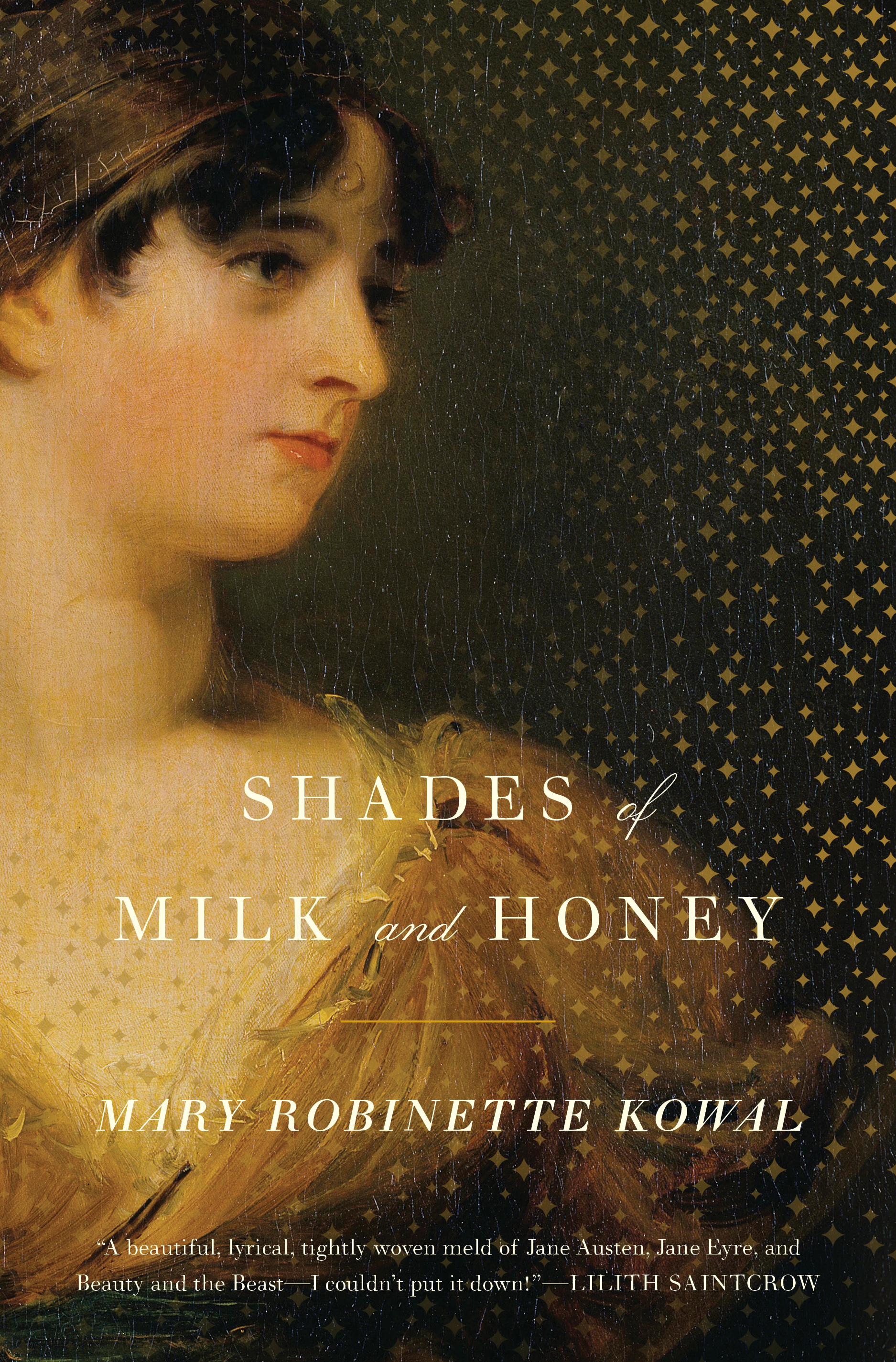 |
| See - totally serious cover! |
Theda Skocpol and Vanessa Williams - The Tea Party and the Remaking of Republican Conservatism
A big serious book about the Tea Party movement. This is that rarity in academic books - full of academic rigor - charts, footnotes (extensive footnotes), details of complicated social science studies - and yet entirely readable. This is what makes Skocpol a luminary in the poli-sci and political/cultural history fields - she can write without covering the whole thing in bafflegab and jargon.
So. The motto for the Slactiverse is "It's usually more complicated than that," but we're, for the most part, lefties, and, as such, we've been pretty dismissive of the Tea Party (when it comes up at all) as either a bunch of old folks who have been duped by a convincing astroturfing (that is, a fake grass-roots movement) effort by the elites on the Right, or a bunch of old folks who have stewed in their hatred and bigotry and then been duped by a convincing astroturfing effort. Skocpol and Williams are not in agreement with the aims of the movement, but they contend, quite effectively, with the idea that the Tea Party is a top-down astro turfed
group. Their studies show, fairly conclusively, that there is a strong disconnect between the efforts to direct the Tea Party by elites on the Right and the movement on the ground. The Tea Party IS a grass roots movement, but it is ALSO being directed (with varying levels of success) from the top down. It IS more complicated than that.
Skocpol and Williams are legitimately impressed by the ability of the people on the ground - the actual Tea Partiers - to understand the legislative ins and outs of Congress. They are also appalled by the lack of solid knowledge about what legislation is actually intended to do that the Tea Partiers display. They end their work by almost bemoaning the fact that leftists have a firm grasp of the facts, but no idea of how to influence political change, while Tea Partiers have a strong grasp of influence, but no grasp of the facts at all - if only these two elements could be merged somehow...
Anyway, it's an important book, it's very very well written, and if you want to have any idea of what the heck is happening in American politics right now, I suggest you at least take a look at it.
Lizzie Stark - Leaving Mundania
This is a serious book about larping - live action role playing. It is fairly deep, but not all that broad. There were elements of larp that I thought could have been better covered - the whole Vampire:The Masquerade/White Wolf/Theater of the Mind's Eye could have been better addressed, for instance - but what Stark does look at, she looks at in exactly enough depth. I'm biased - I'm a total geek, as you all know - but I think Stark does a good job of explaining what larp is for someone who doesn't already know. She describes a couple of long running games - Avatar Systems/Nexus, and Knight Realms - explores the ways in which larp can be used by "mundanes" for education purposes (she spends some time with the US military, exploring their training facilities - perhaps looking at some of the emergency training which she mentions but doesn't explore would have been good also, but the military bit is illustrative), and then goes off to Scandanavia, where they take larp VERY seriously - it's an art form, and it really didn't sound all that much fun based on Stark's descriptions. Stark also takes the ultimate plunge and runs a larp - and not a half-way effort, with a "murder mystery" from a box - she helps to write and run a Cthulhu larp with a bunch of complete larp novices. Yikes! It sounded like everyone had fun, though.
In between the descriptions of various larp and larp-like activities, Stark provides fascinating background on several people important to the modern larp movement in the US. She also traces the historical roots of larping back to Tudor England and to Prussian military training - that, alone, is worth looking at the book for.
There were gaps. I would love to know more about the zombie boffer larps. Also, where should we put non-larp games like zombies vs. humans - the sort of large scale "getting to know you" game that gets run on college campuses every September - or like Quidditch, where college kids run around holding brooms and pretending to play J.K. Rowling's iconic wizarding sport? What about renaissance faires? These aren't larp, per se, but they have larp elements - there's room for more exploration here. But, what Stark does look at, as I say, she dives deep - and, like a narrow, deep river, the book moves really quickly. It's a serious book about a sort of silly thing, but in the end, it's more complicated than that. For established larpers, a must read, for the curious, highly recommended. And, check out this cover:
 |
| That's pretty bad ass. |
Subscribe to:
Posts (Atom)
Subscribe To


 Posts
All Comments
Posts
All Comments