Friday, February 5, 2016

February 5, 2016 - Book 1 of the February 2nd Book Series: _Secondhand Souls_, by Christopher Moore

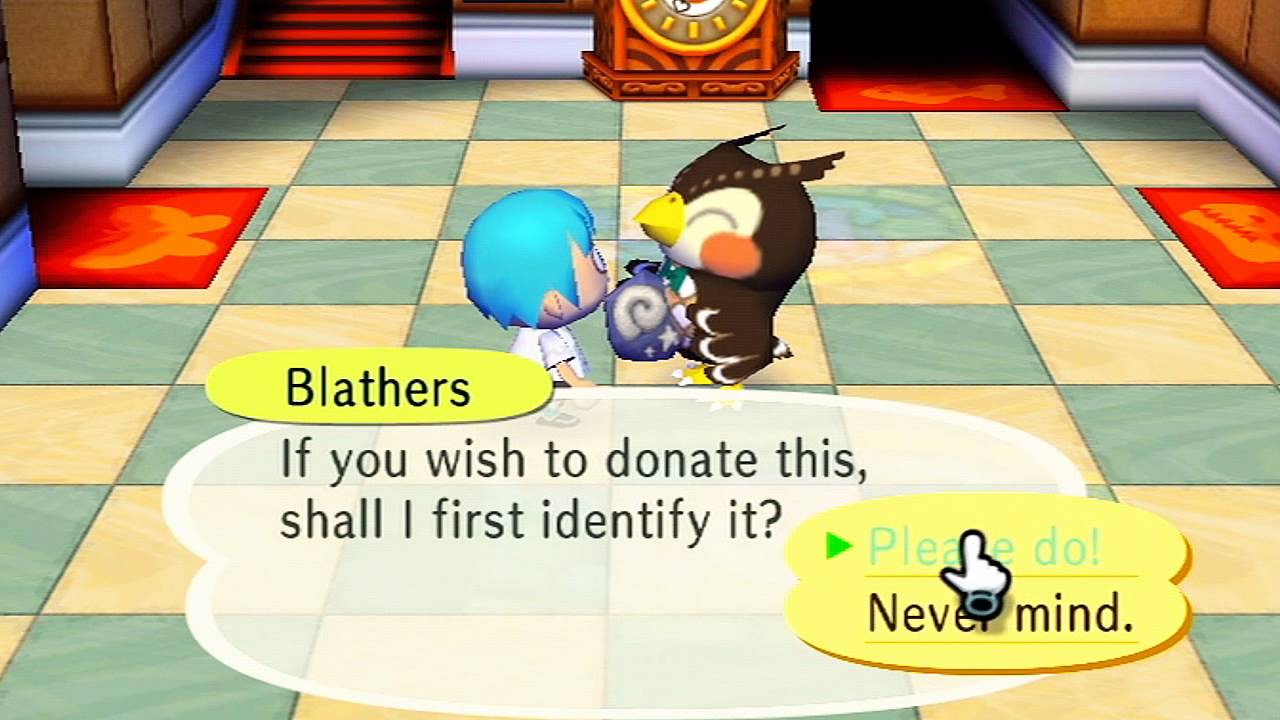
First of all, welcome back! Let me just clean up some of the dust here, and move these boxes over there - oh, look, a cockroach! I shall collect it and add it to my insect collection! Maybe I will donate it to the museum:

Um. Right. Sorry.

So. Since I last posted, I have relocated to a different city in the southern tier of New York, and I've finished and defended my dissertation (yay!), and am now over educated and sadly under employed. If you need a doctor of history, well, you know where to find me.

But enough about that. It's February, which is the second month. I'm giving this whole review blog thing a second chance. So I've decided to look at second books - the second book in a trilogy/series. I'm starting with Christopher Moore's sequel to A Dirty Job, Secondhand Souls.

Second books are sometimes tricky. Part of the plot depends on an understanding of the book which went before. Often, there is an assumption that the bigger story will be resolved, or continued, in a third book. As a result, one of the things I will be considering is how well the book stands by itself.

Moore approaches second books a little differently from other authors. On the one hand, Secondhand Souls clearly builds on the pre-established narrative of A Dirty Job. On the other hand, Dirty Job had as solid and satisfying an ending as any Moore book ever does (which is to say, Moore introduced a new character in the last 1/4 of the novel which allowed him to tie up the loose ends and put the narrative arc to bed), and so a sequel was not (and never is) a foregone conclusion. Consequently, this book has several parts where having read the first book would enhance the experience of reading this book, but no places where having read the first book was essential to enjoying this second book. If that makes sense.

So, here's the nut-shell description of the first book. Charlie Asher collects the souls of people who die in an unresolved state, vis a vis the afterlife. Those souls and then pinned to physical objects which he sells in his secondhand shop. Folks without souls are drawn to the ensouled objects, and buy them, thus acquiring a soul. Supernatural recycling. Oh, also, Asher's daughter is the embodiment of Death. Asher has some wacky adventures, fights with some Celtic crow goddesses, falls in (unlikely) love with a Buddhist nun, and then dies. We open book 2 with Ahser's soul preserved in a creature constructed, with loving care, by Audrey, the nun, out of taxidermy and lunch meat. His daughter, Sophie (now five) believes he is dead. And something screwy is taking place with the recovery of souls.

Returning in this kooky romp are Minty Fresh, the green-clad owner of a second-hand record store, Alphonse Riviera, once a cop, now the owner of a used book store, and Lily Darquewillow Elventhing Severo, fabulous Goth princess, and most excellent suicide hotline call center worker. New characters include Jean-Pierre Baptiste, a janitor, and Theeb, a spork-wielding leader of taxidermy lunch meat creatures. For all the zaniness, there is some depth here too. What does "death" mean, in a cosmic sense? What is the soul, and what do we do with it? How does love endure, even across centuries? What, in the end, is a "booty nun?"

If you liked A Dirty Job, you'll enjoy this. If you like wacky, absurdist fiction, this is a good book for you. If you like the sensation of shock which comes from walking into the bathroom at midnight to find that the cover art glows in the dark, then this is most definitely a book you should check out.

Seriously. It glows in the dark. According to the jacket notes, Beeteeth is responsible - well played, Beeteeth, well played indeed.


Sunday, October 7, 2012

Review post, 10/7/2012

So were trying an experiment. This weekend we're in Virginia, visiting in-laws (and the Green Valley Book Fair!) and we have not brought the laptop. Instead, we have the tablet. We already know that I can write reviews on the tablet, now we're determining if we can do with the tablet as a primary technology device. So far so good.

Two books this week.

Jill Lepore - The Mansion of Happiness

Lepore is rapidly becoming my favorite historian. She writes a nice clear prose, uses lots of discursive endnotes, and shares my view on what History ought to be - an argument supported by stories. This book is an ambitious project, an attempt to address the history of life itself.

Well, perhaps. More the history of the discussion/ views of American thinkers on the various stages of life from conception to death. Along the way, Lepore tells stories about a series of fascinating characters including Milton Bradley (can't talk about life without talking about Life, the game), E.B. White (childhood as viewed through the creation of children's literature), and the Gilbreths (Cheaper by the Dozen - a discussion of Scientific Management, and how it affected work and adulthood).

Topics in the book include breastfeeding, sex-ed, and cryogenics. Each chapter stands more or less by itself - many were originally essays in The New Yorker, more E.B. White - which makes the book nice and easy to read in chunks. Lepore's chatty style of writing makes the book easy to read in long stretches too - a very nice balance. Additionally, Lepore is one of those authors who, while you are reading her work, you feel compelled to share snippets with whomever is lucky enough to be in the room with you.

In the end,  a delightful book, highly recommended.

Robin McKinley - Sunshine

 An older work, a hold over from Vampire Month last year (February is coming - what should I do this time?). McKinley likes to play with literary conventions, and this book is a good illustration of this. Instead of rapid action, the book slowly unfolds. Instead of front loading a lot of exposition, McKinley unwraps her world building carefully over the course of the novel. Instead of clean resolutions, McKinley leaves her readers with a messy ending. Admittedly, perhaps not for all readers, but if your in the mood for a moody, complex novel about vampires, baking, being human, and staying safe (psychologically, politically, emotionally) in a time of perpetual war (vampires, weres, demons as stand-ins for terrorists?) then this book is for you.

Thursday, September 27, 2012

Thursday review 9/27/2012

So. The big exciting news in my world is the purchase of a new electric toy; a Google nexus. Which toy I am learning what I can do with. (That sentence needs to be dragged out and shot.) Anyway, that makes it easy to read e-books, like this week's review:

James Hutchings - The New Death

James sent me a review copy of this book, and offered to do a guest post. Which was very nice of him. The book is a collection of short fiction, flash fiction, and poetry. It's the sort of collection which a relatively new writer might put together after several years of writing, and so it clearly reflects a growing and evolving talent. That actually makes it a little difficult to review, because, frankly, the collection is a little uneven.

High points - a series of stories set in Telelee, which have a decided Leiber flavor. At their best, these stories are pleasantly cynical in their tone with being bitter. Sometimes, though, they dip below that cynical/bitter line. Also, Leiber gave us guides to Lanhkmar in the persons of Fafhrd and the Grey Mouser - Hutchings has no such heroes. Still, I would love to see a longer work in this setting.

Hutchings also offers a series of flash fiction and short shorts which echo Asimovian long-form puns. Now, some of you don't appreciate puns - you are either more or less evolved than me, depending on your point of view. I am a pun aficionado, and I consider Asimov to be a master of the form. Hutchings comes close, but misses as often as he hits. My key problem is that a long pun needs to be played straight right up to the end, and Hutchings likes to wink broadly at his audience as the puns unfold, which spoils things for me. Still, I'd you like puns - well, this is worth the price of admission.

The best piece in the collection is a long autobiographical-ish piece which has considerable heart, a creepy twist, and a nicely set up bite at the end - a perfect short story, and a gem here.

 I didn't dig the poetry, for the most part. There were a few epigrammatic pieces that were OK, but the long ones - reader, I am ashamed to admit I skipped them. Your mileage may vary depending on how much you like poetry.

So. Worth buying and easy to get. The New Death and others is now available from Amazon, Smashwords and Barnes & Noble. James Hutchings also has a new serial novel available here. The Case of the Syphilitic Sister is a detective / superhero story set in a two-fisted version of the 1930s. 

Monday, September 24, 2012

A Guest Post

First, I'm going through some re-evaluation of my time at the moment. I thinking I might shift my review post to Thursdays, for reasons. In the meantime, here's a guest post from James Hutching's whose collection of short stories, The New Death, I am reading and hope to review later this week. James is part of a new(ish) wave of authors making use of e-publishing to leverage the web into a new model of book marketing. In his post, he explains how that works, in regards to protecting his intellectual property, and why he has chosen that route.


"Many writers, whether published or just starting out, are very nervous that someone else will steal their work, whether that be another writer using their ideas in their own stories, or someone making pirated copies of their books. When I put out a collection of my writing, I specifically gave permission for anyone at all to copy my ideas, or even to cut and paste whole stories. I also contacted the Pirate Party, a worldwide network that wants to lessen copyright, and told them that I was giving anyone permission to put my ebook on file-sharing sites. In this post I hope to show why I went against common wisdom.

Creative Commons

I used a free service called Creative Commons. Creative Commons is useful for people who want to give the general public permission to use their work, but with restrictions. In my case I didn't mind people using my work for non-profit purposes, such as posting on a blog, but I didn't want to allow anyone to make money off it. Similarly I wanted anyone who used it to give me credit. I could have just listed these things myself. However I'm not a lawyer, and perhaps I would have worded it wrong so that someone could twist what I said to do more than I meant. Also I could have been unclear about what I was allowing and what I wasn't allowing. Sure, someone could email me and ask, but the whole purpose of having a written statement is so that people don't have to ask.

Creative Commons has a series of different licenses, which give permission to do different things. They're all legally 'tight', and they're all summarized in plain language. So all you have to do is go to their site and answer a series of questions, to get to the license that does what you want. In my case I used the Attribution Non-Commercial License.

Why?

That's what I did. But why? Common sense would suggest that I'm giving something away for free that I could be selling. However I believe that, in the long run, I'll be better off. The main reason is that I've seen how many people are, like me, trying to get their writing out there. Go to Smashwords and have a look at the latest ebooks. Then refresh the page ten minutes later, and you'll probably see a whole new lot. The problem that new writers face isn't that people want to steal your work; it's getting anyone to show an interest in your work at all. If someone passes on a pirated copy of my work, it might get to someone who's prepared to buy it - and that someone would probably have never heard of me otherwise. Even if they don't want to pay for what they read, I might come out with something else in the future, and perhaps paying 99c for it will be easier than hunting it down on a file-sharing site.

Science fiction writer Andrew Burt tells the story of someone who disliked his book, and to get back at him decided to put a copy on a file-sharing site. The effect was that he got a small 'spike' in sales immediately afterwards.

I also have some less selfish motives. Many people would assume that the purpose of copyright is to protect authors and creators. Leaving aside the fact that someone else often ends up with the rights (how many Disney shareholders created any of the Disney characters? How many shareholders in Microsoft have ever written a line of code?), that doesn't seem to have been the intention in the past. The US Constitution says that Congress has the power "to promote the Progress of Science and useful Arts, by securing for limited Times to Authors and Inventors the exclusive Right to their respective Writings and Discoveries." Note that protecting 'intellectual property' isn't mentioned. The authors of the Constitution seemed to see the point as getting ideas out there where people can use them: almost the exact opposite of keeping them 'safe' and 'protected'.

The original idea of copyright seems to have been a sort of deal: you have an idea, and we want you to get it out into the world where it will do some good. To encourage you to do that, we'll give you a monopoly on its use for a limited time. After that, anybody can use it (it will enter the 'public domain').

A lot of people don't know that copyright used to give a lot less protection than it does now, especially in the United States. In the US, it used to be that works were copyrighted for a maximum of 56 years. Today copyright in the US can last for over 100 years. In fact Congress keeps extending the time. In practice, they're acting as if they never want ideas to go into the public domain.

This is great for the owners of 'intellectual property'. But it's hard to see how this "promotes the Progress of Science and useful Arts," or how forever is a "limited time." In a sense it's a theft from the public. Anyone who publishes work has accepted the deal that the law offers, of a limited monopoly in return for making their idea known. Congress has been giving them more and more extensions on that monopoly, but doesn't require them to do anything to earn it.

It probably doesn't matter that much that Disney still owns Mickey Mouse, or that Lord of the Rings is still under copyright. But remember that these laws don't just apply to the arts. Similar laws apply to science as well. So a life-saving invention could be going unused, because its owner wants too much money for it, or because it's tied up in court while two companies fight about who owns it.

Conclusion

I'm far from an expert on either the law or the publishing industry. However I hope that I've given you, especially those of you who might be thinking about publishing some writing, a different take on the whole issue of whether authors should worry about their ideas being stolen. At least I hope I've shown you that there's a different way of thinking about it, and that that way doesn't require you to just give up on making money; in fact that it might be more profitable as well as better for society."

---

bio: James Hutchings lives in Melbourne, Australia. He fights crime as Poetic Justice, but his day job is acting. You might know him by his stage-name 'Brad Pitt.' He specializes in short fantasy fiction. His work has appeared in Daily Science Fiction, fiction365 and Enchanted Conversation among other markets. His ebook collection The New Death and others is now available from Amazon, Smashwords and Barnes & Noble. He blogs daily at Teleleli.

---

This article is licensed under a Creative Commons Attribution Non-Commercial License.

Tuesday, August 28, 2012

Tuesday Library Post, 8/28/2012

I've transitioned the blog to access my G+ profile, which shouldn't affect anything that you guys see (unless you're on G+ also, in which case, there will be a concurrent post of some sort when I post here), but which seems actually to make my life a micron or so easier. Also, according to my stat counter, I had a huuuuuge jump in traffic around the middle of August, for no discernible reason - like, thousands of new viewers. I don't know where you all came from, but the stats say you never really went away again, so, hi. Glad you're here. Archives are on the right, the tag cloud is on the left, and the archives are really more accessible.

One thing which seems to have resulted in traffic is a search for updates on Terri Windling's health, so I poked around, and Magik 4 Terri reported a successful fund raising back in January. So I would assume that Ms. Windling's health is as good as can be expected, all things considered.

Ok. Three books this week:

K.E. Mills - Witches Incorporated

The second of Mills' Rogue Agent series (not to be confused with the Rogue Angel series, which this is so much better than), a series of light fantasy in - well, I want to call it steampunk, because it's vaguely Victorian and there are airships. But it's not steampunk, because the machinery is powered by magic, rather than steam. And it's not really magicpunk, either - although the witches do use magic to challenge the societal status quo, especially the role of women in a Victorian society. Still, I'm not comfortable calling it -punk anything. So. It's a Victorian setting. Machinery is operated by magic. Mages form a critical portion of society, especially the civil service. Gerald, the hero of book one (and the Rogue Agent of the series title) has been recruited as a spy. His plot is the secondary plot, however, as Reg, Melisandre, and Bibby take center stage with their magical investigations agency, Witches Incorporated.

The tone of the novel is light - WI investigates the illegal use of magic to win a baking contest, for instance. That being said, I wouldn't call the book comedic - the material is too serious for that. Gerald wrestles with the responsibility his power entails, there is a short musing on the use of magical torture, and lots and lots of discussion of gender roles in society. So, the tone is light, but the material is dense. Some readers may well feel that this pairing is a little off-putting - even disrespectful, perhaps. It didn't bother me, though.

The pace is a little slow at the beginning, but it picks up towards the end of the book. The book has a solid resolution, while leaving enough material to finish the trilogy - Mills has pulled off an almost perfect middle book, in that you don't need to have read book 1, and there is no feeling that book 2 is incomplete. I think the fact that she shifts her primary characters helps a great deal with this.

I should also note that this was another Orbit publication - I really do like what they're printing right now!

Dave Duncan - When the Saints

Sequel to Speak to the Devil. Duncan picks up moments after the first book ends. The Magnus brothers are still besieged, magic is still in play, skull-duggery and politics are still taking place, the love is still triangular in nature - good stuff. Duncan, as usual, surprises by engaging in some very neat twists. In particular, as I was about midway through the book, it looked like the problems facing our heroes had largely been resolved, and I said to myself "what's the whole rest of this book about, then?" And that was when it became clear that the problems facing our heroes were much much larger than an invading army with a powerful new weapon. And, shortly thereafter, the book went from good to great, as is often the case with Duncan's writing.

If you like politics, especially the dark behind the scenes wheeling and dealing type, with a medieval/magical flavor, then this book is absolutely for you. (Although, you'll want to read the first book first - I think you could possibly skip it, but I wouldn't advise it) Duncan layers his political plots nicely, from the familial at the bottom, up through the politics of a small kingdom, and out into the broader political realm of Catholic dominated Europe, prior to the Reformation. As an interesting sideline, we also get a taste of politics among the secret conclave of mages. Lovely lovely stuff, all power and betrayal, and venal manipulators manipulating for their own gain, like they do.

Two complaints - Duncan's world building is great, but it felt a little tacked on in places. The magical society uses a lot of falconry metaphors - Duncan provides a glossary - but these metaphors (and the society itself) seem to appear from nowhere. Some hint in the first book would have been nice (possibly impossible on Duncan's part, but nice). Second, I wanted maps! There's a little historical note, but no maps.

Clearly, there will be a third novel, both because Duncan writes trilogies (he really knows how to work the form, in fact) and because there are many many loose ends that demand tying up. However, this book does have a solid and satisfying ending, and you won't feel cheated.

Baratunde Thurston - How to Be Black

I heard Thurston talk on NPR about this book, so when I saw it, I had to grab it. Thurston is a very funny man, formerly with the Onion, and professionally black. That is to say, Thurston trades on his racial identity for humor, and he does it very well.

This book is roughly 1/3 autobiography, 1/3 tongue in cheek advice book, and 1/3 stand-up comedy routine. Thurston has a small panel of blackness, including three black men, three black women, and one white guy from Toronto. They are all, also, very funny. Thurston's point (and it's a good point!) is that there is no one way to experience being black in the United States in the 21st century. More importantly, this shouldn't really need to be stated. And yet, popular culture (and society in general) tries to create the impression that there is only one way to "be black," one monolithic black experience. Thurston addresses this idea head on, has a lot of fun doing it, and weaves a somewhat poignant tale of a young black man growing up and becoming Baratunde Thurston. It's a good book, you should read it, even though it isn't February.

Monday, August 27, 2012

Monday Library Post, 8/27/2012

So, classes started today, which means that Monday has suddenly become fraught once again. So I'll be switching back to my school year schedule of library on Monday with reviews on Tuesday. Or, perhaps, Sunday? We shall see.

Two books this week:

Duane Swierczynski - Fun and Games

And out of work cop foils the plans of a group of assassins known for making their victims' deaths look like accidents. Looks gritty and pulpy.

Dave Zeltserman - Outsourced

A group of laid off computer guys plan and execute a heist. Ocean's 11 meets Office Space, perhaps. Anyway, heist/caper novel - I'm all over that.

Monday, August 20, 2012

Monday review, 8/20/2012

We're just back from the ball game. One of the summer reading programs my eldest daughter is/has been participating in gave us free ball tickets. We left during the 7th inning stretch - the visitors were up by one, and it looks as though they kept that lead and won the game. Still, it was a close thing. Not sure if that's because our team has improved since earlier this year, or if the visitors were just not very good...

Anyway, one book this week:

James Corey - Caliban's War

This is the sequel to Leviathan's Wake, the new space opera that Corey is working on. The scope is pretty sweeping - questions about the nature of humanity and the possibility of Empire in Space. The alien from the last book is still causing trouble - but it's not clear if the alien is causing trouble or if humans are using the alien to cause trouble. Which is an important distinction. I would not be at all surprised if the next book featured an attempt by the alien to initiate communication with humanity.

Anyway, I don't want to talk about that. I want to talk about the publisher, Orbit. Orbit is doing some VERY nice things recently - new authors and, in this case, a big risk. Big is the operative word here - this book, and Leviathan's Wake are both massive door stops of books. And Corey isn't an established author*, so there was no guarantee that Orbit could actually sell a massive doorstop of a book, let alone a series of them. Especially since the doorstops are in a sub-genre (space opera) which is, supposedly, not very popular right now. So, kudos to Orbit for taking a big risk on some big books. I think it's probably paid off for them.

It's certainly paid off for fans of sweeping novels with breathtaking descriptions of space craft, broad vistas of planets, and discussion of the complications of living in space. Also, politics, space marines, and giant freakin' alien/human hybrids flying through space without space craft. There's a lot for fans of those things to love in these books. Corey also packs a lot of humor into the books. Oh, and puke zombies - can't forget the puke zombies. They aren't as horrific as they were in the first book, but they're still there. Clearly, there's plenty of room for all manner of things in a doorstop of a book, and Corey takes full advantage.

Trigger warning - for parents of small children especially, this book is full of nightmare fodder. One of the major plot lines focuses on the abduction of a young girl. There are also some (false) accusations of child abuse midway through. So, consider yourself warned.

*Corey isn't exactly a new author, either. Corey is the pseudonym of a pair of authors, one of whom has published under his own name, and the other of whom is an assistant to George R.R. Martin (himself an author of doorstops). Still, I don't think that diminishes the risk that Orbit is taking here, so the kudos still stand.


Followers