Friday, October 21, 2011
OWS and Libraries
A New York Times article about the library that Occupy Boston has set up. Hopefully you'll still be able to read the article - I'm not sure what NYT's paywall system is like.


Friday Review Post, 10/21/2011
I wish to note, should I not finish this this evening, that I am actually sitting down to write it on Friday.
Four books this week.
First up, I found that I could not resist the allure of:
Simon Garfield - Just My Type
This is a book about fonts. It is, perhaps to some, surprising in its goodness. Garfield presents a history of fonts from Gutenberg to the present. He also highlights several specific fonts in a series of "font breaks" - interstitial chapters devoted to several fonts (plus one on the interobang, which Garfield describes as the Esperanto of fonts - something which clearly needs to exist, and yet which no one actually wants to use). Each of the font breaks features the font in question in the first paragraph of the break, which is a nice touch.
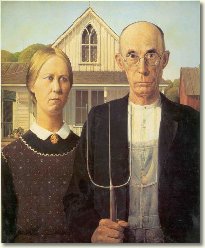
Fonts, it turns out, are fascinating. At least to me, anyway. This kinda fits into my existing experience of things I find neat. I took a class on material culture (the history of objects - using objects as primary sources. Archaeology for historians, perhaps), and since then have been noticing architectural elements in my built environment - particularly the American Gothic window (not the painting - the iconic architectural style for which the painting is named - the house behind the couple has an American Gothic window in its peak.) and the Mansard Roof.
Fonts, it turns out, are the same for me - having read the book, I'm finding myself noticing fonts a lot more. Which is neat, but also a little frustrating. This would seem to be one of those cases in which ignorance is, actually, bliss. I ... I had dreams about fonts as I was finishing the book. Which is just, frankly, odd. I - guys, I changed the fonts on the computer. All of my icons, all of the tags at the top of my browser, the URL, even the clock on my desktop - all are now in Poor Richard font. Because it's pretty. (especially the ampersand! Did I mention that there's a whole chapter on ampersands? There is!) This is, perhaps, not healthy.
Case in point - My new favorite font? Doves. Which doesn't exist. Because the designer, Thomas Cobden-Sanderson, was so obsessed with the idea that lesser type setters than himself would use his typeface for projects to which it was ill fitted that he threw the entire collection of type into the Thames.* I wouldn't have known about the typeface if it weren't for this book - but, given that I can't actually USE the typeface (thanks ever so, Mr. Cobden-Sanderson!), perhaps I would have been better off as a result. Thanks, Mr. Garfield?
*I am not alone in have been struck by the typeface. Here's a lovely essay on the type face, on the nature of beauty, and on why it's a shame that Unitarian Universalists should be less inclined to reject the Bible. There's a lovely image of the first page of the Bible, printed in Doves typeface, in the middle of the essay. Perhaps you'll be captivated too... If so, sorry.
Second book -
Alison Goodman - Eon: The DragonEye Reborn
This book was amazingly good! It had so many things that I like in books. It had a strong female character (although, you know, she spent most of the book pretending to be a guy - more on that in a minute), it was inspired by Asian narratives instead of Western ones (more on that in a minute too), it had a strong transgendered character (who wasn't the main girl-pretending-to-be-a-boy character), it had great heaping gobs of politics, it had dragons (Asian style dragons) - lots and lots of really great stuff. Plus, it was really well written - a plot which just pulled me in and dragged me forward. Over 500 pages, and I finished in in just over a day - simply marvelous story telling.
So, I really really liked the book. But, having finished it, I started pondering. (Actually, that's probably the sign of a really good book, isn't it? It makes you keep thinking about it after the fact?) I pondered two things. First, I had just had a conversation with a friend about how we wished there were more fantasy/sci-fi books based on narratives traditions other than the Western tradition. I mentioned Lloyd Alexander's The Iron Ring, which is set in India, but we really couldn't think of many books where a strong non-Western tradition informed the story. So, I was excited by this book, because it is clearly inspired by Asian traditions. But, when I started thinking about it, I didn't have a strong impression of the characters as Asian. Which makes me wonder - to what extent is that my fault as a product of white privilege (characters in books, unless clearly denoted otherwise, default to white, because I, the reader, am white, and I assume that the characters look like me), and to what extent is that Goodman's fault in that she didn't denote the characters as Asian? Which, what more could she have done? I mean, the book is clearly set in an Asian background - why am I seeing Eon/a as white? So, question to ponder: how can an author denote a character as non-white without hammering the reader over the head with the character's non-whiteness? To what extent should the author be responsible for doing this anyway?
So, that got me pondering the gender tropes in the novel. Gender and gender identity are a big deal in this book. Eon/a is masquerading as a boy because the position she aspires to, Dragoneye, can only be held by a male. This, ultimately, becomes a major plot point, as Eon/a is forced to make a decision regarding her gender presentation - I think I can say that without spoiling anything. Beyond that, however (because "girl pretends to be boy" is an ancient plot device - look at Shakespeare, for instance), Eon/a interacts extensively with a eunuch, Ryko, who is recognized as serving a male role in society (forcing consideration of what it means to be male - how much of it is biology, and how much of it is performative?) and a transgendered individual, Lady Dela (a male to female trans). Dela forces Eon/a to confront her own sense of gender, and in the end (and, again, I hope this doesn't spoil anything) Eon/a is forced to make a decision between being Eon and being Eona. Dela's strong sense of who she is, regardless of biological gender, aids Eon/a in making her decision.
Dela, I think, is an excellent character. She's fully rendered, with a realistic approach to her situation. Goodman indicates that Dela has not merged seamlessly into the society she inhabits - she has been attacked for her nature. She also has Eon/a ask Dela if Dela has ever considered surgery (Dela has). Eon/a experiments (for magical reasons) with some drugs which enhance and/or diminish various elements of her gender identity (it's magic, and magic works differently depending on your gender in Goodman's world - this is internally consistent, even if I'm not explaining if properly). My overwhelming impression is that Goodman has done an excellent job depicting issues of gender, and transgender. Moreover, she has done it without making those aspects the entirety of the characters in question - these are fully realized people.
At least, that was what I thought when I finished the book. But my musings on racial identity forced me to wonder how well equipped I, a cisgendered male, am in assessing these things. So I went looking for a review from a transgenered point of view. I found this essay, which seems to agree with me re: Dela, but suggests that Eon/a is more troublesome, gender-wise. I'm not sure that I fully agree with the final assessment (that Eon/a plays with gender for reasons of convenience - I think it's deeper than that), but the essay gave me some food for thought. That being said, I remain convinced that Goodman has done something significant with her portrayal of Lady Dela. Dela doesn't quite approach the stage of being trans just because she's trans** - her transgendered nature serves the plot, and the character would not work in her role as anything other than trans - but it's certainly a good first step.
One significant complaint - the book doesn't end. Instead, it clearly leads into the sequel (Eona). However, since I really really want to read more, and since I know the sequel exists (I'm not going to be left hanging), I'm willing to forgive, just this once.
Highly recommended to anyone who likes really well written YA fantasy.
** We never ask "why is this character straight or white?" Indeed, we assume, unless otherwise indicated, that a character is straight and white, even if there is no clear reason to think so. Thus, the ideal situation, vis a vis a minority character, is for the reader to be willing to accept them as trans, or gay, or a person of colour, without wondering why they have been written that way. This, of course, requires a change on the part of the author/publisher, but also (and more difficult to achieve, I think) on the part of the reading public in general.
After two hefty novels which gave me deeply complex dreams and ponderings, I wanted something a little lighter, so I went with
John Sandford - Bad Blood
First up, a great big trigger warning on this book, and possibly the review - the book is about ritual sexual abuse, including rape and incest. There aren't significantly graphic presentations of this abuse, but there are several scenes with fairly hefty implications. Those aren't things which a triggering for me, and I found places in the book where it was hard to continue. So, you have been warned.
Sandford, as you know, is a guilty pleasure of mine. The plots are fairly straightforward. The good guys are good - they sometimes bend the law a little (a judicious use of judicial wrangling to ensure that critical evidence ends up in the right place at the right time - that sort of thing), but they never break it completely. Plus, the bad guys are so clearly bad that some bending feels kosher. (even though, on an intellectual level, I register that it isn't.) Sandford doesn't push any of my personal buttons - his villains are villains for individual reasons, and not because they belong to a particular racial and/or religious group. That is, Sandford sometimes writes black villains, or gay villains, or Arabic villains, but they are villains because of what they do, not because they are black, gay, or Arabic. His cops seem willing to accept different genders, different sexual orientations, different races, and different religious views, provided that those elements don't get in the way of doing their job. His characters are reasonably well written, and the plots are hook-y enough that, if you like the sort of stories he's telling, you don't mind that the characters are only reasonably well written. I feel like I'm defending my literary choices - I guess I am. I know that the books are trashy; that's why I read them.
Anyway, Virgil "that fuckin'" Flowers is called in to look at a suspicious prison cell suicide, which turns into a multiple murder investigation, which uncovers a deep, and deeply sordid, local secret involving a local religious sect which uses sex in its idiosyncratic version of Christian worship. The whole thing ends, as this sort of story often does, with fire, and blood, and highly trained psychological counselors.
The only musing this book prompted was some thought on the nature of police procedurals, and the possibility that there are two sorts: one where we follow the detective as he plods through clues, and thus unravel the crime at the same rate as he does; and one where we, the readers, have a clearer sense of what's actually happening than the detective, and so we get to watch him piece the bits together in such a way that he arrives at the place that we've already seen. I know Sandford writes both kinds, and I greatly prefer the former type. This book was decidedly the latter, alas. That, and the dreadful subject matter, kinda left a bad taste in my mouth.
Finally, a rare graphic novel:
M.K. Reed and Johnathan Hill - Americus
This was a book clearly written more or less exactly for me. It tells the story of an attempt to remove a series of books from a small town library. The books tell the story of Apathea Ravenchilde, who is a witch. A conservative Christian group decide that the books are having a negative effect upon their children (with no evidence of this, naturally) and decide that they have to be removed from the library. The main plot focuses on this struggle, with Neal Barton (young reader, and library page) and Charlotte Murphy (youth librarian) organizing the champions of the library.
The book is also about Neal's transition into high school, without his best friend, who has been sent to military school because he is caught reading an Apathea Ravenchilde novel. Neal feels true to me - awkward teen in a somewhat foreign environment, trying to figure out who he is and how he will make his way in the world. Yeah, I identify with him.
The book also features snippets of the Apathea story. These, oddly enough, seem more realistically drawn than the drawings of "reality" - very interesting.
It's a black and white comic. The art is excellent, I found the lettering a little tough to read, but that may have been the light and the tired conspiring against me. A great book for anyone working on growing up (especially if they are awkward teens who like to read fantasy), and anyone who loves libraries. Here's a poster that Hill and Reed did for Banned Book Week - you can find the original here:
Look at that - it's only just 11 pm, and I'm done. I can post reviews on a Friday, I really really can!
Four books this week.
First up, I found that I could not resist the allure of:
Simon Garfield - Just My Type
This is a book about fonts. It is, perhaps to some, surprising in its goodness. Garfield presents a history of fonts from Gutenberg to the present. He also highlights several specific fonts in a series of "font breaks" - interstitial chapters devoted to several fonts (plus one on the interobang, which Garfield describes as the Esperanto of fonts - something which clearly needs to exist, and yet which no one actually wants to use). Each of the font breaks features the font in question in the first paragraph of the break, which is a nice touch.
 |
| This is an interobang |
Fonts, it turns out, are the same for me - having read the book, I'm finding myself noticing fonts a lot more. Which is neat, but also a little frustrating. This would seem to be one of those cases in which ignorance is, actually, bliss. I ... I had dreams about fonts as I was finishing the book. Which is just, frankly, odd. I - guys, I changed the fonts on the computer. All of my icons, all of the tags at the top of my browser, the URL, even the clock on my desktop - all are now in Poor Richard font. Because it's pretty. (especially the ampersand! Did I mention that there's a whole chapter on ampersands? There is!) This is, perhaps, not healthy.
Case in point - My new favorite font? Doves. Which doesn't exist. Because the designer, Thomas Cobden-Sanderson, was so obsessed with the idea that lesser type setters than himself would use his typeface for projects to which it was ill fitted that he threw the entire collection of type into the Thames.* I wouldn't have known about the typeface if it weren't for this book - but, given that I can't actually USE the typeface (thanks ever so, Mr. Cobden-Sanderson!), perhaps I would have been better off as a result. Thanks, Mr. Garfield?
Anyway, if you are geekily inclined - that is, inclined to take odd things entirely too seriously - this book might tickle your fancy. If you are already a font geek - and you know you're out there - this is a must read.
*I am not alone in have been struck by the typeface. Here's a lovely essay on the type face, on the nature of beauty, and on why it's a shame that Unitarian Universalists should be less inclined to reject the Bible. There's a lovely image of the first page of the Bible, printed in Doves typeface, in the middle of the essay. Perhaps you'll be captivated too... If so, sorry.
Second book -
Alison Goodman - Eon: The DragonEye Reborn
This book was amazingly good! It had so many things that I like in books. It had a strong female character (although, you know, she spent most of the book pretending to be a guy - more on that in a minute), it was inspired by Asian narratives instead of Western ones (more on that in a minute too), it had a strong transgendered character (who wasn't the main girl-pretending-to-be-a-boy character), it had great heaping gobs of politics, it had dragons (Asian style dragons) - lots and lots of really great stuff. Plus, it was really well written - a plot which just pulled me in and dragged me forward. Over 500 pages, and I finished in in just over a day - simply marvelous story telling.
So, I really really liked the book. But, having finished it, I started pondering. (Actually, that's probably the sign of a really good book, isn't it? It makes you keep thinking about it after the fact?) I pondered two things. First, I had just had a conversation with a friend about how we wished there were more fantasy/sci-fi books based on narratives traditions other than the Western tradition. I mentioned Lloyd Alexander's The Iron Ring, which is set in India, but we really couldn't think of many books where a strong non-Western tradition informed the story. So, I was excited by this book, because it is clearly inspired by Asian traditions. But, when I started thinking about it, I didn't have a strong impression of the characters as Asian. Which makes me wonder - to what extent is that my fault as a product of white privilege (characters in books, unless clearly denoted otherwise, default to white, because I, the reader, am white, and I assume that the characters look like me), and to what extent is that Goodman's fault in that she didn't denote the characters as Asian? Which, what more could she have done? I mean, the book is clearly set in an Asian background - why am I seeing Eon/a as white? So, question to ponder: how can an author denote a character as non-white without hammering the reader over the head with the character's non-whiteness? To what extent should the author be responsible for doing this anyway?
So, that got me pondering the gender tropes in the novel. Gender and gender identity are a big deal in this book. Eon/a is masquerading as a boy because the position she aspires to, Dragoneye, can only be held by a male. This, ultimately, becomes a major plot point, as Eon/a is forced to make a decision regarding her gender presentation - I think I can say that without spoiling anything. Beyond that, however (because "girl pretends to be boy" is an ancient plot device - look at Shakespeare, for instance), Eon/a interacts extensively with a eunuch, Ryko, who is recognized as serving a male role in society (forcing consideration of what it means to be male - how much of it is biology, and how much of it is performative?) and a transgendered individual, Lady Dela (a male to female trans). Dela forces Eon/a to confront her own sense of gender, and in the end (and, again, I hope this doesn't spoil anything) Eon/a is forced to make a decision between being Eon and being Eona. Dela's strong sense of who she is, regardless of biological gender, aids Eon/a in making her decision.
Dela, I think, is an excellent character. She's fully rendered, with a realistic approach to her situation. Goodman indicates that Dela has not merged seamlessly into the society she inhabits - she has been attacked for her nature. She also has Eon/a ask Dela if Dela has ever considered surgery (Dela has). Eon/a experiments (for magical reasons) with some drugs which enhance and/or diminish various elements of her gender identity (it's magic, and magic works differently depending on your gender in Goodman's world - this is internally consistent, even if I'm not explaining if properly). My overwhelming impression is that Goodman has done an excellent job depicting issues of gender, and transgender. Moreover, she has done it without making those aspects the entirety of the characters in question - these are fully realized people.
At least, that was what I thought when I finished the book. But my musings on racial identity forced me to wonder how well equipped I, a cisgendered male, am in assessing these things. So I went looking for a review from a transgenered point of view. I found this essay, which seems to agree with me re: Dela, but suggests that Eon/a is more troublesome, gender-wise. I'm not sure that I fully agree with the final assessment (that Eon/a plays with gender for reasons of convenience - I think it's deeper than that), but the essay gave me some food for thought. That being said, I remain convinced that Goodman has done something significant with her portrayal of Lady Dela. Dela doesn't quite approach the stage of being trans just because she's trans** - her transgendered nature serves the plot, and the character would not work in her role as anything other than trans - but it's certainly a good first step.
One significant complaint - the book doesn't end. Instead, it clearly leads into the sequel (Eona). However, since I really really want to read more, and since I know the sequel exists (I'm not going to be left hanging), I'm willing to forgive, just this once.
Highly recommended to anyone who likes really well written YA fantasy.
** We never ask "why is this character straight or white?" Indeed, we assume, unless otherwise indicated, that a character is straight and white, even if there is no clear reason to think so. Thus, the ideal situation, vis a vis a minority character, is for the reader to be willing to accept them as trans, or gay, or a person of colour, without wondering why they have been written that way. This, of course, requires a change on the part of the author/publisher, but also (and more difficult to achieve, I think) on the part of the reading public in general.
After two hefty novels which gave me deeply complex dreams and ponderings, I wanted something a little lighter, so I went with
John Sandford - Bad Blood
First up, a great big trigger warning on this book, and possibly the review - the book is about ritual sexual abuse, including rape and incest. There aren't significantly graphic presentations of this abuse, but there are several scenes with fairly hefty implications. Those aren't things which a triggering for me, and I found places in the book where it was hard to continue. So, you have been warned.
Sandford, as you know, is a guilty pleasure of mine. The plots are fairly straightforward. The good guys are good - they sometimes bend the law a little (a judicious use of judicial wrangling to ensure that critical evidence ends up in the right place at the right time - that sort of thing), but they never break it completely. Plus, the bad guys are so clearly bad that some bending feels kosher. (even though, on an intellectual level, I register that it isn't.) Sandford doesn't push any of my personal buttons - his villains are villains for individual reasons, and not because they belong to a particular racial and/or religious group. That is, Sandford sometimes writes black villains, or gay villains, or Arabic villains, but they are villains because of what they do, not because they are black, gay, or Arabic. His cops seem willing to accept different genders, different sexual orientations, different races, and different religious views, provided that those elements don't get in the way of doing their job. His characters are reasonably well written, and the plots are hook-y enough that, if you like the sort of stories he's telling, you don't mind that the characters are only reasonably well written. I feel like I'm defending my literary choices - I guess I am. I know that the books are trashy; that's why I read them.
Anyway, Virgil "that fuckin'" Flowers is called in to look at a suspicious prison cell suicide, which turns into a multiple murder investigation, which uncovers a deep, and deeply sordid, local secret involving a local religious sect which uses sex in its idiosyncratic version of Christian worship. The whole thing ends, as this sort of story often does, with fire, and blood, and highly trained psychological counselors.
The only musing this book prompted was some thought on the nature of police procedurals, and the possibility that there are two sorts: one where we follow the detective as he plods through clues, and thus unravel the crime at the same rate as he does; and one where we, the readers, have a clearer sense of what's actually happening than the detective, and so we get to watch him piece the bits together in such a way that he arrives at the place that we've already seen. I know Sandford writes both kinds, and I greatly prefer the former type. This book was decidedly the latter, alas. That, and the dreadful subject matter, kinda left a bad taste in my mouth.
Finally, a rare graphic novel:
M.K. Reed and Johnathan Hill - Americus
This was a book clearly written more or less exactly for me. It tells the story of an attempt to remove a series of books from a small town library. The books tell the story of Apathea Ravenchilde, who is a witch. A conservative Christian group decide that the books are having a negative effect upon their children (with no evidence of this, naturally) and decide that they have to be removed from the library. The main plot focuses on this struggle, with Neal Barton (young reader, and library page) and Charlotte Murphy (youth librarian) organizing the champions of the library.
The book is also about Neal's transition into high school, without his best friend, who has been sent to military school because he is caught reading an Apathea Ravenchilde novel. Neal feels true to me - awkward teen in a somewhat foreign environment, trying to figure out who he is and how he will make his way in the world. Yeah, I identify with him.
The book also features snippets of the Apathea story. These, oddly enough, seem more realistically drawn than the drawings of "reality" - very interesting.
It's a black and white comic. The art is excellent, I found the lettering a little tough to read, but that may have been the light and the tired conspiring against me. A great book for anyone working on growing up (especially if they are awkward teens who like to read fantasy), and anyone who loves libraries. Here's a poster that Hill and Reed did for Banned Book Week - you can find the original here:
 |
| That would be Apathea on the left, and Neal on the right. Just, you know, FYI. |
Look at that - it's only just 11 pm, and I'm done. I can post reviews on a Friday, I really really can!
Wednesday, October 19, 2011
Tuesday Library Post, early Wednesday Morning, 10/19/2011
A schedule? What's a schedule?
Two books this week:
Frances Fox Piven - Who's Afraid of Frances Fox Piven?
Piven is a professor of sociology and poli sci at CUNY. She's also an advocate for welfare rights and social justice. This is a collection of her essays.
Jon Scieszka, ed. - Guys Read: Thriller
Scieszka is producing a series of anthologies designed to appeal to young male readers, in an effort to raise the young male literacy rate. Given the collection title - "Guys Read" - well, I couldn't pass it up, could I?
Two books this week:
Frances Fox Piven - Who's Afraid of Frances Fox Piven?
Piven is a professor of sociology and poli sci at CUNY. She's also an advocate for welfare rights and social justice. This is a collection of her essays.
Jon Scieszka, ed. - Guys Read: Thriller
Scieszka is producing a series of anthologies designed to appeal to young male readers, in an effort to raise the young male literacy rate. Given the collection title - "Guys Read" - well, I couldn't pass it up, could I?
Tuesday, October 18, 2011
OWS thoughts from Lemony Snicket
via Neil Gaiman: I don't know why the huge gaps are there in the text, but I promise that there IS text there. And it's worth reading. And it's in a pretty font.
1. If you work hard, and become successful, it does not necessarily mean you are successful because you worked hard, just as if you are tall with long hair it doesn’t mean you would be a midget if you were bald.
2. “Fortune” is a word for having a lot of money and for having a lot of luck, but that does not mean the word has two definitions.
3. Money is like a child—rarely unaccompanied. When it disappears, look to those who were supposed to be keeping an eye on it while you were at the grocery store. You might also look for someone who has a lot of extra children sitting around, with long, suspicious explanations for how they got there.
4. People who say money doesn’t matter are like people who say cake doesn’t matter—it’s probably because they’ve already had a few slices.
5. There may not be a reason to share your cake. It is, after all, yours. You probably baked it yourself, in an oven of your own construction with ingredients you harvested yourself. It may be possible to keep your entire cake while explaining to any nearby hungry people just how reasonable you are.
6. Nobody wants to fall into a safety net, because it means the structure in which they’ve been living is in a state of collapse and they have no choice but to tumble downwards. However, it beats the alternative.
7. Someone feeling wronged is like someone feeling thirsty. Don’t tell them they aren’t. Sit with them and have a drink.
8. Don’t ask yourself if something is fair. Ask someone else—a stranger in the street, for example.
9. People gathering in the streets feeling wronged tend to be loud, as it is difficult to make oneself heard on the other side of an impressive edifice.
10. It is not always the job of people shouting outside impressive buildings to solve problems. It is often the job of the people inside, who have paper, pens, desks, and an impressive view.
11. Historically, a story about people inside impressive buildings ignoring or even taunting people standing outside shouting at them turns out to be a story with an unhappy ending.
12. If you have a large crowd shouting outside your building, there might not be room for a safety net if you’re the one tumbling down when it collapses.
13. 99 percent is a very large percentage. For instance, easily 99 percent of people want a roof over their heads, food on their tables, and the occasional slice of cake for dessert. Surely an arrangement can be made with that niggling 1 percent who disagree.
2. “Fortune” is a word for having a lot of money and for having a lot of luck, but that does not mean the word has two definitions.
3. Money is like a child—rarely unaccompanied. When it disappears, look to those who were supposed to be keeping an eye on it while you were at the grocery store. You might also look for someone who has a lot of extra children sitting around, with long, suspicious explanations for how they got there.
4. People who say money doesn’t matter are like people who say cake doesn’t matter—it’s probably because they’ve already had a few slices.
5. There may not be a reason to share your cake. It is, after all, yours. You probably baked it yourself, in an oven of your own construction with ingredients you harvested yourself. It may be possible to keep your entire cake while explaining to any nearby hungry people just how reasonable you are.
6. Nobody wants to fall into a safety net, because it means the structure in which they’ve been living is in a state of collapse and they have no choice but to tumble downwards. However, it beats the alternative.
7. Someone feeling wronged is like someone feeling thirsty. Don’t tell them they aren’t. Sit with them and have a drink.
8. Don’t ask yourself if something is fair. Ask someone else—a stranger in the street, for example.
9. People gathering in the streets feeling wronged tend to be loud, as it is difficult to make oneself heard on the other side of an impressive edifice.
10. It is not always the job of people shouting outside impressive buildings to solve problems. It is often the job of the people inside, who have paper, pens, desks, and an impressive view.
11. Historically, a story about people inside impressive buildings ignoring or even taunting people standing outside shouting at them turns out to be a story with an unhappy ending.
12. If you have a large crowd shouting outside your building, there might not be room for a safety net if you’re the one tumbling down when it collapses.
13. 99 percent is a very large percentage. For instance, easily 99 percent of people want a roof over their heads, food on their tables, and the occasional slice of cake for dessert. Surely an arrangement can be made with that niggling 1 percent who disagree.
Saturday, October 15, 2011
Comments?
So, a while back, I switched to a comment system by Intense Debate. My decision to do this was largely based on the fact that their system allowed commenters to have a link to their own sites in my comments, which I thought was a nice idea. However, I think the system has some problems. First, it doesn't seem to port comments left on posts read through the RSS feed. (At least, I assume that that's what's happening. I get an e-mail about a comment posted, with the text of the comment included, but I can't see the comment on the site, which is frustrating, and makes the whole comment system kinda not function properly. If people can't see the comments, they can't respond to the comments, and so discussion does not happen.) Also, the comments which were posted under the original blogger comment system vanished. (they are still there, you just can't see them anymore.)
I realize this isn't a huge deal - it's not like I have these lengthy comment threads in which community is forming or something - but I'd still like your thoughts on it.
I realize this isn't a huge deal - it's not like I have these lengthy comment threads in which community is forming or something - but I'd still like your thoughts on it.
Friday Review Post, 10/15/2011
Maybe I should just move my Friday post to Saturday? Anyway, four books this week:
Emily Diamand - Raiders' Ransom
Lilly is a fisher girl in a post apocalyptic England. The exact basis of the apocalypse is never made clear, but it is presumed to be global warming combined with some sort of computer virus. Much of England is under water, London in particular. Technology is largely banned (except in Scotland, where they use solar power and such.) Scotland has expanded southward to swallow up most of the island, leaving only ten counties of England in the extreme south. I'd love to post a map, but I can't find one. Anyway, a raid by pirate/vikings from the fringes of Scotland occurs while Lilly is out at sea. She returns to find that the daughter of the English Prime Minister has been kidnapped. In an effort to avert a war, in which her sweetheart has been forcibly enlisted, Lilly sets out to rescue the Prime Minister's daughter.
The plot was satisfying, although not particularly deep. The writing was good, the characters were enjoyable. I would, perhaps, suggest that this was a little younger than most young adult books - 12 or 13, rather than 15-16, say. Good world building - the setting is several generations post-disaster, and Diamond has clearly thought through what that would mean in terms of culture and society. Highly recommended; I've grabbed the sequel.
David Liss - The 12th Enchantment
Mr. Liss continues to be a very dangerous author. This is pretty typical of his work - a complex historical drama with strong characters, a twisty plot, and excellent writing. Set in England during the height of the Napoleonic Wars, the book tells the story of Lucy Derrick. Lucy, an orphan, is dependent on the good will of her uncle (who is not actually her uncle, but rather a distantly good friend of her father). She is engaged to be married to a local industrialist; the owner of a cloth factory who is plagued by Luddites. Lucy's plans are complicated by the sudden arrival of Lord Byron. Byron is incoherent, spitting up pins, and tells Lucy that she must not marry her industrialist, and that she must "gather the leaves". With the timely intervention of a local woman schooled in magic, Lucy removes a curse from Byron, and finds herself plunged into a dense conspiracy. This conspiracy involves fairies, the Rosicrucians, ancient vampires, and alchemy, and it unfolds delightfully into a deeply convoluted but entirely satisfying plot.
Some reviewers have found Liss' use of magic to be distasteful. Liss' other works tend to be less ... fanciful, perhaps. However, given the setting, the conflict between magic and technology is entirely appropriate. The inclusion of Byron and, later, William Blake, did not bother me either. If you are going to write a novel about mystical politics in Regency England, Byron and Blake are bound to show up (as are the Rosicrucians, naturally). I think this is clearly a case of "you got fantasy in my historical fiction!" "no, you got historical fiction in my fantasy!," and, ultimately, the merger works remarkably well.
This, by the way, was the book that my wife kept stealing last week. She also enjoyed it, especially the way that the plot built and expanded and grew increasingly more complex the further into the book she got.
Eoin Colfer - Artemis Fowl
Artemis Fowl, scion of the Fowl crime family, billionaire, and 12 years old. In an effort to restore his family's fortunes after the untimely death of his father, Fowl devises a scheme to extort gold from fairies. What ensues is a complex narrative of double-crossing and high technology, mixed with fairy magic (and fairy technology, which is often the same thing).
I can see why the books are popular, and there's nothing really wrong with the writing. I just didn't really like the characters. The narrator is clearly sympathetic to the fairies (the book is supposed to be an official report on Fowl), but the fairies are hard to like. Fowl is presented as evil (although he clearly isn't), and I couldn't find myself rooting for him either. Perhaps my problem is a timing thing - this clearly compared poorly to the Liss. I may try the next on my next research trip - as fluff, the books might work.
Steve Turner - The Band that Played On
A delightful history of the band from the Titanic. Turner was commissioned to write a book to catch the wave of the Titanic anniversary. Telling the story of the band which continued to play as the ship went down provides a new and interesting entrance into the well known story of the ill-fated ship Turner had his work cut out for him, though, because we don't know very much about the various members of the band. As such, this was a fascinating book on a number of levels.
On one level, this is a retelling of the story of the Titanic. One of the reasons that the Titanic continues to grab our attention is that it's a great story, and Turner works with that. He doesn't go into a great deal of detail about the nature of the ship, the technical specs, or any of that - as he points out, there are plenty of books about that. Instead, he discusses the lives of the band members, explaining where they came from, why they were hired to serve on the ship, and what, potentially, motivated them to sacrifice themselves as the ship sank. Turner tells a compelling story of heroism in the face of tragedy.
On another level, this is a story about music and management and the business of luxury cruise liners just prior to the First World War. In his narration of the lives of the musicians, Turner discusses where they would have played before serving on the Titanic, and uncovers a world of public musical performances in which world class musicians become ornaments for hotels, resorts, and the cruise liners which serve as both hotel and resort. Turner discusses the agents who hired musicians for the great cruise lines. He also touches, a little, on the business of cruise liners, discussing the rivalry between the Cunard and the White Star lines. What was the purpose of the Titanic? Bruce J. Ismay was clearly responding to Cunard's Lusitnania and Mauritania, the two fastest cruise ships in the world at the turn of the 20th century. The White Star Line decided it could not compete in speed, so Olympic and Titanic were not as fast, but were far more luxurious. As the most luxurious ships, they needed the best musicians.
On a further level, this is a story about how to do history. How do you re-construct the stories of eight people who were famous for a brief moment, but were otherwise not considered worthy of remembering? Each of the musicians had a family, one was married, several were engaged to be married, at least one had a child. Turner looked at the letters and telegrams that were sent to the family members, before and after the disaster. He considered newspaper reports about the earlier performances of the musicians. He looked at play bills and reviews of their performances. Ultimately, he pieced together eight lives, based on solid but fragmented evidence. This is one of the things that historians do.
On a final level, Turner engages in the prominent debate over the band - what they played as the ship went down. According to legend, the band played "Nearer, my God, to Thee" as the ship began it's final plunge. The newspaper reports of the event refer to this, based on the testimony of numerous survivors. Monuments to the musicians often included reference to this song. The song was performed at the funerals of the musicians, and at concerts to commemorate the disaster. In their effort to raise money for the families of the musicians, the Amalgamated Musicians Union (AMU) printed a collectible poster with pictures of the eight band members and a verse from "Nearer, my God, to Thee." Several thousand copies of this poster were sold, and the money was given to the parents and sweethearts of the musicians.
Despite this clear connection to the hymn, there is continuing doubt over the performance. Several of the survivors insist that the hymn was not played - that the band played popular music while the ship sank, and that a hymn would have reminded people of their mortality and caused panic. The hymn was not in the collection of music the band was commissioned to perform on the voyage. Further, there were at least three different versions of the hymn, none of which were alike, and yet American passengers, British passengers, Methodist and Anglican passengers all asserted that they had heard the hymn. All of this calls into doubt the possibility that "Nearer, my God, to Thee" was performed. Perhaps it was just one of those things - one person said they heard it, and suddenly everyone remembered hearing it.
Turner argues, quite persuasively, that the hymn was probably performed. He states that there were, in fact, four versions of the hymn, and that the fourth version was a popular (not a church) arrangement, which would have been relatively well known on both sides of the Atlantic, and across various denominations. Wallace Hartley was the band leader. His father was a choir leader in a Methodist church. Hartley's father was known to love "Nearer, my God, to Thee," and Hartley was quoted (after the disaster, certainly) as having said it was his favorite, and that he wanted it performed at his funeral. Turner contends that the band began playing hymns after the last life boat had been lowered - that is, at the point when it became clear that the band was going to go down with the ship.
Ultimately, it doesn't matter what the band played - but that's what makes Turner a historian. This is the other thing that historians do; we argue about things that no one else really cares to argue about. It makes sense that the band played "Nearer, my God, to Thee," it also makes sense that they didn't. There isn't anyway (short of time travel) to resolve the issue. This is the sort of argument that historians thrive on, and the way that Turner presents his argument is an example of excellent historical craft.
I would recommend this book to anyone who is already interested in the Titanic. I would recommend it to budding historians. I would recommend it to people who like a gripping story of doomed heroism. This is a fine example of the intersection of popular and scholarly history - easily readable, yet well researched - a book for professionals and amateurs alike, and all around well written.
Emily Diamand - Raiders' Ransom
Lilly is a fisher girl in a post apocalyptic England. The exact basis of the apocalypse is never made clear, but it is presumed to be global warming combined with some sort of computer virus. Much of England is under water, London in particular. Technology is largely banned (except in Scotland, where they use solar power and such.) Scotland has expanded southward to swallow up most of the island, leaving only ten counties of England in the extreme south. I'd love to post a map, but I can't find one. Anyway, a raid by pirate/vikings from the fringes of Scotland occurs while Lilly is out at sea. She returns to find that the daughter of the English Prime Minister has been kidnapped. In an effort to avert a war, in which her sweetheart has been forcibly enlisted, Lilly sets out to rescue the Prime Minister's daughter.
The plot was satisfying, although not particularly deep. The writing was good, the characters were enjoyable. I would, perhaps, suggest that this was a little younger than most young adult books - 12 or 13, rather than 15-16, say. Good world building - the setting is several generations post-disaster, and Diamond has clearly thought through what that would mean in terms of culture and society. Highly recommended; I've grabbed the sequel.
David Liss - The 12th Enchantment
Mr. Liss continues to be a very dangerous author. This is pretty typical of his work - a complex historical drama with strong characters, a twisty plot, and excellent writing. Set in England during the height of the Napoleonic Wars, the book tells the story of Lucy Derrick. Lucy, an orphan, is dependent on the good will of her uncle (who is not actually her uncle, but rather a distantly good friend of her father). She is engaged to be married to a local industrialist; the owner of a cloth factory who is plagued by Luddites. Lucy's plans are complicated by the sudden arrival of Lord Byron. Byron is incoherent, spitting up pins, and tells Lucy that she must not marry her industrialist, and that she must "gather the leaves". With the timely intervention of a local woman schooled in magic, Lucy removes a curse from Byron, and finds herself plunged into a dense conspiracy. This conspiracy involves fairies, the Rosicrucians, ancient vampires, and alchemy, and it unfolds delightfully into a deeply convoluted but entirely satisfying plot.
Some reviewers have found Liss' use of magic to be distasteful. Liss' other works tend to be less ... fanciful, perhaps. However, given the setting, the conflict between magic and technology is entirely appropriate. The inclusion of Byron and, later, William Blake, did not bother me either. If you are going to write a novel about mystical politics in Regency England, Byron and Blake are bound to show up (as are the Rosicrucians, naturally). I think this is clearly a case of "you got fantasy in my historical fiction!" "no, you got historical fiction in my fantasy!," and, ultimately, the merger works remarkably well.
This, by the way, was the book that my wife kept stealing last week. She also enjoyed it, especially the way that the plot built and expanded and grew increasingly more complex the further into the book she got.
Eoin Colfer - Artemis Fowl
Artemis Fowl, scion of the Fowl crime family, billionaire, and 12 years old. In an effort to restore his family's fortunes after the untimely death of his father, Fowl devises a scheme to extort gold from fairies. What ensues is a complex narrative of double-crossing and high technology, mixed with fairy magic (and fairy technology, which is often the same thing).
I can see why the books are popular, and there's nothing really wrong with the writing. I just didn't really like the characters. The narrator is clearly sympathetic to the fairies (the book is supposed to be an official report on Fowl), but the fairies are hard to like. Fowl is presented as evil (although he clearly isn't), and I couldn't find myself rooting for him either. Perhaps my problem is a timing thing - this clearly compared poorly to the Liss. I may try the next on my next research trip - as fluff, the books might work.
Steve Turner - The Band that Played On
A delightful history of the band from the Titanic. Turner was commissioned to write a book to catch the wave of the Titanic anniversary. Telling the story of the band which continued to play as the ship went down provides a new and interesting entrance into the well known story of the ill-fated ship Turner had his work cut out for him, though, because we don't know very much about the various members of the band. As such, this was a fascinating book on a number of levels.
On one level, this is a retelling of the story of the Titanic. One of the reasons that the Titanic continues to grab our attention is that it's a great story, and Turner works with that. He doesn't go into a great deal of detail about the nature of the ship, the technical specs, or any of that - as he points out, there are plenty of books about that. Instead, he discusses the lives of the band members, explaining where they came from, why they were hired to serve on the ship, and what, potentially, motivated them to sacrifice themselves as the ship sank. Turner tells a compelling story of heroism in the face of tragedy.
On another level, this is a story about music and management and the business of luxury cruise liners just prior to the First World War. In his narration of the lives of the musicians, Turner discusses where they would have played before serving on the Titanic, and uncovers a world of public musical performances in which world class musicians become ornaments for hotels, resorts, and the cruise liners which serve as both hotel and resort. Turner discusses the agents who hired musicians for the great cruise lines. He also touches, a little, on the business of cruise liners, discussing the rivalry between the Cunard and the White Star lines. What was the purpose of the Titanic? Bruce J. Ismay was clearly responding to Cunard's Lusitnania and Mauritania, the two fastest cruise ships in the world at the turn of the 20th century. The White Star Line decided it could not compete in speed, so Olympic and Titanic were not as fast, but were far more luxurious. As the most luxurious ships, they needed the best musicians.
On a further level, this is a story about how to do history. How do you re-construct the stories of eight people who were famous for a brief moment, but were otherwise not considered worthy of remembering? Each of the musicians had a family, one was married, several were engaged to be married, at least one had a child. Turner looked at the letters and telegrams that were sent to the family members, before and after the disaster. He considered newspaper reports about the earlier performances of the musicians. He looked at play bills and reviews of their performances. Ultimately, he pieced together eight lives, based on solid but fragmented evidence. This is one of the things that historians do.
On a final level, Turner engages in the prominent debate over the band - what they played as the ship went down. According to legend, the band played "Nearer, my God, to Thee" as the ship began it's final plunge. The newspaper reports of the event refer to this, based on the testimony of numerous survivors. Monuments to the musicians often included reference to this song. The song was performed at the funerals of the musicians, and at concerts to commemorate the disaster. In their effort to raise money for the families of the musicians, the Amalgamated Musicians Union (AMU) printed a collectible poster with pictures of the eight band members and a verse from "Nearer, my God, to Thee." Several thousand copies of this poster were sold, and the money was given to the parents and sweethearts of the musicians.
Despite this clear connection to the hymn, there is continuing doubt over the performance. Several of the survivors insist that the hymn was not played - that the band played popular music while the ship sank, and that a hymn would have reminded people of their mortality and caused panic. The hymn was not in the collection of music the band was commissioned to perform on the voyage. Further, there were at least three different versions of the hymn, none of which were alike, and yet American passengers, British passengers, Methodist and Anglican passengers all asserted that they had heard the hymn. All of this calls into doubt the possibility that "Nearer, my God, to Thee" was performed. Perhaps it was just one of those things - one person said they heard it, and suddenly everyone remembered hearing it.
Turner argues, quite persuasively, that the hymn was probably performed. He states that there were, in fact, four versions of the hymn, and that the fourth version was a popular (not a church) arrangement, which would have been relatively well known on both sides of the Atlantic, and across various denominations. Wallace Hartley was the band leader. His father was a choir leader in a Methodist church. Hartley's father was known to love "Nearer, my God, to Thee," and Hartley was quoted (after the disaster, certainly) as having said it was his favorite, and that he wanted it performed at his funeral. Turner contends that the band began playing hymns after the last life boat had been lowered - that is, at the point when it became clear that the band was going to go down with the ship.
Ultimately, it doesn't matter what the band played - but that's what makes Turner a historian. This is the other thing that historians do; we argue about things that no one else really cares to argue about. It makes sense that the band played "Nearer, my God, to Thee," it also makes sense that they didn't. There isn't anyway (short of time travel) to resolve the issue. This is the sort of argument that historians thrive on, and the way that Turner presents his argument is an example of excellent historical craft.
I would recommend this book to anyone who is already interested in the Titanic. I would recommend it to budding historians. I would recommend it to people who like a gripping story of doomed heroism. This is a fine example of the intersection of popular and scholarly history - easily readable, yet well researched - a book for professionals and amateurs alike, and all around well written.
Friday, October 14, 2011
Subscribe to:
Posts (Atom)
Subscribe To




 Posts
All Comments
Posts
All Comments