This is the last week of the February 2nd Book series. Next week, as we begin March, I will start a series of food books. For April, I'm considering romance novels - I'd love for you to suggest romance novels for me to read. Or, baring that, name 4 unique sub-genres of romance.
This week, we're looking at the second book in an ongoing series. Specifically, we're looking at the second book in P.J. Tracy's Monkeewrench series, Live Bait.
What do I mean by an ongoing series? What makes this series different from last week's series? After all, the Rot and Ruin books started as a trilogy, and then there were four books, and then five, and then interstitial books, and so on... So, Tracy's* Monkeewrench series; how is that different? I think the key difference is that Maberry had (or has) a defined end point to his series. It's possible that the end point is perpetually disappearing into the distance - not unlike, say, George Martin's Song of Fire and Ice, for instance - but there IS a defined point at which the story is done. By contrast, Monkeewrench (and, really, this is true of most mystery novel series, I think) has no defined end. Grace McBride, Detective Magozzi, and the rest of the team will keep tracking down serial killers until Tracy, her publisher, or her readers, get tired of the conceit. And that's perfectly fine. That being said, I think that the second book in such a series has a surprising amount of weight to bear as a result. The first book, obviously, stands alone. Bad guys do bad things, and good guys stop them, the story has a clear beginning, middle, and end. But, if the first book does well (and, naturally, we assume that the first book does well), then a second book follows. The second book must have a clear beginning, middle, and end. It must have different bad guys doing bad things, and the good guys have to stop them, but in a different (but related!) way from the first book. The book has to stand on its own - what if the reader missed the first book? What if libraries gave it a pass, but picked up book two on the strength of the reviews for book one? - but it must ALSO reward readers of book one with hooks back into the first story line AND also also point towards a potential third (and subsequent) books. That's a lot of pressure! "But Mike," you say, "that's true of the second book in a classic trilogy too! And of whatever Rot and Ruin is. And, really, any book 2 which might have, at some point, a book 3!" And that's a fair statement too - but I think there's an additional pressure here, because this book two absolutely has to stand on its own. Book three can dangle some serious loose ends if the author so desires, but book two might well be the only book in the series that a reader picks up - if they missed book one, and if book three never gets published - so I think there is a unique pressure on a book in this position in an ongoing series.
So, how does Live Bait stand up to that pressure? Pretty well, I think. First off, these are a series of fantastic police procedurals, which is to say that they are awful, dreadful books, which I love. Lots of grit and a fair bit of gore, serial killers with dubious motives, and hard working detectives who solve crimes by asking tough questions, and with the support of computer experts who don't mind bending the rules. Hell, they revel in bending, folding, spindling, and mutilating the rules. The same two detectives seem to solve all of the big serial killer cases in Minneapolis,** and no crime could ever be solved ever without the assistance of Monkeewrench and their unique computer skills. My willing suspension to disbelieve is highly trained, though, and I just love these sorts of books. That probably says something deeply disturbing about my psyche, but it's true. So, if you like pulpy crime novels with quirky (VERY quirky) characters, twisty motives, lots of blind endings, moody cops, and graphic descriptions of Minneapolis weather, you'll like these books. Oh, also, doomed romance, and musings about why a policeman's lot is not a happy one. And, if you want, you can start here with Live Bait, but the first book (Monkeewrench) is good too.
*Actually, P.J. Tracy is a duo, Patricia and Traci Lambrecht.
** Between Tracy and John Sandford, I'm pretty convinces that Minneapolis/St. Paul is ground zero for serial killers in the US...
Friday, February 26, 2016
Friday, February 19, 2016
February 19, Book 3 of the 2nd Book Series, _Dust and Decay_ by Jonathan Maberry
We've looked at an unexpected book 2, and we've looked at the middle book of a trilogy. This week we're looking at book 2 of an ongoing series, Jonathan Maberry's YA zombie series Rot and Ruin.
So, what role does a second book play in a series which is longer than a trilogy, but has a defined (more or less) ending? Maberry's series about Benny Imura is (officially, sorta kinda) four books long, plus a fifth book which covers the actions of other people in the series, plus a set of interstitial e-books - so somewhere between four and ten books, is what I'm saying. So, when the series has four books, does that mean that book two serves half of the purpose of book two in a traditional trilogy? Does it need to point not only to book three, but also further, onto book four? How tightly does it connect to book one; is it more an extension of book one than it would be in a trilogy? All difficult questions to ponder, and I don't really have a clear answer. I think, in the case of a series, book two, and indeed any book in the series, has a more compelling need to stand on its own, while also connecting ongoing readers to the series as a whole. A new reader should be able to pick up book two and understand what is going on, but readers of book one should find something extra in their experience of book two. This need is less compelling here than it would be in a series with no defined end - that's next week, btw - but it's still a real need.
So, how does Dust and Decay hold up? Pretty well, I think. Obviously, it's going to be easier to follow the plot if you've read book one, but I think Maberry offers enough background in book two that new readers will not be lost. Effectively, if we consider the series as a classic quest story (which I think is a fair thing to do), I think this book could be considered book one, with Rot and Ruin working as the prologue in which the characters are prepared for their quest, and the quest is set. Over the remainder of the series, the heroes will pursue the quest to its conclusion, for good or ill. So, Maberry offers enough sign posts for readers to see where the story is going in a general sense, while also offering a compelling and internally satisfying narrative which is complete within this book. A neat trick. Also, perhaps, an answer to my questions above - one way to handle book two in a non-trilogy series is to redefine the role of all of the books in the series.
So, zombies. I love zombies. I considered doing a whole month of zombies for February, and I may yet do that. Maberry does all of the things we've come to expect from a zombie story - plenty of gore, lots of "the real monster is US" stuff, small huddled collections of humanity trying to keep hope alive, brave heroes venturing out into the zombie infested wilds to scavenge supplies, all of that. At the same time, there's a real and unique heart to these books. We care about what happens to Benny Imura and his friends, naturally, but we also care about what happens to the zombies - which is another neat trick. If you like zombies, and coming of age novels, and zombies, and hopeless quests through zombie infested wilderness, and surprisingly deep thoughts about what makes a person a person, and zombies, then this series is totally for you.
So, what role does a second book play in a series which is longer than a trilogy, but has a defined (more or less) ending? Maberry's series about Benny Imura is (officially, sorta kinda) four books long, plus a fifth book which covers the actions of other people in the series, plus a set of interstitial e-books - so somewhere between four and ten books, is what I'm saying. So, when the series has four books, does that mean that book two serves half of the purpose of book two in a traditional trilogy? Does it need to point not only to book three, but also further, onto book four? How tightly does it connect to book one; is it more an extension of book one than it would be in a trilogy? All difficult questions to ponder, and I don't really have a clear answer. I think, in the case of a series, book two, and indeed any book in the series, has a more compelling need to stand on its own, while also connecting ongoing readers to the series as a whole. A new reader should be able to pick up book two and understand what is going on, but readers of book one should find something extra in their experience of book two. This need is less compelling here than it would be in a series with no defined end - that's next week, btw - but it's still a real need.
So, how does Dust and Decay hold up? Pretty well, I think. Obviously, it's going to be easier to follow the plot if you've read book one, but I think Maberry offers enough background in book two that new readers will not be lost. Effectively, if we consider the series as a classic quest story (which I think is a fair thing to do), I think this book could be considered book one, with Rot and Ruin working as the prologue in which the characters are prepared for their quest, and the quest is set. Over the remainder of the series, the heroes will pursue the quest to its conclusion, for good or ill. So, Maberry offers enough sign posts for readers to see where the story is going in a general sense, while also offering a compelling and internally satisfying narrative which is complete within this book. A neat trick. Also, perhaps, an answer to my questions above - one way to handle book two in a non-trilogy series is to redefine the role of all of the books in the series.
So, zombies. I love zombies. I considered doing a whole month of zombies for February, and I may yet do that. Maberry does all of the things we've come to expect from a zombie story - plenty of gore, lots of "the real monster is US" stuff, small huddled collections of humanity trying to keep hope alive, brave heroes venturing out into the zombie infested wilds to scavenge supplies, all of that. At the same time, there's a real and unique heart to these books. We care about what happens to Benny Imura and his friends, naturally, but we also care about what happens to the zombies - which is another neat trick. If you like zombies, and coming of age novels, and zombies, and hopeless quests through zombie infested wilderness, and surprisingly deep thoughts about what makes a person a person, and zombies, then this series is totally for you.


Friday, February 12, 2016
February 12, Book 2 of the 2nd Book Series, _Siege and Storm_, by Leigh Bardugo
Second books serve different purposes in different contexts. Books like last week's entry from Christopher Moore allow the author to return to a setting and explore it more fully. An author might use such a book to tie up loose ends from the first book, and also introduce new loose ends that might spawn a third book. At the same time, such a book needs to be sufficiently satisfying on its own that readers don't feel cheated by not having read the first book, nor by not having a third book available.
This week, however, we have the second book in a traditionally constructed trilogy. This sort of second book serves a completely different purpose. Yes, the author IS exploring a setting more fully, and drawing characters more sharply, but she is also advancing her broader plot, introducing new complications for her characters, and generally building a bigger story. It is far less necessary for this sort of book to stand alone, because there is an implicit assumption that the readers have a) read book one of the trilogy and b) intend to continue onto book two. Indeed, the second book in a trilogy must serve as a bridge between books one and two; on some level, were the second book to stand alone, it would have failed in its purpose. At the same time, of course, the book must be narratively complete, with a clear beginning, middle, and end, even if the beginning is anchored to an earlier book and the end strongly points towards a later one.
Siege and Storm is the Leigh Bardugo's second book in her YA Grisha trilogy. (It is also her second published novel, but that's a different discussion.) This trilogy is a Russian inflected fantasy, in which a body of "grisha" engage in what we the readers might deem magic, but they view as science. Through the manipulation of mater at the atomic level, they can perform wonders in a narrow range of areas: human bodies (healers and killers), natural elements (air, water, and fire), and material elements (construction and alchemy). Bardugo has constructed a compelling world around these grisha, who serve as a powerful second army for the nation of Ravka. Ravka's neighbors tend to distrust or actively hate grisha, focusing instead on technology. Thus, there is an element which some might deem "steampunk," but which I think probably does not apply here.
The books tell the story of Alina and Mal. In the first book, Alina discovers that she is a powerful grisha, able to manipulate light. This makes her important to the leader of the grisha, who can manipulate darkness. Ravka is riven by a "sea" of darkness; an accident caused by a previous Darkling, and Alina might be able to destroy or otherwise mitigate this Unsea. Mal is a soldier whom she loves, a skilled tracker, but not magically inclined. There is, consequently, a class divide.
In the first book, Alina discovers that the politics of Ravka are deeply complicated and full of betrayal and danger. The first book ends with Alina and Mal on the run, and that is where we pick them up at the beginning of this book - hiding on the partially explored other continent. From there, Bardugo offers her readers an adventurous tale with pirates, sea monsters, flying craft, crash landings, wild hunts, land monsters, human monsters, more politics, and a civil war. There is betrayal and redemption and excitement all around. It's a very good book.
It's also a very good second book. While it is possible to pick up the basic thread of the story from book one, there is a strong sense that everything - the plot, the character interactions, the politics, the complications of the world - would make better sense after having read book one. Additionally, while there is an ending to THIS book, there is also a clear sense that this is not the end of the STORY. A trilogy works best when all three books are good books by themselves and ALSO good parts of the larger whole. Bardugo accomplishes both goals with this book, and I do recommend the trilogy AND the book to all of you who love YA fantasy filled with darkness, betrayal, regret, and blood.
This week, however, we have the second book in a traditionally constructed trilogy. This sort of second book serves a completely different purpose. Yes, the author IS exploring a setting more fully, and drawing characters more sharply, but she is also advancing her broader plot, introducing new complications for her characters, and generally building a bigger story. It is far less necessary for this sort of book to stand alone, because there is an implicit assumption that the readers have a) read book one of the trilogy and b) intend to continue onto book two. Indeed, the second book in a trilogy must serve as a bridge between books one and two; on some level, were the second book to stand alone, it would have failed in its purpose. At the same time, of course, the book must be narratively complete, with a clear beginning, middle, and end, even if the beginning is anchored to an earlier book and the end strongly points towards a later one.
Siege and Storm is the Leigh Bardugo's second book in her YA Grisha trilogy. (It is also her second published novel, but that's a different discussion.) This trilogy is a Russian inflected fantasy, in which a body of "grisha" engage in what we the readers might deem magic, but they view as science. Through the manipulation of mater at the atomic level, they can perform wonders in a narrow range of areas: human bodies (healers and killers), natural elements (air, water, and fire), and material elements (construction and alchemy). Bardugo has constructed a compelling world around these grisha, who serve as a powerful second army for the nation of Ravka. Ravka's neighbors tend to distrust or actively hate grisha, focusing instead on technology. Thus, there is an element which some might deem "steampunk," but which I think probably does not apply here.
The books tell the story of Alina and Mal. In the first book, Alina discovers that she is a powerful grisha, able to manipulate light. This makes her important to the leader of the grisha, who can manipulate darkness. Ravka is riven by a "sea" of darkness; an accident caused by a previous Darkling, and Alina might be able to destroy or otherwise mitigate this Unsea. Mal is a soldier whom she loves, a skilled tracker, but not magically inclined. There is, consequently, a class divide.
In the first book, Alina discovers that the politics of Ravka are deeply complicated and full of betrayal and danger. The first book ends with Alina and Mal on the run, and that is where we pick them up at the beginning of this book - hiding on the partially explored other continent. From there, Bardugo offers her readers an adventurous tale with pirates, sea monsters, flying craft, crash landings, wild hunts, land monsters, human monsters, more politics, and a civil war. There is betrayal and redemption and excitement all around. It's a very good book.
It's also a very good second book. While it is possible to pick up the basic thread of the story from book one, there is a strong sense that everything - the plot, the character interactions, the politics, the complications of the world - would make better sense after having read book one. Additionally, while there is an ending to THIS book, there is also a clear sense that this is not the end of the STORY. A trilogy works best when all three books are good books by themselves and ALSO good parts of the larger whole. Bardugo accomplishes both goals with this book, and I do recommend the trilogy AND the book to all of you who love YA fantasy filled with darkness, betrayal, regret, and blood.
Friday, February 5, 2016
February 5, 2016 - Book 1 of the February 2nd Book Series: _Secondhand Souls_, by Christopher Moore
First of all, welcome back! Let me just clean up some of the dust here, and move these boxes over there - oh, look, a cockroach! I shall collect it and add it to my insect collection! Maybe I will donate it to the museum:
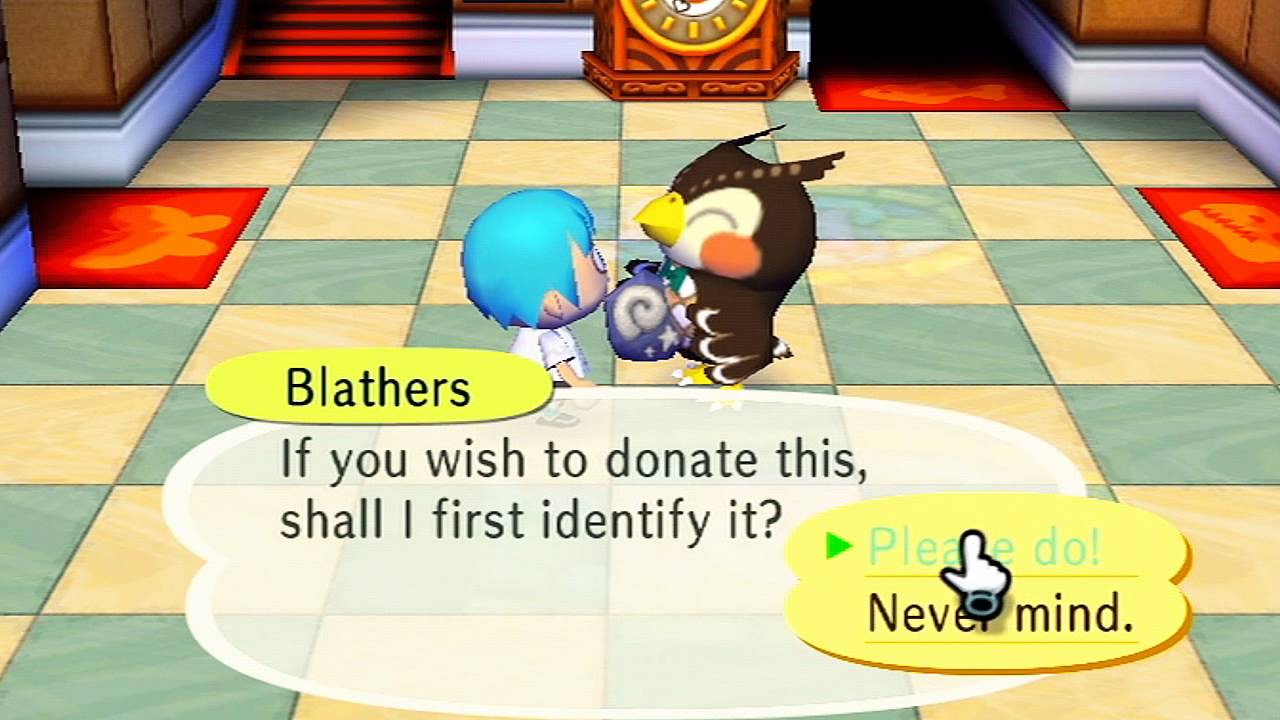
Um. Right. Sorry.
So. Since I last posted, I have relocated to a different city in the southern tier of New York, and I've finished and defended my dissertation (yay!), and am now over educated and sadly under employed. If you need a doctor of history, well, you know where to find me.
But enough about that. It's February, which is the second month. I'm giving this whole review blog thing a second chance. So I've decided to look at second books - the second book in a trilogy/series. I'm starting with Christopher Moore's sequel to A Dirty Job, Secondhand Souls.
Second books are sometimes tricky. Part of the plot depends on an understanding of the book which went before. Often, there is an assumption that the bigger story will be resolved, or continued, in a third book. As a result, one of the things I will be considering is how well the book stands by itself.
Moore approaches second books a little differently from other authors. On the one hand, Secondhand Souls clearly builds on the pre-established narrative of A Dirty Job. On the other hand, Dirty Job had as solid and satisfying an ending as any Moore book ever does (which is to say, Moore introduced a new character in the last 1/4 of the novel which allowed him to tie up the loose ends and put the narrative arc to bed), and so a sequel was not (and never is) a foregone conclusion. Consequently, this book has several parts where having read the first book would enhance the experience of reading this book, but no places where having read the first book was essential to enjoying this second book. If that makes sense.
So, here's the nut-shell description of the first book. Charlie Asher collects the souls of people who die in an unresolved state, vis a vis the afterlife. Those souls and then pinned to physical objects which he sells in his secondhand shop. Folks without souls are drawn to the ensouled objects, and buy them, thus acquiring a soul. Supernatural recycling. Oh, also, Asher's daughter is the embodiment of Death. Asher has some wacky adventures, fights with some Celtic crow goddesses, falls in (unlikely) love with a Buddhist nun, and then dies. We open book 2 with Ahser's soul preserved in a creature constructed, with loving care, by Audrey, the nun, out of taxidermy and lunch meat. His daughter, Sophie (now five) believes he is dead. And something screwy is taking place with the recovery of souls.
Returning in this kooky romp are Minty Fresh, the green-clad owner of a second-hand record store, Alphonse Riviera, once a cop, now the owner of a used book store, and Lily Darquewillow Elventhing Severo, fabulous Goth princess, and most excellent suicide hotline call center worker. New characters include Jean-Pierre Baptiste, a janitor, and Theeb, a spork-wielding leader of taxidermy lunch meat creatures. For all the zaniness, there is some depth here too. What does "death" mean, in a cosmic sense? What is the soul, and what do we do with it? How does love endure, even across centuries? What, in the end, is a "booty nun?"
If you liked A Dirty Job, you'll enjoy this. If you like wacky, absurdist fiction, this is a good book for you. If you like the sensation of shock which comes from walking into the bathroom at midnight to find that the cover art glows in the dark, then this is most definitely a book you should check out.
Seriously. It glows in the dark. According to the jacket notes, Beeteeth is responsible - well played, Beeteeth, well played indeed.
Sunday, October 7, 2012
Review post, 10/7/2012
So were trying an experiment. This weekend we're in Virginia, visiting in-laws (and the Green Valley Book Fair!) and we have not brought the laptop. Instead, we have the tablet. We already know that I can write reviews on the tablet, now we're determining if we can do with the tablet as a primary technology device. So far so good.
Two books this week.
Jill Lepore - The Mansion of Happiness
Lepore is rapidly becoming my favorite historian. She writes a nice clear prose, uses lots of discursive endnotes, and shares my view on what History ought to be - an argument supported by stories. This book is an ambitious project, an attempt to address the history of life itself.
Well, perhaps. More the history of the discussion/ views of American thinkers on the various stages of life from conception to death. Along the way, Lepore tells stories about a series of fascinating characters including Milton Bradley (can't talk about life without talking about Life, the game), E.B. White (childhood as viewed through the creation of children's literature), and the Gilbreths (Cheaper by the Dozen - a discussion of Scientific Management, and how it affected work and adulthood).
Topics in the book include breastfeeding, sex-ed, and cryogenics. Each chapter stands more or less by itself - many were originally essays in The New Yorker, more E.B. White - which makes the book nice and easy to read in chunks. Lepore's chatty style of writing makes the book easy to read in long stretches too - a very nice balance. Additionally, Lepore is one of those authors who, while you are reading her work, you feel compelled to share snippets with whomever is lucky enough to be in the room with you.
In the end, a delightful book, highly recommended.
Robin McKinley - Sunshine
An older work, a hold over from Vampire Month last year (February is coming - what should I do this time?). McKinley likes to play with literary conventions, and this book is a good illustration of this. Instead of rapid action, the book slowly unfolds. Instead of front loading a lot of exposition, McKinley unwraps her world building carefully over the course of the novel. Instead of clean resolutions, McKinley leaves her readers with a messy ending. Admittedly, perhaps not for all readers, but if your in the mood for a moody, complex novel about vampires, baking, being human, and staying safe (psychologically, politically, emotionally) in a time of perpetual war (vampires, weres, demons as stand-ins for terrorists?) then this book is for you.
Two books this week.
Jill Lepore - The Mansion of Happiness
Lepore is rapidly becoming my favorite historian. She writes a nice clear prose, uses lots of discursive endnotes, and shares my view on what History ought to be - an argument supported by stories. This book is an ambitious project, an attempt to address the history of life itself.
Well, perhaps. More the history of the discussion/ views of American thinkers on the various stages of life from conception to death. Along the way, Lepore tells stories about a series of fascinating characters including Milton Bradley (can't talk about life without talking about Life, the game), E.B. White (childhood as viewed through the creation of children's literature), and the Gilbreths (Cheaper by the Dozen - a discussion of Scientific Management, and how it affected work and adulthood).
Topics in the book include breastfeeding, sex-ed, and cryogenics. Each chapter stands more or less by itself - many were originally essays in The New Yorker, more E.B. White - which makes the book nice and easy to read in chunks. Lepore's chatty style of writing makes the book easy to read in long stretches too - a very nice balance. Additionally, Lepore is one of those authors who, while you are reading her work, you feel compelled to share snippets with whomever is lucky enough to be in the room with you.
In the end, a delightful book, highly recommended.
Robin McKinley - Sunshine
An older work, a hold over from Vampire Month last year (February is coming - what should I do this time?). McKinley likes to play with literary conventions, and this book is a good illustration of this. Instead of rapid action, the book slowly unfolds. Instead of front loading a lot of exposition, McKinley unwraps her world building carefully over the course of the novel. Instead of clean resolutions, McKinley leaves her readers with a messy ending. Admittedly, perhaps not for all readers, but if your in the mood for a moody, complex novel about vampires, baking, being human, and staying safe (psychologically, politically, emotionally) in a time of perpetual war (vampires, weres, demons as stand-ins for terrorists?) then this book is for you.
Thursday, September 27, 2012
Thursday review 9/27/2012
So. The big exciting news in my world is the purchase of a new electric toy; a Google nexus. Which toy I am learning what I can do with. (That sentence needs to be dragged out and shot.) Anyway, that makes it easy to read e-books, like this week's review:
James Hutchings - The New Death
James sent me a review copy of this book, and offered to do a guest post. Which was very nice of him. The book is a collection of short fiction, flash fiction, and poetry. It's the sort of collection which a relatively new writer might put together after several years of writing, and so it clearly reflects a growing and evolving talent. That actually makes it a little difficult to review, because, frankly, the collection is a little uneven.
High points - a series of stories set in Telelee, which have a decided Leiber flavor. At their best, these stories are pleasantly cynical in their tone with being bitter. Sometimes, though, they dip below that cynical/bitter line. Also, Leiber gave us guides to Lanhkmar in the persons of Fafhrd and the Grey Mouser - Hutchings has no such heroes. Still, I would love to see a longer work in this setting.
Hutchings also offers a series of flash fiction and short shorts which echo Asimovian long-form puns. Now, some of you don't appreciate puns - you are either more or less evolved than me, depending on your point of view. I am a pun aficionado, and I consider Asimov to be a master of the form. Hutchings comes close, but misses as often as he hits. My key problem is that a long pun needs to be played straight right up to the end, and Hutchings likes to wink broadly at his audience as the puns unfold, which spoils things for me. Still, I'd you like puns - well, this is worth the price of admission.
The best piece in the collection is a long autobiographical-ish piece which has considerable heart, a creepy twist, and a nicely set up bite at the end - a perfect short story, and a gem here.
I didn't dig the poetry, for the most part. There were a few epigrammatic pieces that were OK, but the long ones - reader, I am ashamed to admit I skipped them. Your mileage may vary depending on how much you like poetry.
So. Worth buying and easy to get. The New Death and others is now available from Amazon, Smashwords and Barnes & Noble. James Hutchings also has a new serial novel available here. The Case of the Syphilitic Sister is a detective / superhero story set in a two-fisted version of the 1930s.
James Hutchings - The New Death
James sent me a review copy of this book, and offered to do a guest post. Which was very nice of him. The book is a collection of short fiction, flash fiction, and poetry. It's the sort of collection which a relatively new writer might put together after several years of writing, and so it clearly reflects a growing and evolving talent. That actually makes it a little difficult to review, because, frankly, the collection is a little uneven.
High points - a series of stories set in Telelee, which have a decided Leiber flavor. At their best, these stories are pleasantly cynical in their tone with being bitter. Sometimes, though, they dip below that cynical/bitter line. Also, Leiber gave us guides to Lanhkmar in the persons of Fafhrd and the Grey Mouser - Hutchings has no such heroes. Still, I would love to see a longer work in this setting.
Hutchings also offers a series of flash fiction and short shorts which echo Asimovian long-form puns. Now, some of you don't appreciate puns - you are either more or less evolved than me, depending on your point of view. I am a pun aficionado, and I consider Asimov to be a master of the form. Hutchings comes close, but misses as often as he hits. My key problem is that a long pun needs to be played straight right up to the end, and Hutchings likes to wink broadly at his audience as the puns unfold, which spoils things for me. Still, I'd you like puns - well, this is worth the price of admission.
The best piece in the collection is a long autobiographical-ish piece which has considerable heart, a creepy twist, and a nicely set up bite at the end - a perfect short story, and a gem here.
I didn't dig the poetry, for the most part. There were a few epigrammatic pieces that were OK, but the long ones - reader, I am ashamed to admit I skipped them. Your mileage may vary depending on how much you like poetry.
So. Worth buying and easy to get. The New Death and others is now available from Amazon, Smashwords and Barnes & Noble. James Hutchings also has a new serial novel available here. The Case of the Syphilitic Sister is a detective / superhero story set in a two-fisted version of the 1930s.
Monday, September 24, 2012
A Guest Post
First, I'm going through some re-evaluation of my time at the moment. I thinking I might shift my review post to Thursdays, for reasons. In the meantime, here's a guest post from James Hutching's whose collection of short stories, The New Death, I am reading and hope to review later this week. James is part of a new(ish) wave of authors making use of e-publishing to leverage the web into a new model of book marketing. In his post, he explains how that works, in regards to protecting his intellectual property, and why he has chosen that route.

"Many writers, whether published or just starting out, are very nervous that someone else will steal their work, whether that be another writer using their ideas in their own stories, or someone making pirated copies of their books. When I put out a collection of my writing, I specifically gave permission for anyone at all to copy my ideas, or even to cut and paste whole stories. I also contacted the Pirate Party, a worldwide network that wants to lessen copyright, and told them that I was giving anyone permission to put my ebook on file-sharing sites. In this post I hope to show why I went against common wisdom.
Creative Commons
I used a free service called Creative Commons. Creative Commons is useful for people who want to give the general public permission to use their work, but with restrictions. In my case I didn't mind people using my work for non-profit purposes, such as posting on a blog, but I didn't want to allow anyone to make money off it. Similarly I wanted anyone who used it to give me credit. I could have just listed these things myself. However I'm not a lawyer, and perhaps I would have worded it wrong so that someone could twist what I said to do more than I meant. Also I could have been unclear about what I was allowing and what I wasn't allowing. Sure, someone could email me and ask, but the whole purpose of having a written statement is so that people don't have to ask.
Creative Commons has a series of different licenses, which give permission to do different things. They're all legally 'tight', and they're all summarized in plain language. So all you have to do is go to their site and answer a series of questions, to get to the license that does what you want. In my case I used the Attribution Non-Commercial License.
Why?
That's what I did. But why? Common sense would suggest that I'm giving something away for free that I could be selling. However I believe that, in the long run, I'll be better off. The main reason is that I've seen how many people are, like me, trying to get their writing out there. Go to Smashwords and have a look at the latest ebooks. Then refresh the page ten minutes later, and you'll probably see a whole new lot. The problem that new writers face isn't that people want to steal your work; it's getting anyone to show an interest in your work at all. If someone passes on a pirated copy of my work, it might get to someone who's prepared to buy it - and that someone would probably have never heard of me otherwise. Even if they don't want to pay for what they read, I might come out with something else in the future, and perhaps paying 99c for it will be easier than hunting it down on a file-sharing site.
Science fiction writer Andrew Burt tells the story of someone who disliked his book, and to get back at him decided to put a copy on a file-sharing site. The effect was that he got a small 'spike' in sales immediately afterwards.
I also have some less selfish motives. Many people would assume that the purpose of copyright is to protect authors and creators. Leaving aside the fact that someone else often ends up with the rights (how many Disney shareholders created any of the Disney characters? How many shareholders in Microsoft have ever written a line of code?), that doesn't seem to have been the intention in the past. The US Constitution says that Congress has the power "to promote the Progress of Science and useful Arts, by securing for limited Times to Authors and Inventors the exclusive Right to their respective Writings and Discoveries." Note that protecting 'intellectual property' isn't mentioned. The authors of the Constitution seemed to see the point as getting ideas out there where people can use them: almost the exact opposite of keeping them 'safe' and 'protected'.
The original idea of copyright seems to have been a sort of deal: you have an idea, and we want you to get it out into the world where it will do some good. To encourage you to do that, we'll give you a monopoly on its use for a limited time. After that, anybody can use it (it will enter the 'public domain').
A lot of people don't know that copyright used to give a lot less protection than it does now, especially in the United States. In the US, it used to be that works were copyrighted for a maximum of 56 years. Today copyright in the US can last for over 100 years. In fact Congress keeps extending the time. In practice, they're acting as if they never want ideas to go into the public domain.
This is great for the owners of 'intellectual property'. But it's hard to see how this "promotes the Progress of Science and useful Arts," or how forever is a "limited time." In a sense it's a theft from the public. Anyone who publishes work has accepted the deal that the law offers, of a limited monopoly in return for making their idea known. Congress has been giving them more and more extensions on that monopoly, but doesn't require them to do anything to earn it.
It probably doesn't matter that much that Disney still owns Mickey Mouse, or that Lord of the Rings is still under copyright. But remember that these laws don't just apply to the arts. Similar laws apply to science as well. So a life-saving invention could be going unused, because its owner wants too much money for it, or because it's tied up in court while two companies fight about who owns it.
Conclusion
I'm far from an expert on either the law or the publishing industry. However I hope that I've given you, especially those of you who might be thinking about publishing some writing, a different take on the whole issue of whether authors should worry about their ideas being stolen. At least I hope I've shown you that there's a different way of thinking about it, and that that way doesn't require you to just give up on making money; in fact that it might be more profitable as well as better for society."
---
bio: James Hutchings lives in Melbourne, Australia. He fights crime as Poetic Justice, but his day job is acting. You might know him by his stage-name 'Brad Pitt.' He specializes in short fantasy fiction. His work has appeared in Daily Science Fiction, fiction365 and Enchanted Conversation among other markets. His ebook collection The New Death and others is now available from Amazon, Smashwords and Barnes & Noble. He blogs daily at Teleleli.
---
This article is licensed under a Creative Commons Attribution Non-Commercial License.

"Many writers, whether published or just starting out, are very nervous that someone else will steal their work, whether that be another writer using their ideas in their own stories, or someone making pirated copies of their books. When I put out a collection of my writing, I specifically gave permission for anyone at all to copy my ideas, or even to cut and paste whole stories. I also contacted the Pirate Party, a worldwide network that wants to lessen copyright, and told them that I was giving anyone permission to put my ebook on file-sharing sites. In this post I hope to show why I went against common wisdom.
Creative Commons
I used a free service called Creative Commons. Creative Commons is useful for people who want to give the general public permission to use their work, but with restrictions. In my case I didn't mind people using my work for non-profit purposes, such as posting on a blog, but I didn't want to allow anyone to make money off it. Similarly I wanted anyone who used it to give me credit. I could have just listed these things myself. However I'm not a lawyer, and perhaps I would have worded it wrong so that someone could twist what I said to do more than I meant. Also I could have been unclear about what I was allowing and what I wasn't allowing. Sure, someone could email me and ask, but the whole purpose of having a written statement is so that people don't have to ask.
Creative Commons has a series of different licenses, which give permission to do different things. They're all legally 'tight', and they're all summarized in plain language. So all you have to do is go to their site and answer a series of questions, to get to the license that does what you want. In my case I used the Attribution Non-Commercial License.
Why?
That's what I did. But why? Common sense would suggest that I'm giving something away for free that I could be selling. However I believe that, in the long run, I'll be better off. The main reason is that I've seen how many people are, like me, trying to get their writing out there. Go to Smashwords and have a look at the latest ebooks. Then refresh the page ten minutes later, and you'll probably see a whole new lot. The problem that new writers face isn't that people want to steal your work; it's getting anyone to show an interest in your work at all. If someone passes on a pirated copy of my work, it might get to someone who's prepared to buy it - and that someone would probably have never heard of me otherwise. Even if they don't want to pay for what they read, I might come out with something else in the future, and perhaps paying 99c for it will be easier than hunting it down on a file-sharing site.
Science fiction writer Andrew Burt tells the story of someone who disliked his book, and to get back at him decided to put a copy on a file-sharing site. The effect was that he got a small 'spike' in sales immediately afterwards.
I also have some less selfish motives. Many people would assume that the purpose of copyright is to protect authors and creators. Leaving aside the fact that someone else often ends up with the rights (how many Disney shareholders created any of the Disney characters? How many shareholders in Microsoft have ever written a line of code?), that doesn't seem to have been the intention in the past. The US Constitution says that Congress has the power "to promote the Progress of Science and useful Arts, by securing for limited Times to Authors and Inventors the exclusive Right to their respective Writings and Discoveries." Note that protecting 'intellectual property' isn't mentioned. The authors of the Constitution seemed to see the point as getting ideas out there where people can use them: almost the exact opposite of keeping them 'safe' and 'protected'.
The original idea of copyright seems to have been a sort of deal: you have an idea, and we want you to get it out into the world where it will do some good. To encourage you to do that, we'll give you a monopoly on its use for a limited time. After that, anybody can use it (it will enter the 'public domain').
A lot of people don't know that copyright used to give a lot less protection than it does now, especially in the United States. In the US, it used to be that works were copyrighted for a maximum of 56 years. Today copyright in the US can last for over 100 years. In fact Congress keeps extending the time. In practice, they're acting as if they never want ideas to go into the public domain.
This is great for the owners of 'intellectual property'. But it's hard to see how this "promotes the Progress of Science and useful Arts," or how forever is a "limited time." In a sense it's a theft from the public. Anyone who publishes work has accepted the deal that the law offers, of a limited monopoly in return for making their idea known. Congress has been giving them more and more extensions on that monopoly, but doesn't require them to do anything to earn it.
It probably doesn't matter that much that Disney still owns Mickey Mouse, or that Lord of the Rings is still under copyright. But remember that these laws don't just apply to the arts. Similar laws apply to science as well. So a life-saving invention could be going unused, because its owner wants too much money for it, or because it's tied up in court while two companies fight about who owns it.
Conclusion
I'm far from an expert on either the law or the publishing industry. However I hope that I've given you, especially those of you who might be thinking about publishing some writing, a different take on the whole issue of whether authors should worry about their ideas being stolen. At least I hope I've shown you that there's a different way of thinking about it, and that that way doesn't require you to just give up on making money; in fact that it might be more profitable as well as better for society."
---
bio: James Hutchings lives in Melbourne, Australia. He fights crime as Poetic Justice, but his day job is acting. You might know him by his stage-name 'Brad Pitt.' He specializes in short fantasy fiction. His work has appeared in Daily Science Fiction, fiction365 and Enchanted Conversation among other markets. His ebook collection The New Death and others is now available from Amazon, Smashwords and Barnes & Noble. He blogs daily at Teleleli.
---
This article is licensed under a Creative Commons Attribution Non-Commercial License.
Subscribe to:
Posts (Atom)
Subscribe To


 Posts
All Comments
Posts
All Comments