So, I should probably let you all know what I've been up to. This week, as you know, I've been doing research at the Library of Congress. Which is to say, I've been staring into the Past, with only the barest of filters between me and the raw, unadulterated chronos. I've been reading newspapers from 1945 and 1946, hunting for evidence of ... well, wait - here, I can link you in, and you can share. Brace yourself, and then click here to stare into the past.
Historically, this is actually pretty exciting. It's one of those things where you can ask questions about a thing, and get into arguments about it which have no logical conclusions, because the event is far enough ago that it has no meaningful effect on the current period. My contention is that this movement forms an important link between the movement for women's suffrage and the movement against atomic bomb testing in the early 1950s. But it really doesn't matter - it's just cool to look at, on some level.
Anyway, that's meant that I've been reading a lot this week. Trashy books, as usual. Here's the rundown:
William Deitz - At Empire's Edge
Have you ever wondered why folks from the northwestern US are so mellow? It's because Deitz has been hoarding the region's supply of exclamation points for decades, and the scattering them through his books. Only the Typeset Treaty of 1872 (which concluded the short but vicious Newspaper War of 1872) prevents him from tapping the strategic punctuation reserves in British Columbia, for which we can all be grateful. Oh, also? Deitz likes sentence fragments. So, this is a book about the last surviving member of an elite space police unit, forced to track down a homicidal shape shifter before said killer kills an important member of the Uman Empire's government. Oh, and avenge the death of his buddies. It has a lot of exclamation points. And sentence fragments. To indicate excitement and tension.
The characters weren't bad, but the writing was appalling. Save it for reading while drunk.
Simon Green - Ghost of a Chance
I've contended that Green writes trashy books as an exercise in cynical irony. That is, he writes trashy books because he knows he can get away with it. Green's books often feel derivative, with overly complex plots (often involving time travel) and needlessly intricate inside jokes (like sharing characters across different story lines). At the same time, the books are exceedingly well written, as if Green recognizes that he's writing a trashy book, and has decided to write the hell out of it. As a result, the books are highly entertaining, if a little disappointing. I've often suspected that he could write classy books if he wanted to. This book was, actually, kinda classy.
A team of oddball experts descends into the London Underground to figure out why a ghost has taken over one of the stations. Another team of oddballs is also in the Underground, seeking knowledge for their own nefarious purposes. The two teams end up having to cooperate in order to defeat a really big, nasty thing. So far, so "seen it before". But, the ghost-y stuff is actually pretty creepy, and I kinda liked the characters (which is good, because there will be sequels). Green does a good job of setting up a new series with new characters involved in new stuff. It's not like any other urban (dark) fantasy (horror) stuff I've seen, and I actually kinda liked it.
Alex Archer - Rogue Angel: Sacrifice
Oh. God. This book was awful. I mean, the Rogue Angel series isn't exactly high art to begin with, but this one didn't even live up to previous lows. Anja Creed (wielder, for some un-specified reason, of Joan of Arc's sword) is in the Philippines, held captive by Abu Sayyaf terrorists. Except, sometimes, they aren't Islamic Fundamentalist terrorists. Sometimes, they are Communist terrorists, for no discernible reason. Then, she escapes, and meets an American sniper, who just happens to be in the vicinity. And they get captured by a tribe of Philippine indigenes, who want to sacrifice them to some sort of creature in a pit.
So, yeah. The book has strong racist overtones. all Muslims are terrorists, or at least all terrorists are Muslims, or at least they pretend to be Muslims when they aren't being Marxist. All exotic locales have some sort of indigenous tribe type which will sacrifice you to their pagan god. It takes an American to save the day, preferably by shooting a brown person. But it's all ok, because the brown person's family gets money! Yay! Also, the book is misogynistic - which, given that the central character is a strong, independent woman, is saying something. Anja spends a great deal of time tied up - in the first scene of the book, she's handcuffed. There is an entirely unnecessary scene in which she has to pee in the jungle. Which then allows a tracker to find her and the sniper - because her pee is especially woman-y. Anja's attempt to solve problems by not shooting brown people almost results in Manila getting nuked (how like a woman!) - luckily, she gets herself out of the way in time for the shooting to happen. There is no sex in the book (despite strong overtones of sex). At the same time, there is no strange gluttony on Anja's part - that must just have been the one book. For all that these books epitomize trashy books, I think I'll skip them for the next trip. You feel free to skip them too.
Janet Evanovich - One for the Money
I liked this one - it was funny, with a strong early-90's vibe. Stephanie Plum as lingerie buyer turned reluctant bounty hunter is delightful. I really liked the characters. The plot was satisfying. The setting was, perhaps, a little overly described - I don't need to know the brand of coffee that Stephanie drinks (ok, it wasn't that bad, but close). I'm also not all that interested in the process whereby Stephanie gets ready for bed, or for going out in the morning. Still, the detail was evocative of Stephanie as a character - she's the sort of person who feels it necessary to describe her breakfast to her audience, so, good craft?
Less forgivable - Evanovich does this thing where she re-caps the previous chapter sometimes, at the beginning of the next chapter - as if she assumes you didn't read the previous chapter. This is a little annoying. Deitz does the same thing, actually - this implies something unpleasant about the way that the author sees their audience.
Despite that, I did enjoy the book, and I will pick up another of these.
Jean Rabe and Martin Greenburg, eds - Steampunk'd
So - an anthology of totally new steampunk short stories. Some of which were really really good. I am, however, going to maunder about steampunk as a genre for a minute before I discuss the stories themselves.
Right. I've talked about this before. The steam refers to the use of steampowered technology. Generally, it means steampowered technology in a Victorian (or Victorianesque) setting, but the technology is closer to our current technology than Victorian - steam powered computers, for instance, or things to that effect. The punk, when steampunk is done right, refers to the characters using steam powered technology to subvert the dominant paradigm - either the dominant paradigm currently in effect, or the paradigm in which they, the fictional characters exist, or both. The best works struggle with both paradigms. A story which doesn't struggle, though - that's just steam. Call it techno-Victorian, perhaps, or neo-Victorian, but it's not steampunk.
See, the thing about steam power is that it happened. The industrial revolution ran on steam power (and water power and wind power, but mostly steam). Our world is based in the steam powered machines of the Industrial revolution, and the mass-produced consumer product driven economy that those machines made possible. So, unless your characters are struggling against the flattening effects of mass-production, or against the crushing effects of rampant industrialization, or something of that nature, you aren't really doing anything new. You're just transposing existing genre bits into a steamy setting - steam powered ray guns! steam powered aliens! steam powered night vision goggles! yadda yadda yadda!
So. The stories I really liked from the collection:
Michael Stackpole - "Chance Corrigan and the TickTock King of the Nile"
Corrigan uses steam powered machines to improve the lot of the common Egyptian, while struggling with an industrialist who wants to use steam powered machines to make himself rich.
Jody Lynn Nye - "Portrait of a Lady in a Monocle"
A feisty lady proves that, despite Victorian thoughts about women, she is as capable an inventor as the next guy, even if she doesn't have a penis.
Paul Genesse - "The Nubian Queen"
Fantasy/sci-fi stories don't need to be set in lily-white Europe - they can happen in Africa! With an exploding zepplin and cannons carried by rhinos - why not!
Skip and Penny Williams - "The Imperial Changeling"
Who says that the hero has to be the one challenging the dominant paradigm? Here, technology attempts, and fails, to overthrow the European system of magic and monarchy - and that's ok.
Special mention to Robert Vardeman - "The Transmogrification Ray" - I haven't finished this story yet, but I loved that he includes a reference to Chance Corrigan from Stackpole's story - brilliant!
Special mention to William Dietz - "The Battle of Cumberland Gap" - nicely steamy, although not a lot of punk; basically steam enhanced mil-fic. With sentence fragments galore. But I liked the characters.
The remaining stories - it's not so much that a I didn't like them; for the most part they were fine. I had problems with characters in a couple, and plot in another, and a mild lack of punk throughout.
Final thought - that title! Someone picked that title! Punk'd and punk - not at all the same thing. Don't be put off, though; the stories are, generally, quite good - a nice place to begin playing with steampunk, if you aren't already.
That's all for now! I'll wrap up with some trashy books next week too, because I get to ride the train to Philly! Woohoo! So my reading is not done yet.
Showing posts with label Archer. Show all posts
Showing posts with label Archer. Show all posts
Friday, January 13, 2012
Monday, June 27, 2011
Much Belated Friday Review Post, 6/27/2011, more trashy books AND a Library Monday Post.
So, I got back home yesterday evening, after a return trip turned much longer than expected by an exploding tire. No injuries, although we had not really budgeted for a pair of new tires right now - we were thinking we might buy a full set of 4 closer to Christmas. Oh well. Anyway, I was in no fit state to make a post last night, so here it is now. I'm going to stick the Library Post on the end, too. Also, expect TWO chapters of Hickey of the Beast on Wednesday - ooo!
Two Sundays ago was, of course, Father's Day. My family gave me a tie, and a desk toy, and a book -
Thomas Ayres, That's Not in my American History Book
This is a cute book of off beat history. It presents seldom heard stories of historical figures, and of people who ought to be historical figures, from American history. Clearly well researched, Ayres contends (quite rightly) that the way that history is presented throughout most of our educational lives is a) dry and b) leaves out a lot of important people who happen not to be white, or male, or either. Ayres argues for a broader history, rather than an equally narrow history which presents the stories of non-white, male protagonists at the expense of the standard narrative. I'm inclined to agree - certainly at the elementary and high school level, it should not be assumed that students already know the "standard" narrative. However, my job at the college level would be a lot easier if students came in with a sense that history was exciting, and inclusive. I think books like Ayres' work are valuable, if a little informal. A fun book, designed to trigger a desire to read more into the historical record - I recommend it for anyone struggling with a dry textbook, or desirous of shocking a boring history teacher.
Now, onto the trashy books!
This time out, I was much more successful in my trashy book selection. Over the course of the week, my books became increasingly less trashy, however - I started out strong, but couldn't sustain. Oh well.
Alex Archer - Rogue Angel: Footprints
These books, the Rogue Angel books, have, over the past year or so, become my go-to books for trash. They are the definition of trash - utterly disposable, with very little in the way of redeeming qualities. They're written by a committee - there is no Alex Archer, each book is written by someone else (this one was by John Merz - there's a note on the copyright page thanking him for his contributions to the work). There doesn't appear to be a strong style guide for the series, either. Annja Creed is the recipient of Joan of Arc's sword (which, I thought, was Detective Sara Pezzini's weapon of choice, but who knows) which ought to grant her some sort of mystical powers, but really doesn't. Well, beyond the fact that she can pull this sword out of the "otherness" when she needs a sword. She works as the host of the TV show Chasing History's Monsters, which sends her to remote places of the planet to investigate strange reports of things like mummies, or yetis, or the spear of Gengis Khan. In this capacity, or entirely separate from it (as in this book) Annja encounters a far more mundane monster - drug smugglers, or human traffickers, or whathaveyou - which she deals with by chopping the villain up with her sword. Beyond that, details are fairly loose.
The books seem to allude to some sort of story arc in which Annja learns of her destiny and the nature of the sword. It's possible that this unifying story arc takes place in some of the books I haven't read - it certainly isn't in the ones I have read. Also missing - any sense of coherent motivation for the villain of the book, much respect for the cultural trappings in the book's background, or a realistic approach to life and/or mystical objects on the part on Annja. This book was particularly egregious - the villains are all over the place (is it money? is it power? Why are you doing what you're doing? Never mind - we'll just shoot you, or chop you up, or smother you in your own cocaine). Mysticism is provided courtesy of a couple of Native Americans - plains Indians transplanted to the Pacific Northwest specifically so that Annja has a Tonto to do her dirty work for free. Annja travels to the wilds of Oregon without a change of clothes or a tent or a cell phone or anything. Consequently, she spends several scenes in the nude, while clothes are drying, or being washed or whatever. She does not have sex, but this probably has a lot to do with the fact that none of the males in the book are sexually available. She does not consume inhuman quantities of food; something earlier books had suggested she did - no style guide. Ultimately, these are just not very good books, and perhaps there is no point in thinking about them beyond that.
Annette Blair - The Kitchen Witch
My wife described this as so fluffy it would probably blow away, and she's right. This was a cute little book. Logan Kilgarven is a single dad with a new job as the television producer for the local channel in Salem, MA. Melody Seabright is his downstairs neighbor - a "raven haired beauty" rumored to be a witch. Kilgarven arranges for her to interview for the position of the chef on his station's cooking show - despite the fact that there is no evidence that she can cook at all. Everything works out ok in the end, naturally.
I loved Blair's characters - they were hesitant and passionate and mostly real. I think, perhaps, it took to long for them to sleep with each other, but not alarmingly so. The ending was a little too pat, but you want a nice happy ending in a romance novel, so no real complaint there. The book was witty and bubbly and fun, but didn't have a whole lot of substance. Fluffy, and largely disposable. It appears that this is the first book in a trilogy of "accidental witches" - I might have to look up the rest of them.
Dan Vining - The Quick
For the most part, this was a straight forward hard-boiled detective novel. Jimmy Miles is a detective in Hollywood, hired by Jean Kantke to investigate the murder of her mother, more than a decade ago. Her father, a promising assistant DA, was convicted of and executed for the murder - Kantke wants to know if he was innocent.
In true hard-boiled form, Miles looks into the mystery by using brute force; following leads to their bitter end, and realizing that he's getting close to something true when people start threatening his life. The mystery is solved as much by Miles' judicious use of violence as it is by investigation in a classic sense, although Miles is a smart character; not all fists and pistol whipping.
Additionally, Miles is a Sailor - part of some sort of shadowy group of folks in and around the Hollywood area. The Sailors, we learn, are people who discovered, at the point of their own death, that they cannot die. That is, an event occurs which should kill them, and which results in a body (Miles suggests that this is so the family has something to bury), but someone walks away as well. That someone - the Sailor - cannot die, although the body can be hurt rather extremely (it is implied.) It becomes clear that the Sailors are, in some way, involved in this case, which complicates things rather a lot.
The mystery part of the novel was excellent, I enjoyed it a great deal. I think it works without the whole Sailor bit. The Sailor thing has considerable potential, but I don't think Vining lives up to that potential. Too much about the Sailors is left unexplained, and, indeed, unexamined. When did the phenomenon begin? To what extent has it been investigated? How extensive is the network of mutual aid? Are there Sailors elsewhere, or only in Hollywood? What else do they do? All lovely questions that demand answers that Vining doesn't offer. And since the Sailors are presented as a fairly central element of the novel, well. Frankly, I want more. I liked the characters, I liked the writing, I'd read another, if there were another to read, but this is only just a cut above trash - and it doesn't need to be. It's a self inflicted wound!
Jules Bass - Headhunters
I think Mr. Bass writes movie scripts at least part of the time. This book reads, delightfully, as a movie. Four women from New Jersey decide to up their game in an effort to find love and marriage and fortune. They rent some glitzy dresses and head for Monte Carlo, pretending to be four of the richest women in the world. They plan to put the hotel expenses on their credit cards and deal with the consequences later - their goal is to attract rich men, with the idea that the rich men will either marry them, or at least cover their expenses while in Monte Carlo.
They attract the attention of four gentlemen of leisure, one of whom is a professional escort, and the other three who have joined him in escorting rich, unattached women in the past. None of them are themselves rich (for a variety of reasons) but they can pretend. Their goal - to attract the attention of these four clearly wealthy women, with the hopes that the women will either marry them, or at least cover their expenses for a little while.
You can see where this is going to get complicated, right? Both sides of the group are desperately trying to con the other side of the group. It would be easy for Bass to set up one group as the "bad" group and have the reader root for the "good" group. Instead, Bass creates two groups of sympathetic characters, striving to get out of the mess with their dignity intact. Add to the mix an over worked and understaffed police officer, his over worked and over sexed assistant, and a hapless jewel thief... Yeah. It has all the bits that a great rom com movie requires. Bass manages to make it work as a novel - I loved the characters, I loved the plot, I loved the resolution - but it would be better on the screen.Oh, and look! It may, sort of, end up there - Monte Carlo began filming last year, and may come out later this year. It's not quite the plot, but it's based on the novel.
J.D. Robb - Holiday in Death
J.D. Robb is, of course, romance writer Nora Roberts. She has a whole spinner rack to herself at my library, what with the romance novels and the mystery novels. Clearly, she is what trashy novelists aspire to.
This is from her "in Death" mystery novels. Set in the New York of 2035, these novels follow the exploits of Lieutenant Eve Dallas. This is the earliest of the series available when I was looking - I've been wanting to read these, but I wanted to start at the beginning. This time, I said "frell it," and grabbed the book closest to the beginning, on the grounds that it probably wouldn't matter. I was mostly right.
It's Christmas. Dallas is recently married to Roarke (no last name), who is sort of a romance novel cliche, I think - he's Irish, he's gorgeous, he's a rogue, he's rich, his love-making takes Dallas' breath away routinely. Never mind. Dallas responds to a domestic disturbance call and discovers a rape-murder, which looks like it's the first of a series of serial murders. It is, of course - there are several, they are somewhat graphic, you may consider this a trigger warning for the novel. The connection between the murders seems to be a computer dating service, Personally Yours.
As a mystery novel, this is a fantastic police procedural, full of gritty realism, fights with forensic experts, hard nosed cops who've seen it all, wet behind the ear rookies who haven't had the idealism beaten out of them yet, and the mystery is solved by dogged tracking of clues, while the cops are restrained by their need to get evidence legally for a court case. Lovely stuff, I eat it up with a spoon. Mixed into it, Robb reminds us that she's a romance novelist in her day job, so Dallas and Roarke have lots and lots of really steamy sex - seems like every other chapter. It gets distracting. I found myself skipping the sex to get to the plot. No, really. On the other hand, I think Robb is also setting things up to balance the unhealthy sex of the murderer with the healthy sex of the detective, which is nicely done.
The future stuff is a little dated, because the book was published in 1998 - this is the 2035 of more than a decade ago. Some of the gadgets are old hat now - the future ain't what it used to be, I guess. Also, I expected a further twist at the end, and it didn't come, so the denouement takes longer than I had expected - a quick, punchy ending would have been ... well, it would have been different, anyway. Still, a good novel. I really liked Dallas, and I'll pick up more of these at another time.
Jim Butcher, Simon Green, Kat Richardson, Thomas Sniegoski, Mean Streets
I finished the week out with this collection of four novellas, featuring mystical detectives Harry Dresden, John Taylor, Harper Blaine, and Remy Chandler. I've mentioned Dresden and Chandler before - Blaine died for a minute or two, and since then she can see and speak with ghosts, for all the help they provide. John Taylor is the best PI in the Nightside, the mystical heart of London where dreams and nightmares rub shoulders.
In Butcher's contribution, Harry Dresden tries to protect his friend, Michael Carpenter, former Knight of the Cross. The story, which opens the collection, sparkles delightfully, and, as always, shows that Butcher is writing smart, witty, and surprisingly deep novels which masquerade as trashy paperbacks. There's a lot of heart in this novella, and it really makes the collection worth the effort entirely on its own.
I don't really like Simon Green - he tries way too hard, and packs cliches on top of cliches. His novels are quirky, and they should be right up my alley - all the sort of "secret world behind the real world" stuff, but, meh - they just rub me the wrong way. Anyway, John Tyler, who can find anything, given a little time, helps a young woman find her husband who she suspects is having an affair. He is - with a computer. This is all presented as shocking, but somehow it doesn't work.
Kat Richardson gives us a quirky novella as well, but this one is sweet. Blaine sets off to fulfill a "last will and testament" job - you know, "stay in this house overnight and inherit everything" type thing - she has to transport a small clay dog to a specific gravestone in Mexico on Dios de la Muerto. As you might imagine, ghosts feature. A delightful little story of justice and vengeance. I'm not sure why I haven't read more than the first of the Harper Blaine novels - I'll have to look into that.
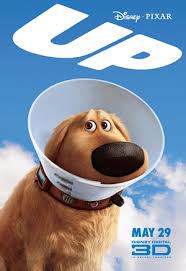
Sniegoski writes mystery novels about fallen angel Remy Chandler. In this novella, Remy investigates the murder of Noah. Yes, that Noah, with the ark. I like Remy. I really like Marlowe, Remy's Labrador - Sniegoski really captures the stupid glee of a large dog. Not unlike Doug, from Up - "I have just met you, and I love you!".
With the Butcher and the Sniegoski as bookends, and Kat Richardson to fill out the roster, you can easily skip the Simon Green, and suddenly this isn't all that trashy at all. A nice way to end the week.
Monday Library Post:
Patrick Rothfuss - The Wise Man's Fear
Sequel, finally, to The Name of the Wind. I fear this book will eat most of a week. I've been putting it off for that reason. Also, I hoped to grab the first book to remind me of the story so far (spoilers for the first book at that link) - alas, it was checked out. I grabbed this anyway; it's a hot property, and if I don't take it now, I don't know when I'll see it again - the cover is already cracking, and the spine threatens to loose pages. (Not on MY watch, though.)
Two Sundays ago was, of course, Father's Day. My family gave me a tie, and a desk toy, and a book -
Thomas Ayres, That's Not in my American History Book
This is a cute book of off beat history. It presents seldom heard stories of historical figures, and of people who ought to be historical figures, from American history. Clearly well researched, Ayres contends (quite rightly) that the way that history is presented throughout most of our educational lives is a) dry and b) leaves out a lot of important people who happen not to be white, or male, or either. Ayres argues for a broader history, rather than an equally narrow history which presents the stories of non-white, male protagonists at the expense of the standard narrative. I'm inclined to agree - certainly at the elementary and high school level, it should not be assumed that students already know the "standard" narrative. However, my job at the college level would be a lot easier if students came in with a sense that history was exciting, and inclusive. I think books like Ayres' work are valuable, if a little informal. A fun book, designed to trigger a desire to read more into the historical record - I recommend it for anyone struggling with a dry textbook, or desirous of shocking a boring history teacher.
Now, onto the trashy books!
This time out, I was much more successful in my trashy book selection. Over the course of the week, my books became increasingly less trashy, however - I started out strong, but couldn't sustain. Oh well.
Alex Archer - Rogue Angel: Footprints
These books, the Rogue Angel books, have, over the past year or so, become my go-to books for trash. They are the definition of trash - utterly disposable, with very little in the way of redeeming qualities. They're written by a committee - there is no Alex Archer, each book is written by someone else (this one was by John Merz - there's a note on the copyright page thanking him for his contributions to the work). There doesn't appear to be a strong style guide for the series, either. Annja Creed is the recipient of Joan of Arc's sword (which, I thought, was Detective Sara Pezzini's weapon of choice, but who knows) which ought to grant her some sort of mystical powers, but really doesn't. Well, beyond the fact that she can pull this sword out of the "otherness" when she needs a sword. She works as the host of the TV show Chasing History's Monsters, which sends her to remote places of the planet to investigate strange reports of things like mummies, or yetis, or the spear of Gengis Khan. In this capacity, or entirely separate from it (as in this book) Annja encounters a far more mundane monster - drug smugglers, or human traffickers, or whathaveyou - which she deals with by chopping the villain up with her sword. Beyond that, details are fairly loose.
The books seem to allude to some sort of story arc in which Annja learns of her destiny and the nature of the sword. It's possible that this unifying story arc takes place in some of the books I haven't read - it certainly isn't in the ones I have read. Also missing - any sense of coherent motivation for the villain of the book, much respect for the cultural trappings in the book's background, or a realistic approach to life and/or mystical objects on the part on Annja. This book was particularly egregious - the villains are all over the place (is it money? is it power? Why are you doing what you're doing? Never mind - we'll just shoot you, or chop you up, or smother you in your own cocaine). Mysticism is provided courtesy of a couple of Native Americans - plains Indians transplanted to the Pacific Northwest specifically so that Annja has a Tonto to do her dirty work for free. Annja travels to the wilds of Oregon without a change of clothes or a tent or a cell phone or anything. Consequently, she spends several scenes in the nude, while clothes are drying, or being washed or whatever. She does not have sex, but this probably has a lot to do with the fact that none of the males in the book are sexually available. She does not consume inhuman quantities of food; something earlier books had suggested she did - no style guide. Ultimately, these are just not very good books, and perhaps there is no point in thinking about them beyond that.
Annette Blair - The Kitchen Witch
My wife described this as so fluffy it would probably blow away, and she's right. This was a cute little book. Logan Kilgarven is a single dad with a new job as the television producer for the local channel in Salem, MA. Melody Seabright is his downstairs neighbor - a "raven haired beauty" rumored to be a witch. Kilgarven arranges for her to interview for the position of the chef on his station's cooking show - despite the fact that there is no evidence that she can cook at all. Everything works out ok in the end, naturally.
I loved Blair's characters - they were hesitant and passionate and mostly real. I think, perhaps, it took to long for them to sleep with each other, but not alarmingly so. The ending was a little too pat, but you want a nice happy ending in a romance novel, so no real complaint there. The book was witty and bubbly and fun, but didn't have a whole lot of substance. Fluffy, and largely disposable. It appears that this is the first book in a trilogy of "accidental witches" - I might have to look up the rest of them.
Dan Vining - The Quick
For the most part, this was a straight forward hard-boiled detective novel. Jimmy Miles is a detective in Hollywood, hired by Jean Kantke to investigate the murder of her mother, more than a decade ago. Her father, a promising assistant DA, was convicted of and executed for the murder - Kantke wants to know if he was innocent.
In true hard-boiled form, Miles looks into the mystery by using brute force; following leads to their bitter end, and realizing that he's getting close to something true when people start threatening his life. The mystery is solved as much by Miles' judicious use of violence as it is by investigation in a classic sense, although Miles is a smart character; not all fists and pistol whipping.
Additionally, Miles is a Sailor - part of some sort of shadowy group of folks in and around the Hollywood area. The Sailors, we learn, are people who discovered, at the point of their own death, that they cannot die. That is, an event occurs which should kill them, and which results in a body (Miles suggests that this is so the family has something to bury), but someone walks away as well. That someone - the Sailor - cannot die, although the body can be hurt rather extremely (it is implied.) It becomes clear that the Sailors are, in some way, involved in this case, which complicates things rather a lot.
The mystery part of the novel was excellent, I enjoyed it a great deal. I think it works without the whole Sailor bit. The Sailor thing has considerable potential, but I don't think Vining lives up to that potential. Too much about the Sailors is left unexplained, and, indeed, unexamined. When did the phenomenon begin? To what extent has it been investigated? How extensive is the network of mutual aid? Are there Sailors elsewhere, or only in Hollywood? What else do they do? All lovely questions that demand answers that Vining doesn't offer. And since the Sailors are presented as a fairly central element of the novel, well. Frankly, I want more. I liked the characters, I liked the writing, I'd read another, if there were another to read, but this is only just a cut above trash - and it doesn't need to be. It's a self inflicted wound!
Jules Bass - Headhunters
I think Mr. Bass writes movie scripts at least part of the time. This book reads, delightfully, as a movie. Four women from New Jersey decide to up their game in an effort to find love and marriage and fortune. They rent some glitzy dresses and head for Monte Carlo, pretending to be four of the richest women in the world. They plan to put the hotel expenses on their credit cards and deal with the consequences later - their goal is to attract rich men, with the idea that the rich men will either marry them, or at least cover their expenses while in Monte Carlo.
They attract the attention of four gentlemen of leisure, one of whom is a professional escort, and the other three who have joined him in escorting rich, unattached women in the past. None of them are themselves rich (for a variety of reasons) but they can pretend. Their goal - to attract the attention of these four clearly wealthy women, with the hopes that the women will either marry them, or at least cover their expenses for a little while.
You can see where this is going to get complicated, right? Both sides of the group are desperately trying to con the other side of the group. It would be easy for Bass to set up one group as the "bad" group and have the reader root for the "good" group. Instead, Bass creates two groups of sympathetic characters, striving to get out of the mess with their dignity intact. Add to the mix an over worked and understaffed police officer, his over worked and over sexed assistant, and a hapless jewel thief... Yeah. It has all the bits that a great rom com movie requires. Bass manages to make it work as a novel - I loved the characters, I loved the plot, I loved the resolution - but it would be better on the screen.Oh, and look! It may, sort of, end up there - Monte Carlo began filming last year, and may come out later this year. It's not quite the plot, but it's based on the novel.
J.D. Robb - Holiday in Death
J.D. Robb is, of course, romance writer Nora Roberts. She has a whole spinner rack to herself at my library, what with the romance novels and the mystery novels. Clearly, she is what trashy novelists aspire to.
This is from her "in Death" mystery novels. Set in the New York of 2035, these novels follow the exploits of Lieutenant Eve Dallas. This is the earliest of the series available when I was looking - I've been wanting to read these, but I wanted to start at the beginning. This time, I said "frell it," and grabbed the book closest to the beginning, on the grounds that it probably wouldn't matter. I was mostly right.
It's Christmas. Dallas is recently married to Roarke (no last name), who is sort of a romance novel cliche, I think - he's Irish, he's gorgeous, he's a rogue, he's rich, his love-making takes Dallas' breath away routinely. Never mind. Dallas responds to a domestic disturbance call and discovers a rape-murder, which looks like it's the first of a series of serial murders. It is, of course - there are several, they are somewhat graphic, you may consider this a trigger warning for the novel. The connection between the murders seems to be a computer dating service, Personally Yours.
As a mystery novel, this is a fantastic police procedural, full of gritty realism, fights with forensic experts, hard nosed cops who've seen it all, wet behind the ear rookies who haven't had the idealism beaten out of them yet, and the mystery is solved by dogged tracking of clues, while the cops are restrained by their need to get evidence legally for a court case. Lovely stuff, I eat it up with a spoon. Mixed into it, Robb reminds us that she's a romance novelist in her day job, so Dallas and Roarke have lots and lots of really steamy sex - seems like every other chapter. It gets distracting. I found myself skipping the sex to get to the plot. No, really. On the other hand, I think Robb is also setting things up to balance the unhealthy sex of the murderer with the healthy sex of the detective, which is nicely done.
The future stuff is a little dated, because the book was published in 1998 - this is the 2035 of more than a decade ago. Some of the gadgets are old hat now - the future ain't what it used to be, I guess. Also, I expected a further twist at the end, and it didn't come, so the denouement takes longer than I had expected - a quick, punchy ending would have been ... well, it would have been different, anyway. Still, a good novel. I really liked Dallas, and I'll pick up more of these at another time.
Jim Butcher, Simon Green, Kat Richardson, Thomas Sniegoski, Mean Streets
I finished the week out with this collection of four novellas, featuring mystical detectives Harry Dresden, John Taylor, Harper Blaine, and Remy Chandler. I've mentioned Dresden and Chandler before - Blaine died for a minute or two, and since then she can see and speak with ghosts, for all the help they provide. John Taylor is the best PI in the Nightside, the mystical heart of London where dreams and nightmares rub shoulders.
In Butcher's contribution, Harry Dresden tries to protect his friend, Michael Carpenter, former Knight of the Cross. The story, which opens the collection, sparkles delightfully, and, as always, shows that Butcher is writing smart, witty, and surprisingly deep novels which masquerade as trashy paperbacks. There's a lot of heart in this novella, and it really makes the collection worth the effort entirely on its own.
I don't really like Simon Green - he tries way too hard, and packs cliches on top of cliches. His novels are quirky, and they should be right up my alley - all the sort of "secret world behind the real world" stuff, but, meh - they just rub me the wrong way. Anyway, John Tyler, who can find anything, given a little time, helps a young woman find her husband who she suspects is having an affair. He is - with a computer. This is all presented as shocking, but somehow it doesn't work.
Kat Richardson gives us a quirky novella as well, but this one is sweet. Blaine sets off to fulfill a "last will and testament" job - you know, "stay in this house overnight and inherit everything" type thing - she has to transport a small clay dog to a specific gravestone in Mexico on Dios de la Muerto. As you might imagine, ghosts feature. A delightful little story of justice and vengeance. I'm not sure why I haven't read more than the first of the Harper Blaine novels - I'll have to look into that.
Sniegoski writes mystery novels about fallen angel Remy Chandler. In this novella, Remy investigates the murder of Noah. Yes, that Noah, with the ark. I like Remy. I really like Marlowe, Remy's Labrador - Sniegoski really captures the stupid glee of a large dog. Not unlike Doug, from Up - "I have just met you, and I love you!".
With the Butcher and the Sniegoski as bookends, and Kat Richardson to fill out the roster, you can easily skip the Simon Green, and suddenly this isn't all that trashy at all. A nice way to end the week.
Monday Library Post:
Patrick Rothfuss - The Wise Man's Fear
Sequel, finally, to The Name of the Wind. I fear this book will eat most of a week. I've been putting it off for that reason. Also, I hoped to grab the first book to remind me of the story so far (spoilers for the first book at that link) - alas, it was checked out. I grabbed this anyway; it's a hot property, and if I don't take it now, I don't know when I'll see it again - the cover is already cracking, and the spine threatens to loose pages. (Not on MY watch, though.)


Friday, September 10, 2010
Friday Review Post? Yes!
Dear merciful deity of your choice! It's Friday, and here's a review! Will wonders ever cease?
Tanya Huff - Blood Lines
This is the one with the mummy. At some point, it becomes clear that Huff is re-thinking the classic movie monsters - vampire, demon-worshiper, werewolf, mummy, zombies/Frankenstein monsters, and finishing up with ghosts. Anyway, this is, I think, my favorite of the series. What I really like about this one is that the monster is actually a monster. I also like the plot line which twists Victoria's beloved police back upon her, and finally, I really really like the point at the end of the book that Victoria and Celluci have been fighting despair for years. All in all, I think, the gem in a fairly stellar series. One more, and I can read the short story collection!
Bruce Cumings - The Korean War
Wow! I was expecting a fairly straight-forward history of the Korean War. This was NOT that book. Cumings covers the basic story in his first chapter, very briefly, and then goes off and does some seriously heavy cultural military history. His basic thesis is that Americans really have no understanding of what happened between 1950 and 1955 on the Korean peninsula, and that this is largely because they (understandably) insist on looking at the events as if they had something to do with the United States. More broadly, Cumings argues that the Korean war was the most visible/violent aspect of a Korean civil war which started in the 1930s with a new level of Japanese repression, and really hasn't ended yet. I've taught this war for several years now as the first of the Cold War proxy-wars, and that will remain an aspect of how I present the material. I will also, having read Cumings, be including the idea that what made Korea different from Vietnam was that both sides of the war (from a Korean perspective) saw themselves as the legitimate rulers of the peninsula. And, from the appropriate points of view, both sides were correct. A further point that Cumings makes is the idea that the United States was on the side of the Japanese collaborators - this was the first instance of the US siding with the repressive dictator because he was less "Communist" than the liberal reformer.
This was a seriously dense book. Cumings gave me lots to think about. He made a serious effort to connect the Korean War to current events, both in Korea and in the Middle East. His broadest possible point was that the Korean War really defined the way in which the United States has fought wars and enacted occupations since the end of World War Two. If, Cumings suggests, we are looking for a point in history where the United States "went wrong", we need look no further than the Korean War. That is, perhaps, too broad a statement to make, but he presents a very convincing argument.
Some final notes - excellent pictures throughout the book, but it needed more maps! Even given that the book was more cultural than military, the maps were entirely inadequate.
Alex Archer - The Spirit Banner
My wife described this book as slush, and she was oh so right. Because I'm sure your curious, no, Anja Creed does not have sex in this novel. Nor, however, does she consume absurd quantities of food in an obvious attempt on the part of the author to sublimate her sex drive. There is no explanation of the series title - Rogue Angel? Anja is not, as far as I've seen, an angel, she's just an archeologist with Joan of Arc's magical mystical sword. In this book, she finds Ghengis Khan's (at one point, a Mongolian calls him Chingis, which was actually his name. It would have been nice to have seen Ms. Creed correct her peers throughout - that would have been a nice touch of academic realism...) tomb. Oh, and has a fight in Mexico which was neither explained nor really resolved. She falls off of a bridge, and has a sword fight in which she reveals that she is, in fact, the bigger person, and an all around nice girl. The author indulges in military porn (that is, he describes, in painstaking detail, all of the military equipment used - this sort of gun, that sort of jeep, the other sort of helicopter, using such and such sort of ammunition, etc etc), and there's an entirely gratuitous scene where the baddy shoots up some of Anja's allies, even though she's not around to see, and never finds out about it. All of this, but despite the provocative cover image (look, I've included it so you can see what I mean - seriously, if this were a romance novel, there would be bodice ripping...), she does not have sex. Next time I have lengthy train rides where I need to put my brain to sleep, I'll grab some more of these.
Molly Crosby - Asleep
A book about the epidemic of encephalitis lethargica of the post WWI period. Fascinating stuff - a disease caused by swelling of the brain which resulted in severe lethargy (to the extent that patients' pulses were often too faint for doctors to sense) and, if the patient woke up, violent mood shifts. Linked, perhaps, to the 1918 flu pandemic, or maybe to a concurrent strep throat epidemic (doctors are still unsure, which makes this whole thing even more interesting).
So, fascinating subject, but I have to question Crosby's organisation. She starts by breaking the book into a series of patient case files - this patient, seen by that doctor, with those symptoms - but she's really telling the story of a small group of neurosurgeons and psychiatrists and such who tried to figure out the disease during the 1920s and '30s. I almost feel as though the book would have been better served by following the doctors instead of the patients - the patient stories felt a little tacked on.
The book has ample endnotes, and an extensive bibliography, but the notes are not cited in the text, which makes it hard to find the reference points. Normally, this wouldn't bother me, but I've just finished the Keegan and the Cumings, and they are both histories written by historians, so in this book, it bugged me. Especially because Crosby includes some truly juicy information in her endnotes, and you wouldn't know it from the main text. Tsk tsk. Seriously.
Also, the glossy photos towards the end of the book really add nothing. All in all, a fair book on an exceedingly creepy and interesting topic.
Tanya Huff - Blood Lines
This is the one with the mummy. At some point, it becomes clear that Huff is re-thinking the classic movie monsters - vampire, demon-worshiper, werewolf, mummy, zombies/Frankenstein monsters, and finishing up with ghosts. Anyway, this is, I think, my favorite of the series. What I really like about this one is that the monster is actually a monster. I also like the plot line which twists Victoria's beloved police back upon her, and finally, I really really like the point at the end of the book that Victoria and Celluci have been fighting despair for years.
All in all, I think, the gem in a fairly stellar series. One more, and I can read the short story collection!Bruce Cumings - The Korean War
Wow! I was expecting a fairly straight-forward history of the Korean War. This was NOT that book. Cumings covers the basic story in his first chapter, very briefly, and then goes off and does some seriously heavy cultural military history. His basic thesis is that Americans really have no understanding of what happened between 1950 and 1955 on the Korean peninsula, and that this is largely because they (understandably) insist on looking at the events as if they had something to do with the United States. More broadly, Cumings argues that the Korean war was the most visible/violent aspect of a Korean civil war which started in the 1930s with a new level of Japanese repression, and really hasn't ended yet. I've taught this war for several years now as the first of the Cold War proxy-wars, and that will remain an aspect of how I present the material. I will also, having read Cumings, be including the idea that what made Korea different from Vietnam was that both sides of the war (from a Korean perspective) saw themselves as the legitimate rulers of the peninsula. And, from the appropriate points of view, both sides were correct. A further point that Cumings makes is the idea that the United States was on the side of the Japanese collaborators - this was the first instance of the US siding with the repressive dictator because he was less "Communist" than the liberal reformer.
This was a seriously dense book. Cumings gave me lots to think about. He made a serious effort to connect the Korean War to current events, both in Korea and in the Middle East. His broadest possible point was that the Korean War really defined the way in which the United States has fought wars and enacted occupations since the end of World War Two. If, Cumings suggests, we are looking for a point in history where the United States "went wrong", we need look no further than the Korean War. That is, perhaps, too broad a statement to make, but he presents a very convincing argument.
Some final notes - excellent pictures throughout the book, but it needed more maps! Even given that the book was more cultural than military, the maps were entirely inadequate.
Alex Archer - The Spirit Banner
My wife described this book as slush, and she was oh so right. Because I'm sure your curious, no, Anja Creed does not have sex in this novel. Nor, however, does she consume absurd quantities of food in an obvious attempt on the part of the author to sublimate her sex drive. There is no explanation of the series title - Rogue Angel? Anja is not, as far as I've seen, an angel, she's just an archeologist with Joan of Arc's magical mystical sword. In this book, she finds Ghengis Khan's (at one point, a Mongolian calls him Chingis, which was actually his name. It would have been nice to have seen Ms. Creed correct her peers throughout - that would have been a nice touch of academic realism...) tomb. Oh, and has a fight in Mexico which was neither explained nor really resolved. She falls off of a bridge, and has a sword fight in which she reveals that she is, in fact, the bigger person, and an all around nice girl. The author indulges in military porn (that is, he describes, in painstaking detail, all of the military equipment used - this sort of gun, that sort of jeep, the other sort of helicopter, using such and such sort of ammunition, etc etc), and there's an entirely gratuitous scene where the baddy shoots up some of Anja's allies, even though she's not around to see, and never finds out about it. All of this, but despite the provocative cover image (look, I've included it so you can see what I mean - seriously, if this were a romance novel, there would be bodice ripping...), she does not have sex. Next time I have lengthy train rides where I need to put my brain to sleep, I'll grab some more of these.
Molly Crosby - Asleep
A book about the epidemic of encephalitis lethargica of the post WWI period. Fascinating stuff - a disease caused by swelling of the brain which resulted in severe lethargy (to the extent that patients' pulses were often too faint for doctors to sense) and, if the patient woke up, violent mood shifts. Linked, perhaps, to the 1918 flu pandemic, or maybe to a concurrent strep throat epidemic (doctors are still unsure, which makes this whole thing even more interesting).
So, fascinating subject, but I have to question Crosby's organisation. She starts by breaking the book into a series of patient case files - this patient, seen by that doctor, with those symptoms - but she's really telling the story of a small group of neurosurgeons and psychiatrists and such who tried to figure out the disease during the 1920s and '30s. I almost feel as though the book would have been better served by following the doctors instead of the patients - the patient stories felt a little tacked on.
The book has ample endnotes, and an extensive bibliography, but the notes are not cited in the text, which makes it hard to find the reference points. Normally, this wouldn't bother me, but I've just finished the Keegan and the Cumings, and they are both histories written by historians, so in this book, it bugged me. Especially because Crosby includes some truly juicy information in her endnotes, and you wouldn't know it from the main text. Tsk tsk. Seriously.
Also, the glossy photos towards the end of the book really add nothing. All in all, a fair book on an exceedingly creepy and interesting topic.
Saturday, July 17, 2010
Trashy Book Post, 7/16/10
I have spent the week in Washington, DC, doing research at the Archives and at the Library of Congress. This entailed a lengthy train ride each day - about an hour each way - which meant plenty of time to read. The research meant that I didn't really want books which would engage my mind; I wanted books which would help shut down my mind, allowing me to semi-consciously work through the material I had been looking at. Or, you know, fall asleep on the train - I did both. So, a round of trashy books ensued. I picked six, but I didn't get to one of them, so there are only five reviews.
Alex Archer - Rogue Angel: Eternal Journey
Oh my, very formulaic. I mean, the author is a pseudonym. Lots of action, but the whole thing didn't really work, in my mind. Look, you've got a heroine who is wielding Joan of Arc's sword, and she works on a TV show called "Tracking History's Monsters", which is about tracking down evidence of historical monsters, but she ends up fighting deluded human terrorists? I was hoping for a mummy or something.
The premise - Anja Creed is in Australia to film a bit on a recent arcaelogical dig which purports to have uncovered evidence of Egyptians in Australia (there is some tenuous evidence, actually - the same sort of evidence that proves that Egyptians and Romans and etc were in the US before Columbus - hard to explain, but not overwhelming), and then her camera man disappears. And there's some evidence which looks like it might be supernatural - but in the end, no, it's just Arab Terrists (tm). Tanya Huff did it better.
Plus, several references to the fact that Anja eats a lot, but remains skinny through extreme physical exercise - is the author attempting to cover one appetite with another? Because Anja, although described as entirely desirable, has no sex at all in the book, even though sex would be entirely appropriate given the genre. I may have to read another one from the series to see if this holds up for the whole thing, but I bet it does.
I did like that Anja is actually slowed down by injuries, even though she gets on a bus covered in blood, and no one calls the cops. Do people in Australia not HAVE cell phones? Seriously?
Iain Pears - The Titian Committee
I really liked this one, actually. Mystery novel, set in Venice, art historians showing up dead, unconventional detectives trained to deal with art theft rather than murder, but solve the murder anyway. It had a good flavor - it felt Italian, if that makes any sense - the plot made sense, the motive made sense, I didn't feel cheated. Good character development, a believable romance that didn't end up getting consummated, which didn't matter. Some interesting discussions of justice. Was there a formula? Perhaps, but I didn't see it - maybe if I read more Italian inspired art history mysteries, I might have.
Kay Hooper - Blood Sins
I like Kay Hooper. She writes romance, but this was not a romance. This is part of her Special Crimes Unit books - the SCU is a unit of psychics in the FBI who hunt psychic serial killers. This is the second book in a trilogy, I have not read the first book, and it didn't matter much. Hooper has broadly drawn characters, so it's not hard to pick up a book in the stream, as it were. She also does good back story throughout, so you've got enough to hang the plot on - I imagine that it's not enough to feel re-hashed if you have read book 1.
Hooper's psychics are well thought out, she has a good idea of what they can do, and what they can't do, and why they can do the things they can do, without getting bogged down in specific pseudo-science details - the whole process runs on handwavium, basically. Hooper is building up to a big big big finale - this book was pretty big itself, pushing "over the top", so the next book promises to be explosive. She's definitely playing the whole "wheels within wheels" bit, where connections between groups and such are only slowly doled out.
This wasn't a deep book by any stretch, but it did what it did nicely and well. I will probably look for the first and third books.
Ralph McInery - The Third Revelation
The premise is this - a retired CIA spy is called back into service to solve a double murder in the Vatican (actually, a quadruple murder, but two of them don't really count). He had served in the Vatican when he was active, and had written the CIA report on the attempted assassination of John Paul II. So, spy thriller/detective novel, maybe some conspiracy stuff involving the Catholic church - yes, we've seen this before, but I wasn't necessarily looking for good literature this week. Which is good, actually, because in this book, I certainly didn't get good literature. This book was awful - I got about a quarter of the way in, and that was only because I was on the train with nothing else to read.
The characters were flat. Further, McInery introduced characters left and right, leaving me bewildered as to who was important to the plot and who was not. Should I care about the random woman who has discovered Catholicism after college, or is she a chapter long diversion that I should ignore? Indeed, at some point I lost track of the retired spy character who the back material suggested the whole plot revolved around - not a good sign.
The pacing was entirely wrong - a taut mystery/thriller only works if there is a sense that the detective/spy character is constantly in motion, searching for clues and such. I did not get that impression. Characters went off on vacations, on which they did nothing, advanced the plot in no way, and returned to a situation which was entirely unchanged. Further, it was impossible to tell if a scene was supposed to be a flash back or "present" - McInery wandered without a break from a character musing on the past to a current dialog without indicating that there was a shift at all.
Finally, there was at least one gross continuity error - the spy's secretary was first described as not knowing what the spy did when not working at his cover job, and then, later, she did know what he did when not working at his cover job. The author repeated information that didn't need to be repeated, but didn't include information that would have been nice - for instance, a central plot point is the three prophecies of Mary granted at Fatima - it would have been a good idea to, I don't know, tell the reader what they were? Instead of hinting at them?
After Dan Brown's The DaVinci Code hit it big, one of the criticisms was that Umberto Eco had done it better, which was true. Well, Dan Brown did it better than this truly awful book. Bah.
Sandra Hill - Viking Unchained
I learned about these books from Questionable Content, and so when I saw a copy at the library, I just had to grab it. The premise here is ... absurd, frankly. Viking time travelers arrive in the the present day, and become Navy SEALS. That being said, it's no less plausible than a lot of the other stuff I read, as it stands, I suppose.
More specific premise - Thorfinn's wife, Luta, ran off with some Saxon merchant shortly after giving birth to Miklof, Thorfinn's first son. She took Miklaf with him. The ship they were on was lost at sea. When Thorfinn hears reports that suggest that Luta and Miklaf might not be dead, he goes to Baghdad to investigate. All of this is in the 11th century, by the way. (Vikings did, actually, travel that far from Norway in the 11th century - Hill has clearly done research on vikings and on Navy SEALS.) While there, he is beset by some locals who don't like the way he looks at women. In the fight, he is transported to present day Iraq, where he is rescued by Torolf - his cousin, who, it so happens, has also traveled through time, and is now a Navy SEAL, in Iraq to kill generic Arab-type terrorists; 11th century ones are fine by him. Thorfinn is taken back to California, where he resolves to also become a Navy SEAL. At a bar, he meets Lydia Denton. Lydia's husband was a Navy SEAL who died in Iraq 5 years ago. She has a 4 year old son, Michael. Thorfinn reminds Lydia of her dead husband - they have the same eyes - so she picks him upLydia and Thorfinn "hook up", screw like "lustfilled rabbits," and eventually fall in love. Somewhere in the middle, there's a terrorist attack, but noone is killed except the terrorist, so that's ok.
Ok. This wasn't the best book I read all week, but I finished it, and it had some high points. The scenes of Thorfinn struggling to grasp 21st century technology were fun. There were some moments of teasing which I found amusing. There was a great deal of sex, from the beginning of the book all the way through - not a bad thing in a romance novel, I suppose.
There was also a lot that I didn't like. The relationship between Thorfinn and Lydia really didn't work for me all that well - they were clearly sexually compatible, but there didn't seem to be much reason for them to fall in love and get married. I suppose it's asking a bit much for deep, realistic love from a romance novel - although, really, isn't that what these are supposed to be about? Anyway, there was too much dominance/submission game playing for my taste - not in a kinky way, but in a creepy, surely that's not how Ms. Hill sees gender relationships sort of way.
That was my big objection. Smaller ones - I didn't like the generic terrorist, but I suppose the subplot made sense in context. Ms. Hill is not, perhaps, writing ageless prose, but the whole act of tying the book to the Iraq War means that the book will age poorly. There was no really plausible explanation for the whole time travel thing - it wouldn't have taken much, but Hill doesn't even describe any special effects - it just happens. And, clearly, it's been happening a lot, as there is a whole community of vikings living in California and elsewhere in the US. A continuity issue here too - there is a reference, midway through, to a previous book in which the viking SEALS et al travel back to the 11th century and save Thorfinn from some evil villain. And yet, early on, Thorfinn is baffled by the people he is meeting, as if he's never seen them before. It's not a full blown continuity error, but it smacks of poor editing. Also, Hill repeats basic information in a couple of places - reminding us within a chapter or two of character points that really didn't need to be brought up again - slack editing, or sloppy writing.
In the end, I was amused, the plot mostly satisfied, and the characters were at least interesting. I don't know that I'd search out the rest of Ms. Hill's time travelling viking books, but I'd probably read one, given no other choice.
Alex Archer - Rogue Angel: Eternal Journey
Oh my, very formulaic. I mean, the author is a pseudonym. Lots of action, but the whole thing didn't really work, in my mind. Look, you've got a heroine who is wielding Joan of Arc's sword, and she works on a TV show called "Tracking History's Monsters", which is about tracking down evidence of historical monsters, but she ends up fighting deluded human terrorists? I was hoping for a mummy or something.
The premise - Anja Creed is in Australia to film a bit on a recent arcaelogical dig which purports to have uncovered evidence of Egyptians in Australia (there is some tenuous evidence, actually - the same sort of evidence that proves that Egyptians and Romans and etc were in the US before Columbus - hard to explain, but not overwhelming), and then her camera man disappears. And there's some evidence which looks like it might be supernatural - but in the end, no, it's just Arab Terrists (tm). Tanya Huff
did it better.Plus, several references to the fact that Anja eats a lot, but remains skinny through extreme physical exercise - is the author attempting to cover one appetite with another? Because Anja, although described as entirely desirable, has no sex at all in the book, even though sex would be entirely appropriate given the genre. I may have to read another one from the series to see if this holds up for the whole thing, but I bet it does.
I did like that Anja is actually slowed down by injuries, even though she gets on a bus covered in blood, and no one calls the cops. Do people in Australia not HAVE cell phones? Seriously?
Iain Pears - The Titian Committee
I really liked this one, actually. Mystery novel, set in Venice, art historians showing up dead, unconventional detectives trained to deal with art theft rather than murder, but solve the murder anyway. It had a good flavor - it felt Italian, if that makes any sense - the plot made sense, the motive made sense, I didn't feel cheated. Good character development, a believable romance that didn't end up getting consummated, which didn't matter. Some interesting discussions of justice. Was there a formula? Perhaps, but I didn't see it - maybe if I read more Italian inspired art history mysteries, I might have.
Kay Hooper - Blood Sins
I like Kay Hooper. She writes romance, but this was not a romance. This is part of her Special Crimes Unit books - the SCU is a unit of psychics in the FBI who hunt psychic serial killers. This is the second book in a trilogy, I have not read the first book, and it didn't matter much. Hooper has broadly drawn characters, so it's not hard to pick up a book in the stream, as it were. She also does good back story throughout, so you've got enough to hang the plot on - I imagine that it's not enough to feel re-hashed if you have read book 1.
Hooper's psychics are well thought out, she has a good idea of what they can do, and what they can't do, and why they can do the things they can do, without getting bogged down in specific pseudo-science details - the whole process runs on handwavium, basically. Hooper is building up to a big big big finale - this book was pretty big itself, pushing "over the top", so the next book promises to be explosive. She's definitely playing the whole "wheels within wheels" bit, where connections between groups and such are only slowly doled out.
This wasn't a deep book by any stretch, but it did what it did nicely and well. I will probably look for the first and third books.
Ralph McInery - The Third Revelation
The premise is this - a retired CIA spy is called back into service to solve a double murder in the Vatican (actually, a quadruple murder, but two of them don't really count). He had served in the Vatican when he was active, and had written the CIA report on the attempted assassination of John Paul II. So, spy thriller/detective novel, maybe some conspiracy stuff involving the Catholic church - yes, we've seen this before, but I wasn't necessarily looking for good literature this week. Which is good, actually, because in this book, I certainly didn't get good literature. This book was awful - I got about a quarter of the way in, and that was only because I was on the train with nothing else to read.
The characters were flat. Further, McInery introduced characters left and right, leaving me bewildered as to who was important to the plot and who was not. Should I care about the random woman who has discovered Catholicism after college, or is she a chapter long diversion that I should ignore? Indeed, at some point I lost track of the retired spy character who the back material suggested the whole plot revolved around - not a good sign.
The pacing was entirely wrong - a taut mystery/thriller only works if there is a sense that the detective/spy character is constantly in motion, searching for clues and such. I did not get that impression. Characters went off on vacations, on which they did nothing, advanced the plot in no way, and returned to a situation which was entirely unchanged. Further, it was impossible to tell if a scene was supposed to be a flash back or "present" - McInery wandered without a break from a character musing on the past to a current dialog without indicating that there was a shift at all.
Finally, there was at least one gross continuity error - the spy's secretary was first described as not knowing what the spy did when not working at his cover job, and then, later, she did know what he did when not working at his cover job. The author repeated information that didn't need to be repeated, but didn't include information that would have been nice - for instance, a central plot point is the three prophecies of Mary granted at Fatima - it would have been a good idea to, I don't know, tell the reader what they were? Instead of hinting at them?
After Dan Brown's The DaVinci Code hit it big, one of the criticisms was that Umberto Eco had done it better, which was true. Well, Dan Brown did it better than this truly awful book. Bah.
Sandra Hill - Viking Unchained
I learned about these books from Questionable Content, and so when I saw a copy at the library, I just had to grab it. The premise here is ... absurd, frankly. Viking time travelers arrive in the the present day, and become Navy SEALS. That being said, it's no less plausible than a lot of the other stuff I read, as it stands, I suppose.
More specific premise - Thorfinn's wife, Luta, ran off with some Saxon merchant shortly after giving birth to Miklof, Thorfinn's first son. She took Miklaf with him. The ship they were on was lost at sea. When Thorfinn hears reports that suggest that Luta and Miklaf might not be dead, he goes to Baghdad to investigate. All of this is in the 11th century, by the way. (Vikings did, actually, travel that far from Norway in the 11th century - Hill has clearly done research on vikings and on Navy SEALS.) While there, he is beset by some locals who don't like the way he looks at women. In the fight, he is transported to present day Iraq, where he is rescued by Torolf - his cousin, who, it so happens, has also traveled through time, and is now a Navy SEAL, in Iraq to kill generic Arab-type terrorists; 11th century ones are fine by him. Thorfinn is taken back to California, where he resolves to also become a Navy SEAL. At a bar, he meets Lydia Denton. Lydia's husband was a Navy SEAL who died in Iraq 5 years ago. She has a 4 year old son, Michael. Thorfinn reminds Lydia of her dead husband - they have the same eyes - so she picks him upLydia and Thorfinn "hook up", screw like "lustfilled rabbits," and eventually fall in love. Somewhere in the middle, there's a terrorist attack, but noone is killed except the terrorist, so that's ok.
Ok. This wasn't the best book I read all week, but I finished it, and it had some high points. The scenes of Thorfinn struggling to grasp 21st century technology were fun. There were some moments of teasing which I found amusing. There was a great deal of sex, from the beginning of the book all the way through - not a bad thing in a romance novel, I suppose.
There was also a lot that I didn't like. The relationship between Thorfinn and Lydia really didn't work for me all that well - they were clearly sexually compatible, but there didn't seem to be much reason for them to fall in love and get married. I suppose it's asking a bit much for deep, realistic love from a romance novel - although, really, isn't that what these are supposed to be about? Anyway, there was too much dominance/submission game playing for my taste - not in a kinky way, but in a creepy, surely that's not how Ms. Hill sees gender relationships sort of way.
That was my big objection. Smaller ones - I didn't like the generic terrorist, but I suppose the subplot made sense in context. Ms. Hill is not, perhaps, writing ageless prose, but the whole act of tying the book to the Iraq War means that the book will age poorly. There was no really plausible explanation for the whole time travel thing - it wouldn't have taken much, but Hill doesn't even describe any special effects - it just happens. And, clearly, it's been happening a lot, as there is a whole community of vikings living in California and elsewhere in the US. A continuity issue here too - there is a reference, midway through, to a previous book in which the viking SEALS et al travel back to the 11th century and save Thorfinn from some evil villain. And yet, early on, Thorfinn is baffled by the people he is meeting, as if he's never seen them before. It's not a full blown continuity error, but it smacks of poor editing. Also, Hill repeats basic information in a couple of places - reminding us within a chapter or two of character points that really didn't need to be brought up again - slack editing, or sloppy writing.
In the end, I was amused, the plot mostly satisfied, and the characters were at least interesting. I don't know that I'd search out the rest of Ms. Hill's time travelling viking books, but I'd probably read one, given no other choice.
Subscribe to:
Posts (Atom)
Subscribe To


 Posts
All Comments
Posts
All Comments