I've read a bunch of books over the past two weeks. I'm going to refer you to my establishing post, in which I said that I would thumbnail some of the books and only do big reviews of one or two each week. Consider yourself thus referred.
Jana Oliver - Soul Thief - sequel to The Demon Hunter's Daughter. Not a bad second book. The use of accents bugged the heck out of me, and the book doesn't end, as the first one didn't end - problematic. Still a solid piece of world building, and I will find the third book.
Scott Westerfeld - Goliath - a solid conclusion to a stellar trilogy. I love love LOVE the illustrations, and the feel of the book made reading these a tactile pleasure. Strong characters throughout, nice world building, nice alt-hist, interesting ... well, I would call it steampunk, but it wasn't really, was it? Darwin-punk, perhaps. The steam was in the background, because the heroes were the Darwinists. interesting Darwin-punk. Go, read these books.
Robert Sawyer - WWW: Wake - a nice establishing book, introduction to some strong characters. Sawyer writes strong female characters. I loved the "Americans in Canada" schtick - made me homesick. All three books have been published - this is an old series - so I'll pick up the second one. Oh - a fascinating trip through the discussion of identity, because everything cycles back to that at the moment. A book about learning who you are and how you fit into the world, even if you are the self-aware embodiment of the internet.
Mary Robinette Kowal - Shades of Milk and Honey - This book was AMAZING, and if you like Jane Austen, and/or magic, and/or regency romances, you must must must read this book. Right now. Kowal bills it as the novel that Austen would have written if she lived in a world where formalized magic worked. So. It's very much an Austen novel about social relations, finding the right spouse, making your family proud, and etc. It's got jilted lovers, young men who are not what they are pretending to be, for good and for ill, a semi-detached father, a hypochondriacal mother, a sensible daughter and a silly one - it's very Austenesque. Plus, it has glamour - exactly the sort of decorative magic that the regency world would have cultivated - completely artistic and functionally useless, fantastically expensive, yet totally lower class. Oh, and there's a duel. I know at least three people in my readership who will adore this book, and probably two others who will enjoy the heck out of it - you know who you are, and this book is worth hunting down.
In the theme of judging books by covers - this book has a Very Serious Cover, so you can pretend to be reading Serious Literature while on the bus - a decided plus.
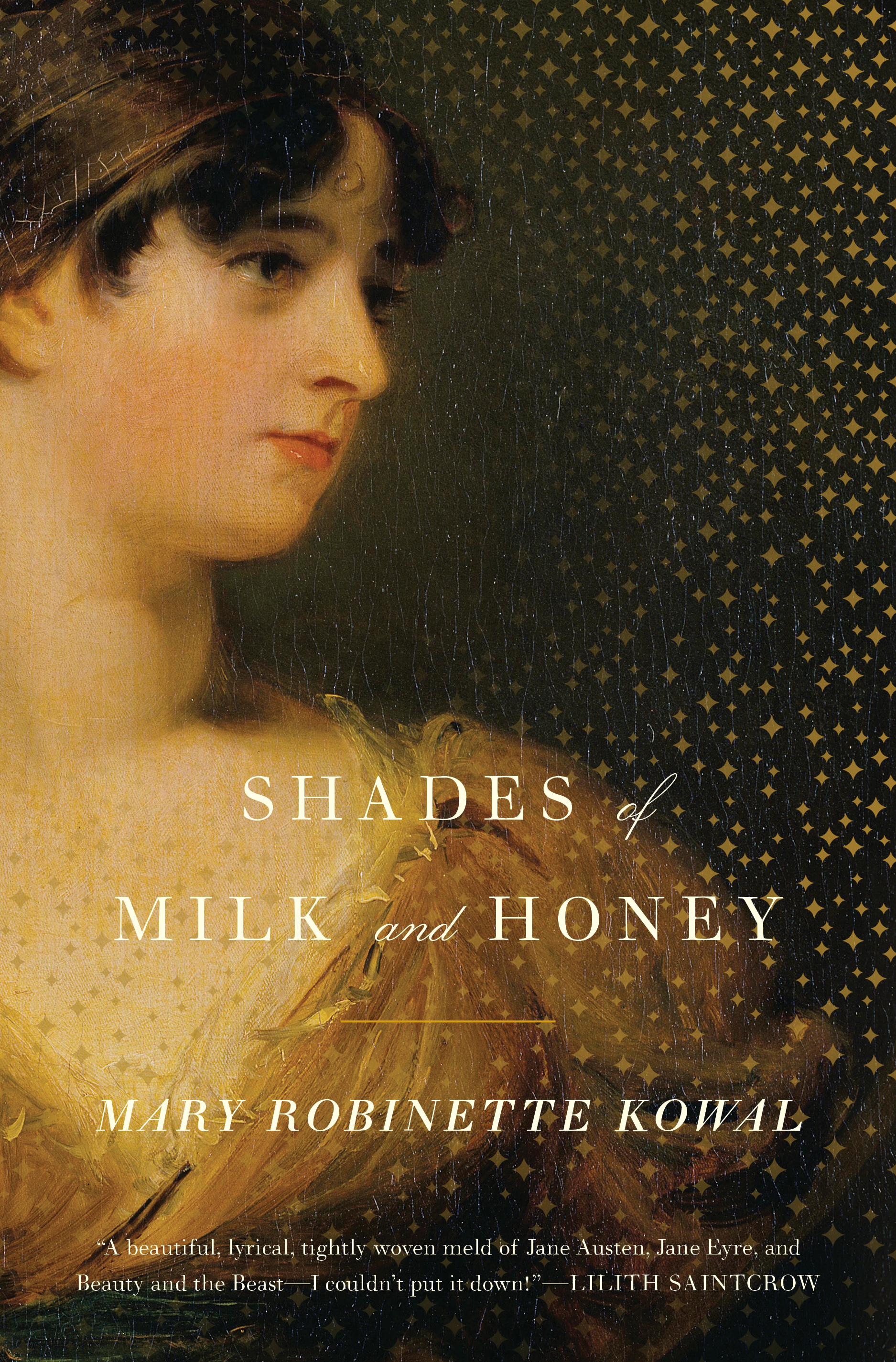 |
| See - totally serious cover! |
Theda Skocpol and Vanessa Williams - The Tea Party and the Remaking of Republican Conservatism
A big serious book about the Tea Party movement. This is that rarity in academic books - full of academic rigor - charts, footnotes (extensive footnotes), details of complicated social science studies - and yet entirely readable. This is what makes Skocpol a luminary in the poli-sci and political/cultural history fields - she can write without covering the whole thing in bafflegab and jargon.
So. The motto for the Slactiverse is "It's usually more complicated than that," but we're, for the most part, lefties, and, as such, we've been pretty dismissive of the Tea Party (when it comes up at all) as either a bunch of old folks who have been duped by a convincing astroturfing (that is, a fake grass-roots movement) effort by the elites on the Right, or a bunch of old folks who have stewed in their hatred and bigotry and then been duped by a convincing astroturfing effort. Skocpol and Williams are not in agreement with the aims of the movement, but they contend, quite effectively, with the idea that the Tea Party is a top-down astro turfed
group. Their studies show, fairly conclusively, that there is a strong disconnect between the efforts to direct the Tea Party by elites on the Right and the movement on the ground. The Tea Party IS a grass roots movement, but it is ALSO being directed (with varying levels of success) from the top down. It IS more complicated than that.
Skocpol and Williams are legitimately impressed by the ability of the people on the ground - the actual Tea Partiers - to understand the legislative ins and outs of Congress. They are also appalled by the lack of solid knowledge about what legislation is actually intended to do that the Tea Partiers display. They end their work by almost bemoaning the fact that leftists have a firm grasp of the facts, but no idea of how to influence political change, while Tea Partiers have a strong grasp of influence, but no grasp of the facts at all - if only these two elements could be merged somehow...
Anyway, it's an important book, it's very very well written, and if you want to have any idea of what the heck is happening in American politics right now, I suggest you at least take a look at it.
Lizzie Stark - Leaving Mundania
This is a serious book about larping - live action role playing. It is fairly deep, but not all that broad. There were elements of larp that I thought could have been better covered - the whole Vampire:The Masquerade/White Wolf/Theater of the Mind's Eye could have been better addressed, for instance - but what Stark does look at, she looks at in exactly enough depth. I'm biased - I'm a total geek, as you all know - but I think Stark does a good job of explaining what larp is for someone who doesn't already know. She describes a couple of long running games - Avatar Systems/Nexus, and Knight Realms - explores the ways in which larp can be used by "mundanes" for education purposes (she spends some time with the US military, exploring their training facilities - perhaps looking at some of the emergency training which she mentions but doesn't explore would have been good also, but the military bit is illustrative), and then goes off to Scandanavia, where they take larp VERY seriously - it's an art form, and it really didn't sound all that much fun based on Stark's descriptions. Stark also takes the ultimate plunge and runs a larp - and not a half-way effort, with a "murder mystery" from a box - she helps to write and run a Cthulhu larp with a bunch of complete larp novices. Yikes! It sounded like everyone had fun, though.
In between the descriptions of various larp and larp-like activities, Stark provides fascinating background on several people important to the modern larp movement in the US. She also traces the historical roots of larping back to Tudor England and to Prussian military training - that, alone, is worth looking at the book for.
There were gaps. I would love to know more about the zombie boffer larps. Also, where should we put non-larp games like zombies vs. humans - the sort of large scale "getting to know you" game that gets run on college campuses every September - or like Quidditch, where college kids run around holding brooms and pretending to play J.K. Rowling's iconic wizarding sport? What about renaissance faires? These aren't larp, per se, but they have larp elements - there's room for more exploration here. But, what Stark does look at, as I say, she dives deep - and, like a narrow, deep river, the book moves really quickly. It's a serious book about a sort of silly thing, but in the end, it's more complicated than that. For established larpers, a must read, for the curious, highly recommended. And, check out this cover:
 |
| That's pretty bad ass. |


 - actually, it might have been lifted from White in the first place. And, at the same time, it does what a good sci fi book should do - provides gentle commentary on the modern world. It's solid writing, the heroes are heroic, the villains are still human in this one, and the solutions are palatable. You'll probably like these books better if you tend towards fantasy - the fans of hard sci fi will find these a little fluffy, I think, and might want to stop after book 1.


 Posts
Posts

