Illness abounds in the Timonin household, and it's playing merry hob with my schedule. Also, it's that point in the semester when everything goes out the window (strange - when I was a student, I thought it was just students that felt that way, but clearly I was wrong). Frankly, the only thing that is getting this post out on time is the fact that it's 11/11/11, and how could I resist a post with that date stamp?
I suppose I could post a place holder for the cachet, but that would be cheating, right?
So. Three books this week.
Tamora Pierce - Mastiff
This is the third, and last, of the Beka Cooper novels. (I suppose it's possible that Pierce will return to the Cooper setting in a future book or series of books - let's say, this is the last of this particular trilogy.) Wait, though. I don't think I've reviewed a Pierce yet, have I? No, I haven't! What fun!
Tamora Pierce writes YA fiction. She's been writing YA fiction since before there WAS YA fiction, starting with the Alanna the Lioness series. She features strong female characters, often working in a tightly restricted male world. Also, she is brilliant. If you are not yet familiar with her work, I strongly encourage you to go, as soon as possible, and read some. Alanna is pretty cool, but clearly an early work - it lacks polish in some places. The Defender of the Small quartet is better (except you need to read Alanna first), and the two Circle of Magic quartets are excellent - I'm reading those to the big kid right now.
The Beka Cooper books are set in the past of the Alanna/Defender of the Small books, and follow the adventures of Beka Cooper, one Provost's "Dog" - basically, a police officer. Beka has some small magic - she can talk to ghosts - which she uses to help her investigate murders. The trilogy follows Beka from her beginnings as a trainee through this book, which presents Beka at the midpoint of her career. The books are written as Beka's diary, which has some ... issues. Like an epistolary novel, a novel framed as a diary is a step removed from the action. Everything is reported after the fact. In some instances, the action is presented long after the fact - days, even - which Pierce covers by having Beka trained in memory retention. Which is, admittedly, a useful thing for a police officer.
This novel, I should say, is not a good place to enter the trilogy - Terrier is the first one. That being said, this novel follows Beka, her scent hound, and her friends as they track down a gang of slavers who have kidnapped the royal prince. It's a police procedural novel, mostly, and it's exactly the sort I like - where the reader knows exactly as much as the detective - delicious! Pierce presents delightfully complex characters and a very pleasing romance. A completely satisfying conclusion to the trilogy - if there are no more books from this perspective, I am entirely happy (although I would be just as happy for there to be more!).
Frances Fox Piven - Who's Afraid of Frances Fox Piven?
Piven is an historian teaching at City University in New York (CUNY). During the 1960s and '70s, she was closely associated with the Poor People's Rights movement, and articulated a political theory about why poor people riot. Recently, she has been cast into the limelight by Glenn Beck (and may that be the only time I write his name here. Bleh) because of a proposition she made in the '70s - that everyone eligible for welfare should apply for welfare en masse, thus showing the instability of the welfare system, and hopefully result in some sort of guaranteed income policy. Beck (sorry) presented this proposition as a) current and b) a plan to destabilize the US economy, ushering in an era of anti-capitalist anarchy (which, sometimes, doesn't sound so bad). Piven responded to her sudden fame/infamy by publishing a collection of her various essays on economic inequality.
On the one hand, I'd love to say "if you want to understand what is happening with the Occupy Wall Street movement, read Piven." A lot of what she says makes sense. It is difficult to organize the poor in any society, because they are not, by nature, a cohesive group. Unlike, say, workers in a factory, you cannot organize them around their work place; nor can they be organized around a common shared experience, like military vets. Instead, Piven argues, the poor need to be shaped into brief moments of rebellion to shock the system - or, rather, the poor tend to rally themselves into brief moments of rebellion, when they, as a class, can be convinced that their misfortune a) has a clear cause and b) can be reversed through direct action. That - a moment in which direction action can reverse widespread misfortune - is what is happening right now. I'd love to say that it would be easy to see this if you read Piven - and, perhaps it would, assuming that you read fluent academicese. Because most of Piven's most fascinating work is written for a very specific audience - an audience of historians and political scientists - and so it's dense, and full of jargon. I must confess that I gutted* a lot of the book, like a well trained graduate student.
More recently, Piven has contributed to The Nation magazine, and those articles are far more accessible, and pertinent. Here is one of her articles for The Nation, from early this year - it's in the book, but you can read it online. So, I can say "if you want to understand what's happening with Occupy Wall Street, read Piven" - just not, necessarily, this book.
*graduate students of the humanities are often expected to read and discuss 3-5 lengthy academic texts a week, in addition to teaching classes and having lives. This is difficult or impossible. Thus, graduates "gut" books - they read the intro and conclusion, and then aggressively skim the material within the book, reading paragraphs which catch their eye, but not the whole work. Ideally, in discussion, different students have noticed different things in the work, and thus the book is reconstructed. Some academic authors clearly write their works in such a way that gutting is easily accomplished - spelling out in the intro and conclusion what, exactly, they thought they had proved, and including bold section titles throughout the chapters so that readers can quickly see what the important points are. Other authors write such compelling prose that gutting is acutely difficult - many times, I have found myself engrossed in a work that I really need to be done with so that I can move onto the next one. Yet other authors write such dry, dull prose, and bury their points so effectively, that even the closest reading cannot tease out meaning. Those books are the worst.
Jim Butcher - White Night
I'm midway through the Harry Dresden books. I've reviewed a couple of these earlier. The series invites a certain amount of skipping around - Butcher is skilled at presenting enough background material that new readers don't feel the need to read everything which proceeds, yet not in such a way that existing readers feel like they are reading the same book over and over. This book is set towards the end, perhaps, of the war between the Wizard's Council and the Vampire Courts. Dresden is called in to investigate a series of suicides which might not be suicides, and finds himself dealing with some old enemies.
Butcher, perhaps, is writing himself into a corner here. Dresden is amassing power from book to book, which means that his enemies must also have a great deal of power (or else we can't believe them), and his allies must also be extremely powerful (or else they are not much help). Eventually, this becomes ludicrous - Dresden and his enemies and his allies will become like unto gods, and combat between them will shatter worlds - that would be boring. So, I suspect, in future books, Dresden will find himself battling political issues more and more - which, actually, I kinda like in a book. In this one, though, he's just fighting really powerful bad guys, and that's pretty cool too.
Butcher is playing with the idea of power, though. At what point does Dresden cease to be human? What does it mean to be human, anyway? It is often difficult to tell who the monsters are in Butcher's books - and that, I think, is what keeps me coming back for more. I like complex books, I like complex characters, and I also like the whole over the top power struggle that Butcher writes so very well.
Showing posts with label Butcher. Show all posts
Showing posts with label Butcher. Show all posts
Friday, November 11, 2011
Monday, June 27, 2011
Much Belated Friday Review Post, 6/27/2011, more trashy books AND a Library Monday Post.
So, I got back home yesterday evening, after a return trip turned much longer than expected by an exploding tire. No injuries, although we had not really budgeted for a pair of new tires right now - we were thinking we might buy a full set of 4 closer to Christmas. Oh well. Anyway, I was in no fit state to make a post last night, so here it is now. I'm going to stick the Library Post on the end, too. Also, expect TWO chapters of Hickey of the Beast on Wednesday - ooo!
Two Sundays ago was, of course, Father's Day. My family gave me a tie, and a desk toy, and a book -
Thomas Ayres, That's Not in my American History Book
This is a cute book of off beat history. It presents seldom heard stories of historical figures, and of people who ought to be historical figures, from American history. Clearly well researched, Ayres contends (quite rightly) that the way that history is presented throughout most of our educational lives is a) dry and b) leaves out a lot of important people who happen not to be white, or male, or either. Ayres argues for a broader history, rather than an equally narrow history which presents the stories of non-white, male protagonists at the expense of the standard narrative. I'm inclined to agree - certainly at the elementary and high school level, it should not be assumed that students already know the "standard" narrative. However, my job at the college level would be a lot easier if students came in with a sense that history was exciting, and inclusive. I think books like Ayres' work are valuable, if a little informal. A fun book, designed to trigger a desire to read more into the historical record - I recommend it for anyone struggling with a dry textbook, or desirous of shocking a boring history teacher.
Now, onto the trashy books!
This time out, I was much more successful in my trashy book selection. Over the course of the week, my books became increasingly less trashy, however - I started out strong, but couldn't sustain. Oh well.
Alex Archer - Rogue Angel: Footprints
These books, the Rogue Angel books, have, over the past year or so, become my go-to books for trash. They are the definition of trash - utterly disposable, with very little in the way of redeeming qualities. They're written by a committee - there is no Alex Archer, each book is written by someone else (this one was by John Merz - there's a note on the copyright page thanking him for his contributions to the work). There doesn't appear to be a strong style guide for the series, either. Annja Creed is the recipient of Joan of Arc's sword (which, I thought, was Detective Sara Pezzini's weapon of choice, but who knows) which ought to grant her some sort of mystical powers, but really doesn't. Well, beyond the fact that she can pull this sword out of the "otherness" when she needs a sword. She works as the host of the TV show Chasing History's Monsters, which sends her to remote places of the planet to investigate strange reports of things like mummies, or yetis, or the spear of Gengis Khan. In this capacity, or entirely separate from it (as in this book) Annja encounters a far more mundane monster - drug smugglers, or human traffickers, or whathaveyou - which she deals with by chopping the villain up with her sword. Beyond that, details are fairly loose.
The books seem to allude to some sort of story arc in which Annja learns of her destiny and the nature of the sword. It's possible that this unifying story arc takes place in some of the books I haven't read - it certainly isn't in the ones I have read. Also missing - any sense of coherent motivation for the villain of the book, much respect for the cultural trappings in the book's background, or a realistic approach to life and/or mystical objects on the part on Annja. This book was particularly egregious - the villains are all over the place (is it money? is it power? Why are you doing what you're doing? Never mind - we'll just shoot you, or chop you up, or smother you in your own cocaine). Mysticism is provided courtesy of a couple of Native Americans - plains Indians transplanted to the Pacific Northwest specifically so that Annja has a Tonto to do her dirty work for free. Annja travels to the wilds of Oregon without a change of clothes or a tent or a cell phone or anything. Consequently, she spends several scenes in the nude, while clothes are drying, or being washed or whatever. She does not have sex, but this probably has a lot to do with the fact that none of the males in the book are sexually available. She does not consume inhuman quantities of food; something earlier books had suggested she did - no style guide. Ultimately, these are just not very good books, and perhaps there is no point in thinking about them beyond that.
Annette Blair - The Kitchen Witch
My wife described this as so fluffy it would probably blow away, and she's right. This was a cute little book. Logan Kilgarven is a single dad with a new job as the television producer for the local channel in Salem, MA. Melody Seabright is his downstairs neighbor - a "raven haired beauty" rumored to be a witch. Kilgarven arranges for her to interview for the position of the chef on his station's cooking show - despite the fact that there is no evidence that she can cook at all. Everything works out ok in the end, naturally.
I loved Blair's characters - they were hesitant and passionate and mostly real. I think, perhaps, it took to long for them to sleep with each other, but not alarmingly so. The ending was a little too pat, but you want a nice happy ending in a romance novel, so no real complaint there. The book was witty and bubbly and fun, but didn't have a whole lot of substance. Fluffy, and largely disposable. It appears that this is the first book in a trilogy of "accidental witches" - I might have to look up the rest of them.
Dan Vining - The Quick
For the most part, this was a straight forward hard-boiled detective novel. Jimmy Miles is a detective in Hollywood, hired by Jean Kantke to investigate the murder of her mother, more than a decade ago. Her father, a promising assistant DA, was convicted of and executed for the murder - Kantke wants to know if he was innocent.
In true hard-boiled form, Miles looks into the mystery by using brute force; following leads to their bitter end, and realizing that he's getting close to something true when people start threatening his life. The mystery is solved as much by Miles' judicious use of violence as it is by investigation in a classic sense, although Miles is a smart character; not all fists and pistol whipping.
Additionally, Miles is a Sailor - part of some sort of shadowy group of folks in and around the Hollywood area. The Sailors, we learn, are people who discovered, at the point of their own death, that they cannot die. That is, an event occurs which should kill them, and which results in a body (Miles suggests that this is so the family has something to bury), but someone walks away as well. That someone - the Sailor - cannot die, although the body can be hurt rather extremely (it is implied.) It becomes clear that the Sailors are, in some way, involved in this case, which complicates things rather a lot.
The mystery part of the novel was excellent, I enjoyed it a great deal. I think it works without the whole Sailor bit. The Sailor thing has considerable potential, but I don't think Vining lives up to that potential. Too much about the Sailors is left unexplained, and, indeed, unexamined. When did the phenomenon begin? To what extent has it been investigated? How extensive is the network of mutual aid? Are there Sailors elsewhere, or only in Hollywood? What else do they do? All lovely questions that demand answers that Vining doesn't offer. And since the Sailors are presented as a fairly central element of the novel, well. Frankly, I want more. I liked the characters, I liked the writing, I'd read another, if there were another to read, but this is only just a cut above trash - and it doesn't need to be. It's a self inflicted wound!
Jules Bass - Headhunters
I think Mr. Bass writes movie scripts at least part of the time. This book reads, delightfully, as a movie. Four women from New Jersey decide to up their game in an effort to find love and marriage and fortune. They rent some glitzy dresses and head for Monte Carlo, pretending to be four of the richest women in the world. They plan to put the hotel expenses on their credit cards and deal with the consequences later - their goal is to attract rich men, with the idea that the rich men will either marry them, or at least cover their expenses while in Monte Carlo.
They attract the attention of four gentlemen of leisure, one of whom is a professional escort, and the other three who have joined him in escorting rich, unattached women in the past. None of them are themselves rich (for a variety of reasons) but they can pretend. Their goal - to attract the attention of these four clearly wealthy women, with the hopes that the women will either marry them, or at least cover their expenses for a little while.
You can see where this is going to get complicated, right? Both sides of the group are desperately trying to con the other side of the group. It would be easy for Bass to set up one group as the "bad" group and have the reader root for the "good" group. Instead, Bass creates two groups of sympathetic characters, striving to get out of the mess with their dignity intact. Add to the mix an over worked and understaffed police officer, his over worked and over sexed assistant, and a hapless jewel thief... Yeah. It has all the bits that a great rom com movie requires. Bass manages to make it work as a novel - I loved the characters, I loved the plot, I loved the resolution - but it would be better on the screen.Oh, and look! It may, sort of, end up there - Monte Carlo began filming last year, and may come out later this year. It's not quite the plot, but it's based on the novel.
J.D. Robb - Holiday in Death
J.D. Robb is, of course, romance writer Nora Roberts. She has a whole spinner rack to herself at my library, what with the romance novels and the mystery novels. Clearly, she is what trashy novelists aspire to.
This is from her "in Death" mystery novels. Set in the New York of 2035, these novels follow the exploits of Lieutenant Eve Dallas. This is the earliest of the series available when I was looking - I've been wanting to read these, but I wanted to start at the beginning. This time, I said "frell it," and grabbed the book closest to the beginning, on the grounds that it probably wouldn't matter. I was mostly right.
It's Christmas. Dallas is recently married to Roarke (no last name), who is sort of a romance novel cliche, I think - he's Irish, he's gorgeous, he's a rogue, he's rich, his love-making takes Dallas' breath away routinely. Never mind. Dallas responds to a domestic disturbance call and discovers a rape-murder, which looks like it's the first of a series of serial murders. It is, of course - there are several, they are somewhat graphic, you may consider this a trigger warning for the novel. The connection between the murders seems to be a computer dating service, Personally Yours.
As a mystery novel, this is a fantastic police procedural, full of gritty realism, fights with forensic experts, hard nosed cops who've seen it all, wet behind the ear rookies who haven't had the idealism beaten out of them yet, and the mystery is solved by dogged tracking of clues, while the cops are restrained by their need to get evidence legally for a court case. Lovely stuff, I eat it up with a spoon. Mixed into it, Robb reminds us that she's a romance novelist in her day job, so Dallas and Roarke have lots and lots of really steamy sex - seems like every other chapter. It gets distracting. I found myself skipping the sex to get to the plot. No, really. On the other hand, I think Robb is also setting things up to balance the unhealthy sex of the murderer with the healthy sex of the detective, which is nicely done.
The future stuff is a little dated, because the book was published in 1998 - this is the 2035 of more than a decade ago. Some of the gadgets are old hat now - the future ain't what it used to be, I guess. Also, I expected a further twist at the end, and it didn't come, so the denouement takes longer than I had expected - a quick, punchy ending would have been ... well, it would have been different, anyway. Still, a good novel. I really liked Dallas, and I'll pick up more of these at another time.
Jim Butcher, Simon Green, Kat Richardson, Thomas Sniegoski, Mean Streets
I finished the week out with this collection of four novellas, featuring mystical detectives Harry Dresden, John Taylor, Harper Blaine, and Remy Chandler. I've mentioned Dresden and Chandler before - Blaine died for a minute or two, and since then she can see and speak with ghosts, for all the help they provide. John Taylor is the best PI in the Nightside, the mystical heart of London where dreams and nightmares rub shoulders.
In Butcher's contribution, Harry Dresden tries to protect his friend, Michael Carpenter, former Knight of the Cross. The story, which opens the collection, sparkles delightfully, and, as always, shows that Butcher is writing smart, witty, and surprisingly deep novels which masquerade as trashy paperbacks. There's a lot of heart in this novella, and it really makes the collection worth the effort entirely on its own.
I don't really like Simon Green - he tries way too hard, and packs cliches on top of cliches. His novels are quirky, and they should be right up my alley - all the sort of "secret world behind the real world" stuff, but, meh - they just rub me the wrong way. Anyway, John Tyler, who can find anything, given a little time, helps a young woman find her husband who she suspects is having an affair. He is - with a computer. This is all presented as shocking, but somehow it doesn't work.
Kat Richardson gives us a quirky novella as well, but this one is sweet. Blaine sets off to fulfill a "last will and testament" job - you know, "stay in this house overnight and inherit everything" type thing - she has to transport a small clay dog to a specific gravestone in Mexico on Dios de la Muerto. As you might imagine, ghosts feature. A delightful little story of justice and vengeance. I'm not sure why I haven't read more than the first of the Harper Blaine novels - I'll have to look into that.
Sniegoski writes mystery novels about fallen angel Remy Chandler. In this novella, Remy investigates the murder of Noah. Yes, that Noah, with the ark. I like Remy. I really like Marlowe, Remy's Labrador - Sniegoski really captures the stupid glee of a large dog. Not unlike Doug, from Up - "I have just met you, and I love you!".
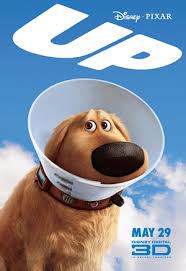
With the Butcher and the Sniegoski as bookends, and Kat Richardson to fill out the roster, you can easily skip the Simon Green, and suddenly this isn't all that trashy at all. A nice way to end the week.
Monday Library Post:
Patrick Rothfuss - The Wise Man's Fear
Sequel, finally, to The Name of the Wind. I fear this book will eat most of a week. I've been putting it off for that reason. Also, I hoped to grab the first book to remind me of the story so far (spoilers for the first book at that link) - alas, it was checked out. I grabbed this anyway; it's a hot property, and if I don't take it now, I don't know when I'll see it again - the cover is already cracking, and the spine threatens to loose pages. (Not on MY watch, though.)
Two Sundays ago was, of course, Father's Day. My family gave me a tie, and a desk toy, and a book -
Thomas Ayres, That's Not in my American History Book
This is a cute book of off beat history. It presents seldom heard stories of historical figures, and of people who ought to be historical figures, from American history. Clearly well researched, Ayres contends (quite rightly) that the way that history is presented throughout most of our educational lives is a) dry and b) leaves out a lot of important people who happen not to be white, or male, or either. Ayres argues for a broader history, rather than an equally narrow history which presents the stories of non-white, male protagonists at the expense of the standard narrative. I'm inclined to agree - certainly at the elementary and high school level, it should not be assumed that students already know the "standard" narrative. However, my job at the college level would be a lot easier if students came in with a sense that history was exciting, and inclusive. I think books like Ayres' work are valuable, if a little informal. A fun book, designed to trigger a desire to read more into the historical record - I recommend it for anyone struggling with a dry textbook, or desirous of shocking a boring history teacher.
Now, onto the trashy books!
This time out, I was much more successful in my trashy book selection. Over the course of the week, my books became increasingly less trashy, however - I started out strong, but couldn't sustain. Oh well.
Alex Archer - Rogue Angel: Footprints
These books, the Rogue Angel books, have, over the past year or so, become my go-to books for trash. They are the definition of trash - utterly disposable, with very little in the way of redeeming qualities. They're written by a committee - there is no Alex Archer, each book is written by someone else (this one was by John Merz - there's a note on the copyright page thanking him for his contributions to the work). There doesn't appear to be a strong style guide for the series, either. Annja Creed is the recipient of Joan of Arc's sword (which, I thought, was Detective Sara Pezzini's weapon of choice, but who knows) which ought to grant her some sort of mystical powers, but really doesn't. Well, beyond the fact that she can pull this sword out of the "otherness" when she needs a sword. She works as the host of the TV show Chasing History's Monsters, which sends her to remote places of the planet to investigate strange reports of things like mummies, or yetis, or the spear of Gengis Khan. In this capacity, or entirely separate from it (as in this book) Annja encounters a far more mundane monster - drug smugglers, or human traffickers, or whathaveyou - which she deals with by chopping the villain up with her sword. Beyond that, details are fairly loose.
The books seem to allude to some sort of story arc in which Annja learns of her destiny and the nature of the sword. It's possible that this unifying story arc takes place in some of the books I haven't read - it certainly isn't in the ones I have read. Also missing - any sense of coherent motivation for the villain of the book, much respect for the cultural trappings in the book's background, or a realistic approach to life and/or mystical objects on the part on Annja. This book was particularly egregious - the villains are all over the place (is it money? is it power? Why are you doing what you're doing? Never mind - we'll just shoot you, or chop you up, or smother you in your own cocaine). Mysticism is provided courtesy of a couple of Native Americans - plains Indians transplanted to the Pacific Northwest specifically so that Annja has a Tonto to do her dirty work for free. Annja travels to the wilds of Oregon without a change of clothes or a tent or a cell phone or anything. Consequently, she spends several scenes in the nude, while clothes are drying, or being washed or whatever. She does not have sex, but this probably has a lot to do with the fact that none of the males in the book are sexually available. She does not consume inhuman quantities of food; something earlier books had suggested she did - no style guide. Ultimately, these are just not very good books, and perhaps there is no point in thinking about them beyond that.
Annette Blair - The Kitchen Witch
My wife described this as so fluffy it would probably blow away, and she's right. This was a cute little book. Logan Kilgarven is a single dad with a new job as the television producer for the local channel in Salem, MA. Melody Seabright is his downstairs neighbor - a "raven haired beauty" rumored to be a witch. Kilgarven arranges for her to interview for the position of the chef on his station's cooking show - despite the fact that there is no evidence that she can cook at all. Everything works out ok in the end, naturally.
I loved Blair's characters - they were hesitant and passionate and mostly real. I think, perhaps, it took to long for them to sleep with each other, but not alarmingly so. The ending was a little too pat, but you want a nice happy ending in a romance novel, so no real complaint there. The book was witty and bubbly and fun, but didn't have a whole lot of substance. Fluffy, and largely disposable. It appears that this is the first book in a trilogy of "accidental witches" - I might have to look up the rest of them.
Dan Vining - The Quick
For the most part, this was a straight forward hard-boiled detective novel. Jimmy Miles is a detective in Hollywood, hired by Jean Kantke to investigate the murder of her mother, more than a decade ago. Her father, a promising assistant DA, was convicted of and executed for the murder - Kantke wants to know if he was innocent.
In true hard-boiled form, Miles looks into the mystery by using brute force; following leads to their bitter end, and realizing that he's getting close to something true when people start threatening his life. The mystery is solved as much by Miles' judicious use of violence as it is by investigation in a classic sense, although Miles is a smart character; not all fists and pistol whipping.
Additionally, Miles is a Sailor - part of some sort of shadowy group of folks in and around the Hollywood area. The Sailors, we learn, are people who discovered, at the point of their own death, that they cannot die. That is, an event occurs which should kill them, and which results in a body (Miles suggests that this is so the family has something to bury), but someone walks away as well. That someone - the Sailor - cannot die, although the body can be hurt rather extremely (it is implied.) It becomes clear that the Sailors are, in some way, involved in this case, which complicates things rather a lot.
The mystery part of the novel was excellent, I enjoyed it a great deal. I think it works without the whole Sailor bit. The Sailor thing has considerable potential, but I don't think Vining lives up to that potential. Too much about the Sailors is left unexplained, and, indeed, unexamined. When did the phenomenon begin? To what extent has it been investigated? How extensive is the network of mutual aid? Are there Sailors elsewhere, or only in Hollywood? What else do they do? All lovely questions that demand answers that Vining doesn't offer. And since the Sailors are presented as a fairly central element of the novel, well. Frankly, I want more. I liked the characters, I liked the writing, I'd read another, if there were another to read, but this is only just a cut above trash - and it doesn't need to be. It's a self inflicted wound!
Jules Bass - Headhunters
I think Mr. Bass writes movie scripts at least part of the time. This book reads, delightfully, as a movie. Four women from New Jersey decide to up their game in an effort to find love and marriage and fortune. They rent some glitzy dresses and head for Monte Carlo, pretending to be four of the richest women in the world. They plan to put the hotel expenses on their credit cards and deal with the consequences later - their goal is to attract rich men, with the idea that the rich men will either marry them, or at least cover their expenses while in Monte Carlo.
They attract the attention of four gentlemen of leisure, one of whom is a professional escort, and the other three who have joined him in escorting rich, unattached women in the past. None of them are themselves rich (for a variety of reasons) but they can pretend. Their goal - to attract the attention of these four clearly wealthy women, with the hopes that the women will either marry them, or at least cover their expenses for a little while.
You can see where this is going to get complicated, right? Both sides of the group are desperately trying to con the other side of the group. It would be easy for Bass to set up one group as the "bad" group and have the reader root for the "good" group. Instead, Bass creates two groups of sympathetic characters, striving to get out of the mess with their dignity intact. Add to the mix an over worked and understaffed police officer, his over worked and over sexed assistant, and a hapless jewel thief... Yeah. It has all the bits that a great rom com movie requires. Bass manages to make it work as a novel - I loved the characters, I loved the plot, I loved the resolution - but it would be better on the screen.Oh, and look! It may, sort of, end up there - Monte Carlo began filming last year, and may come out later this year. It's not quite the plot, but it's based on the novel.
J.D. Robb - Holiday in Death
J.D. Robb is, of course, romance writer Nora Roberts. She has a whole spinner rack to herself at my library, what with the romance novels and the mystery novels. Clearly, she is what trashy novelists aspire to.
This is from her "in Death" mystery novels. Set in the New York of 2035, these novels follow the exploits of Lieutenant Eve Dallas. This is the earliest of the series available when I was looking - I've been wanting to read these, but I wanted to start at the beginning. This time, I said "frell it," and grabbed the book closest to the beginning, on the grounds that it probably wouldn't matter. I was mostly right.
It's Christmas. Dallas is recently married to Roarke (no last name), who is sort of a romance novel cliche, I think - he's Irish, he's gorgeous, he's a rogue, he's rich, his love-making takes Dallas' breath away routinely. Never mind. Dallas responds to a domestic disturbance call and discovers a rape-murder, which looks like it's the first of a series of serial murders. It is, of course - there are several, they are somewhat graphic, you may consider this a trigger warning for the novel. The connection between the murders seems to be a computer dating service, Personally Yours.
As a mystery novel, this is a fantastic police procedural, full of gritty realism, fights with forensic experts, hard nosed cops who've seen it all, wet behind the ear rookies who haven't had the idealism beaten out of them yet, and the mystery is solved by dogged tracking of clues, while the cops are restrained by their need to get evidence legally for a court case. Lovely stuff, I eat it up with a spoon. Mixed into it, Robb reminds us that she's a romance novelist in her day job, so Dallas and Roarke have lots and lots of really steamy sex - seems like every other chapter. It gets distracting. I found myself skipping the sex to get to the plot. No, really. On the other hand, I think Robb is also setting things up to balance the unhealthy sex of the murderer with the healthy sex of the detective, which is nicely done.
The future stuff is a little dated, because the book was published in 1998 - this is the 2035 of more than a decade ago. Some of the gadgets are old hat now - the future ain't what it used to be, I guess. Also, I expected a further twist at the end, and it didn't come, so the denouement takes longer than I had expected - a quick, punchy ending would have been ... well, it would have been different, anyway. Still, a good novel. I really liked Dallas, and I'll pick up more of these at another time.
Jim Butcher, Simon Green, Kat Richardson, Thomas Sniegoski, Mean Streets
I finished the week out with this collection of four novellas, featuring mystical detectives Harry Dresden, John Taylor, Harper Blaine, and Remy Chandler. I've mentioned Dresden and Chandler before - Blaine died for a minute or two, and since then she can see and speak with ghosts, for all the help they provide. John Taylor is the best PI in the Nightside, the mystical heart of London where dreams and nightmares rub shoulders.
In Butcher's contribution, Harry Dresden tries to protect his friend, Michael Carpenter, former Knight of the Cross. The story, which opens the collection, sparkles delightfully, and, as always, shows that Butcher is writing smart, witty, and surprisingly deep novels which masquerade as trashy paperbacks. There's a lot of heart in this novella, and it really makes the collection worth the effort entirely on its own.
I don't really like Simon Green - he tries way too hard, and packs cliches on top of cliches. His novels are quirky, and they should be right up my alley - all the sort of "secret world behind the real world" stuff, but, meh - they just rub me the wrong way. Anyway, John Tyler, who can find anything, given a little time, helps a young woman find her husband who she suspects is having an affair. He is - with a computer. This is all presented as shocking, but somehow it doesn't work.
Kat Richardson gives us a quirky novella as well, but this one is sweet. Blaine sets off to fulfill a "last will and testament" job - you know, "stay in this house overnight and inherit everything" type thing - she has to transport a small clay dog to a specific gravestone in Mexico on Dios de la Muerto. As you might imagine, ghosts feature. A delightful little story of justice and vengeance. I'm not sure why I haven't read more than the first of the Harper Blaine novels - I'll have to look into that.
Sniegoski writes mystery novels about fallen angel Remy Chandler. In this novella, Remy investigates the murder of Noah. Yes, that Noah, with the ark. I like Remy. I really like Marlowe, Remy's Labrador - Sniegoski really captures the stupid glee of a large dog. Not unlike Doug, from Up - "I have just met you, and I love you!".
With the Butcher and the Sniegoski as bookends, and Kat Richardson to fill out the roster, you can easily skip the Simon Green, and suddenly this isn't all that trashy at all. A nice way to end the week.
Monday Library Post:
Patrick Rothfuss - The Wise Man's Fear
Sequel, finally, to The Name of the Wind. I fear this book will eat most of a week. I've been putting it off for that reason. Also, I hoped to grab the first book to remind me of the story so far (spoilers for the first book at that link) - alas, it was checked out. I grabbed this anyway; it's a hot property, and if I don't take it now, I don't know when I'll see it again - the cover is already cracking, and the spine threatens to loose pages. (Not on MY watch, though.)


Friday, April 1, 2011
Friday Reviews 4/1/2011
Four books this week; three of which are part of a series.
Jim Butcher - Blood Rites
This is book 6 of Butcher's Dresden Files novels. The premise of the collection is fairly simple - Harry Dresden is a wizard. He lives in Chicago, and he advertises in the Yellow Pages. Being a wizard is less glamorous than one might imagine, at least from the point of view of Harry Dresden - he has some limited powers - a magical shield, a flame blast, the ability to call wind - and some strong contacts in both the mundane and the magical realms. He's not in good standing with the society of wizards, one group of vampires wants to kill him, and he has to pay rent on a regular basis. In tone, the novels are very much noir detective novels, but Dresden has a blasting rod instead of a gun. I like the noir elements, and I like the mystical stuff, and I like Harry Dresden, so I tend to enjoy these books.
Now, as I said, this is book 6 of a series. My local library system has been acquiring these books in an oddly haphazard way, such that I'm not sure that there is a full collection of them anywhere in the system, and normally that would be a problem. I can be a little obsessive about a series of books, insisting on reading the books in order. Most series encourage this sort of reading - each book builds on the previous book, and its often hard to pick up the narrative if you haven't read the earlier books. Efforts to clue readers in to the ongoing story arc tend to be clumsy*, and often inadequate. Butcher seems to have avoided that particular pitfall. I pick these up more or less at random, and it doesn't seem to matter. I've read the first six books, entirely out of order, often with long breaks between books, and while they definitely build on each other, each book seems to stand on their own at the same time, with just enough back story in each book to keep the reader clued in. Each book does two things, in terms of narrative. On the one hand, the books each have a central plot; Dresden has been hired to do a particular job for a particular client. This job is resolved over the course of the book. This results in a tidy narrative with a defined beginning, middle, and end - it is not necessary to wait for the next book to resolve the main plot. At the same time, each book contributes a little more to a bigger narrative arc, such that, like a puzzle, as you read more books you get a clearer picture of what's going on in Dresden's bigger world. I really like this effect.
In this specific book, Dresden has been hired to act as a magical body guard for a director of pornographic movies, Arturo Genosa. Genosa has recently broken away from a major studio to produce and direct his own films. As a director, Genosa has worked hard to present a wide range of people in his films, old people, people of colour, people with a wide range of body types - he's not presented as a hero, necessarily, but he is offered as a paragon among pornographers. His current project, one of three he needs to complete in order to complete a contract, has been plagued with odd elements of bad luck - women on the set are being injured and dying in bizarre ways. He suspects magic, and Dresden has been hired to figure out who is doing the magic, and to prevent it if possible.
Given that a lot of the action takes place on the set of a porn film, there is almost no smut in this novel. In fact, although Dresden periodically has girlfriends, these novels are, much like the noir detective novels they emulate, largely free of graphic sexual descriptions. That's nice. The story is strong, the twists are not outrageous, the motive is reasonable, and Dresden, for all that he does magic, is not absurd in his heroism. The major themes of the book are revenge, betrayal, and family politics. Although there are no graphic sexual scenes, I'm going to offer a trigger warning for dysfunctional families and child abuse. Beyond that, a basically good book in a basically good series.
*In terms of clumsy - when I was much younger, my sister read the Babysitter Club books. For some unknowable reason, I chose to do so also - I was not in anyway the target audience of the books, being both too old and too male, and yet. Each of the books opens with a chapter detailing how the Club came to be, and what the various baby sitters do, and what their names are, and what their favorite things are and such. We just skipped the first chapter entirely, and started on Chapter 2.
Michael Pollan - In Defense of Food
My food ethics book for the week, naturally. Pollan is hot right now in this realm - The Omnivore's Dilemma and this book served as a wake up call for a lot of readers, and has triggered considerable discussion about food, where it comes from, what's wrong with our food culture, and what we can do about it.
Pollan writes a nice, clear prose. His books are exceedingly well researched and documented, although he doesn't use traditional endnotes or footnotes - tsk tsk. The notes are there, but you have to go looking - an increasingly common phenomenon in publishing these days. Those superscript numbers are just so hard to print. (Sorry, something of a pet peeve - footnotes are something of a religion to me as an historian.)
This book is a follow up to The Omnivore's Dilemma. Pollan has said that, after the first book was published, people approached him at public events and complained that their reaction to his book was "ack, the further I get into the book, the fewer things I am allowed to eat - if I finish the book, I'll starve to death" - this is his response to that concern. He seeks to provide some clear rules for what eaters should eat. Those rules boil down to this - "Eat food. Not too much. Mostly vegetables." Those are the opening words of the book. Pollan then spends the rest of the book unpacking those rules, explaining what they mean (what is "food"? How much is "too much"?), why they are important, and how to apply them to our daily eating lives.
Pollan's over all argument is that the food culture of "the West" (by which he sometimes means Europe and North America, and he sometimes means North America, and he mostly means "the United States") is broken or non-existent, and that, until we get that back under control, we are going to continue experiencing societal dietary problems - diabetes, obesity, high blood pressure, and the like. Pollan is, perhaps, a little alarmist (although, I think, largely for effect), and some might argue that his "fix" for the problem is a little expensive, on the individual level. He argues, and I agree, that "organic" food doesn't need to be wildly more expensive than "regular" food (a nice linguistic quirk there, by the way - what, after all, is inorganic food?), but "organic" has become a brand now. Yes, it's possible to find naturally grown food if you have access to a farmer's market, or a backyard garden (and, if you do have access to those, I urge you to take advantage), but if you buy "organic" food from the store, it's going to cost you more than otherwise; and that puts the sort of eating Pollan argues for out of the reach of a lot of people. (There is a bit where he suggests that we, as a society, spend a lot on television and the internet, and that if we really valued food, we could cut back on other expenses in order to buy good food. This is, I feel, a little unrealistic, and even patronizing.)
If the book has flaws (and all books have flaws), they are fully encapsulated in the book's subtitle. The book is subtitled An Eater's Manifesto. The two flaws, which are common with many aspirational works, are these: 1) people who already agree with Pollan will find themselves nodding, but won't necessarily learn anything new and 2) people who already disagree with Pollan will find plenty in the book to argue with, to the extent that they will be entirely closed off to things they might agree with, if presented otherwise. I think it is possible to take the parts of Pollan that work for you, and discard the rest - eat the meat and throw away the bones, if you will - and I think that doing so will be better for everyone than not doing that at all.
Final assessment, I found this book to provide a nice balance for the Twinkie book last week.
Johnathan Stroud - Bartimaeus: The Ring of Solomon
This is the second book from a series, except it's not really from a series at all. Johnathan Stroud wrote the Bartimaeus Trilogy, a series of books about (and partially narrated by) Bartimaeus, a djinni, summoned by a magician employed by the British government. The time frame of that novel is a little hard to pin down - sometime after 1936; e-mail and airplanes are mentioned, but the American Revolution did not end in the favor of the Americans, and Britain is still trying to deal with it. That trilogy was a lot of fun, and I think it was fun largely because of the character of Bartimaeus.
I really like Bartimaeus. He's snarky, and that's fun. He's also a grand example of an unreliable narrator. He boasts, unrealistically, of his achievements while complaining about the vanity of others. He complains about being forced to serve a master, and yet seems clearly to enjoy what he is asked to do. He claims to be fearless, and yet certainly is not. He resents being pushed around by greater spirits, and yet goes out of his way to push around lesser spirits. He is a bold, brash, boastful bully, and yet he's fantastically compelling as a character, both in the original trilogy and here, in this prequel.
This book describes a period in Bartimaeus' life while he is (tangentially) in service to King Solomon. Solomon, through threat of the use of the titular ring, has seventeen powerful magicians working for him, each of whom can summon legions of spirits; imps, foliots, djini, afrits, and marids. Bartimaeus is one of those summoned spirits. The action of the novel turns on the adventures of Asmira, a young guardswoman/slave/assassin sent by Balkis, Queen of Sheba, to kill Solomon and steal his ring. Bartimaeus narrates about a third of the novel, the remainder is told from the point of view of Asmira and several of the other lesser characters.
The novel stands entirely on it's own - there is no reference at all to the original trilogy. There isn't even a framing reference - no "Young Nathaniel, let me tell you of the time I worked for King Solomon," nothing of that sort. If you have never read the original trilogy, you can pick this book up entirely cold, enjoy it thoroughly, and never read about Bartimaeus again. Although that would be silly, since he's such a compelling rogue of a character. As a way of handling a text within, or tangential to, a series, I like this a great deal.
Final assessment - Very nice. Strong female character, plus Bartimaeus. Plenty of action, a nicely twisty political plot, some thought provoking stuff about slavery. Highly recommended.
Jana Oliver - The Demon Trapper's Daughter
This is the first of a series of books about demons, and the people who trap them for money. It is set in the near future in Atlanta, probably. Society as we know it has largely collapsed - food still comes into the city, but the city, and, it is assumed, the rest of the country, is broke. Riley Blackthorne - the protagonist - and her friends go to school in gutted grocery stores and Starbucks. They are taught by any teacher willing to work for whatever they can be paid. The city is crumbling, roads are falling apart, gas is fantastically expensive, and demons are everywhere.
I say it is set in the near future, probably, because it is not quite clear which of these two possibilities is true. Either Oliver has set her novel in our own world, slightly into the future, and demons have always been present but only apparent to a few trappers and hunters sanctioned by the Vatican until just recently, but now things are so bad that everyone is aware of them, or this is an alternate world in which demons have always been evident, and everyone has always been aware of them. I'm not sure it really matters which of these two things is true, but it does make it hard for me to place the book, temporally.
Riley is the only daughter of Paul Blackthorne, who is widely regarded as one of the better demon trappers (trappers catch demons and sell them to the Catholic Church through various licensed intermediaries. The Church sends the demons to monasteries in Europe where monks chant over them until they disappear. Hunters, directly sanctioned by the Church, kill demons when they find them. There is tension there.) and is training to be a demon trapper herself. She will be, if successful, the first female demon trapper - a noble goal.
There is, naturally, conflict. Riley is 17, she has to deal with the things that 17 year old girls deal with - cliques at school, boys, parents, and also trapping demons, who a) seem to recognize her even though they should not and b) don't necessarily want to be trapped. Things rarely go smoothly, and Oliver throws in plenty of delightful twists to keep the reader engaged.
The book is fast paced, the characters are well presented, especially spunky Riley Blackthorne (who has a lot of Buffy the Vampire Slayer in her background) the concept is intriguing, and the world creation is excellent, if a little depressing. Oliver does make use of regional accents - this is a practice that I almost always find a little grating - it is no different here. Also, as has been pointed out in the comments, the book ends on a cliffhanger. This is not unusual with books in a trilogy/series, I suppose, but I also don't think it is unreasonable to expect at least the first book of a trilogy to be able to stand on its own. What if it sells poorly, and readers never get to read the second book? It's happened before. Hopefully it won't happen here - this is, accents and unsatisfying ending aside, an excellent book, and well worth taking a look at. I await the sequel.
Jim Butcher - Blood Rites
This is book 6 of Butcher's Dresden Files novels. The premise of the collection is fairly simple - Harry Dresden is a wizard. He lives in Chicago, and he advertises in the Yellow Pages. Being a wizard is less glamorous than one might imagine, at least from the point of view of Harry Dresden - he has some limited powers - a magical shield, a flame blast, the ability to call wind - and some strong contacts in both the mundane and the magical realms. He's not in good standing with the society of wizards, one group of vampires wants to kill him, and he has to pay rent on a regular basis. In tone, the novels are very much noir detective novels, but Dresden has a blasting rod instead of a gun. I like the noir elements, and I like the mystical stuff, and I like Harry Dresden, so I tend to enjoy these books.
Now, as I said, this is book 6 of a series. My local library system has been acquiring these books in an oddly haphazard way, such that I'm not sure that there is a full collection of them anywhere in the system, and normally that would be a problem. I can be a little obsessive about a series of books, insisting on reading the books in order. Most series encourage this sort of reading - each book builds on the previous book, and its often hard to pick up the narrative if you haven't read the earlier books. Efforts to clue readers in to the ongoing story arc tend to be clumsy*, and often inadequate. Butcher seems to have avoided that particular pitfall. I pick these up more or less at random, and it doesn't seem to matter. I've read the first six books, entirely out of order, often with long breaks between books, and while they definitely build on each other, each book seems to stand on their own at the same time, with just enough back story in each book to keep the reader clued in. Each book does two things, in terms of narrative. On the one hand, the books each have a central plot; Dresden has been hired to do a particular job for a particular client. This job is resolved over the course of the book. This results in a tidy narrative with a defined beginning, middle, and end - it is not necessary to wait for the next book to resolve the main plot. At the same time, each book contributes a little more to a bigger narrative arc, such that, like a puzzle, as you read more books you get a clearer picture of what's going on in Dresden's bigger world. I really like this effect.
In this specific book, Dresden has been hired to act as a magical body guard for a director of pornographic movies, Arturo Genosa. Genosa has recently broken away from a major studio to produce and direct his own films. As a director, Genosa has worked hard to present a wide range of people in his films, old people, people of colour, people with a wide range of body types - he's not presented as a hero, necessarily, but he is offered as a paragon among pornographers. His current project, one of three he needs to complete in order to complete a contract, has been plagued with odd elements of bad luck - women on the set are being injured and dying in bizarre ways. He suspects magic, and Dresden has been hired to figure out who is doing the magic, and to prevent it if possible.
Given that a lot of the action takes place on the set of a porn film, there is almost no smut in this novel. In fact, although Dresden periodically has girlfriends, these novels are, much like the noir detective novels they emulate, largely free of graphic sexual descriptions. That's nice. The story is strong, the twists are not outrageous, the motive is reasonable, and Dresden, for all that he does magic, is not absurd in his heroism. The major themes of the book are revenge, betrayal, and family politics. Although there are no graphic sexual scenes, I'm going to offer a trigger warning for dysfunctional families and child abuse. Beyond that, a basically good book in a basically good series.
*In terms of clumsy - when I was much younger, my sister read the Babysitter Club books. For some unknowable reason, I chose to do so also - I was not in anyway the target audience of the books, being both too old and too male, and yet. Each of the books opens with a chapter detailing how the Club came to be, and what the various baby sitters do, and what their names are, and what their favorite things are and such. We just skipped the first chapter entirely, and started on Chapter 2.
Michael Pollan - In Defense of Food
My food ethics book for the week, naturally. Pollan is hot right now in this realm - The Omnivore's Dilemma
and this book served as a wake up call for a lot of readers, and has triggered considerable discussion about food, where it comes from, what's wrong with our food culture, and what we can do about it.Pollan writes a nice, clear prose. His books are exceedingly well researched and documented, although he doesn't use traditional endnotes or footnotes - tsk tsk. The notes are there, but you have to go looking - an increasingly common phenomenon in publishing these days. Those superscript numbers are just so hard to print. (Sorry, something of a pet peeve - footnotes are something of a religion to me as an historian.)
This book is a follow up to The Omnivore's Dilemma. Pollan has said that, after the first book was published, people approached him at public events and complained that their reaction to his book was "ack, the further I get into the book, the fewer things I am allowed to eat - if I finish the book, I'll starve to death" - this is his response to that concern. He seeks to provide some clear rules for what eaters should eat. Those rules boil down to this - "Eat food. Not too much. Mostly vegetables." Those are the opening words of the book. Pollan then spends the rest of the book unpacking those rules, explaining what they mean (what is "food"? How much is "too much"?), why they are important, and how to apply them to our daily eating lives.
Pollan's over all argument is that the food culture of "the West" (by which he sometimes means Europe and North America, and he sometimes means North America, and he mostly means "the United States") is broken or non-existent, and that, until we get that back under control, we are going to continue experiencing societal dietary problems - diabetes, obesity, high blood pressure, and the like. Pollan is, perhaps, a little alarmist (although, I think, largely for effect), and some might argue that his "fix" for the problem is a little expensive, on the individual level. He argues, and I agree, that "organic" food doesn't need to be wildly more expensive than "regular" food (a nice linguistic quirk there, by the way - what, after all, is inorganic food?), but "organic" has become a brand now. Yes, it's possible to find naturally grown food if you have access to a farmer's market, or a backyard garden (and, if you do have access to those, I urge you to take advantage), but if you buy "organic" food from the store, it's going to cost you more than otherwise; and that puts the sort of eating Pollan argues for out of the reach of a lot of people. (There is a bit where he suggests that we, as a society, spend a lot on television and the internet, and that if we really valued food, we could cut back on other expenses in order to buy good food. This is, I feel, a little unrealistic, and even patronizing.)
If the book has flaws (and all books have flaws), they are fully encapsulated in the book's subtitle. The book is subtitled An Eater's Manifesto. The two flaws, which are common with many aspirational works, are these: 1) people who already agree with Pollan will find themselves nodding, but won't necessarily learn anything new and 2) people who already disagree with Pollan will find plenty in the book to argue with, to the extent that they will be entirely closed off to things they might agree with, if presented otherwise. I think it is possible to take the parts of Pollan that work for you, and discard the rest - eat the meat and throw away the bones, if you will - and I think that doing so will be better for everyone than not doing that at all.
Final assessment, I found this book to provide a nice balance for the Twinkie book last week.
Johnathan Stroud - Bartimaeus: The Ring of Solomon
This is the second book from a series, except it's not really from a series at all. Johnathan Stroud wrote the Bartimaeus Trilogy, a series of books about (and partially narrated by) Bartimaeus, a djinni, summoned by a magician employed by the British government. The time frame of that novel is a little hard to pin down - sometime after 1936; e-mail and airplanes are mentioned, but the American Revolution did not end in the favor of the Americans, and Britain is still trying to deal with it. That trilogy was a lot of fun, and I think it was fun largely because of the character of Bartimaeus.
I really like Bartimaeus. He's snarky, and that's fun. He's also a grand example of an unreliable narrator. He boasts, unrealistically, of his achievements while complaining about the vanity of others. He complains about being forced to serve a master, and yet seems clearly to enjoy what he is asked to do. He claims to be fearless, and yet certainly is not. He resents being pushed around by greater spirits, and yet goes out of his way to push around lesser spirits. He is a bold, brash, boastful bully, and yet he's fantastically compelling as a character, both in the original trilogy and here, in this prequel.
This book describes a period in Bartimaeus' life while he is (tangentially) in service to King Solomon. Solomon, through threat of the use of the titular ring, has seventeen powerful magicians working for him, each of whom can summon legions of spirits; imps, foliots, djini, afrits, and marids. Bartimaeus is one of those summoned spirits. The action of the novel turns on the adventures of Asmira, a young guardswoman/slave/assassin sent by Balkis, Queen of Sheba, to kill Solomon and steal his ring. Bartimaeus narrates about a third of the novel, the remainder is told from the point of view of Asmira and several of the other lesser characters.
The novel stands entirely on it's own - there is no reference at all to the original trilogy. There isn't even a framing reference - no "Young Nathaniel, let me tell you of the time I worked for King Solomon," nothing of that sort. If you have never read the original trilogy, you can pick this book up entirely cold, enjoy it thoroughly, and never read about Bartimaeus again. Although that would be silly, since he's such a compelling rogue of a character. As a way of handling a text within, or tangential to, a series, I like this a great deal.
Final assessment - Very nice. Strong female character, plus Bartimaeus. Plenty of action, a nicely twisty political plot, some thought provoking stuff about slavery. Highly recommended.
Jana Oliver - The Demon Trapper's Daughter
This is the first of a series of books about demons, and the people who trap them for money. It is set in the near future in Atlanta, probably. Society as we know it has largely collapsed - food still comes into the city, but the city, and, it is assumed, the rest of the country, is broke. Riley Blackthorne - the protagonist - and her friends go to school in gutted grocery stores and Starbucks. They are taught by any teacher willing to work for whatever they can be paid. The city is crumbling, roads are falling apart, gas is fantastically expensive, and demons are everywhere.
I say it is set in the near future, probably, because it is not quite clear which of these two possibilities is true. Either Oliver has set her novel in our own world, slightly into the future, and demons have always been present but only apparent to a few trappers and hunters sanctioned by the Vatican until just recently, but now things are so bad that everyone is aware of them, or this is an alternate world in which demons have always been evident, and everyone has always been aware of them. I'm not sure it really matters which of these two things is true, but it does make it hard for me to place the book, temporally.
Riley is the only daughter of Paul Blackthorne, who is widely regarded as one of the better demon trappers (trappers catch demons and sell them to the Catholic Church through various licensed intermediaries. The Church sends the demons to monasteries in Europe where monks chant over them until they disappear. Hunters, directly sanctioned by the Church, kill demons when they find them. There is tension there.) and is training to be a demon trapper herself. She will be, if successful, the first female demon trapper - a noble goal.
There is, naturally, conflict. Riley is 17, she has to deal with the things that 17 year old girls deal with - cliques at school, boys, parents, and also trapping demons, who a) seem to recognize her even though they should not and b) don't necessarily want to be trapped. Things rarely go smoothly, and Oliver throws in plenty of delightful twists to keep the reader engaged.
The book is fast paced, the characters are well presented, especially spunky Riley Blackthorne (who has a lot of Buffy the Vampire Slayer in her background) the concept is intriguing, and the world creation is excellent, if a little depressing. Oliver does make use of regional accents - this is a practice that I almost always find a little grating - it is no different here. Also, as has been pointed out in the comments, the book ends on a cliffhanger. This is not unusual with books in a trilogy/series, I suppose, but I also don't think it is unreasonable to expect at least the first book of a trilogy to be able to stand on its own. What if it sells poorly, and readers never get to read the second book? It's happened before. Hopefully it won't happen here - this is, accents and unsatisfying ending aside, an excellent book, and well worth taking a look at. I await the sequel.
Subscribe to:
Posts (Atom)
Subscribe To


 Posts
All Comments
Posts
All Comments