Friday, March 2, 2012
Not a Friday post
It looks likely that we'll be packing up the computer tomorrow, and so won't have internet access until Wednesday, probably. So you'll have to wait until then for the review and such.


Wednesday, February 29, 2012
Library Wednesday?, 2/29/2012
Happy Leap Day!
Two books from the library on Monday:
Walter Mosley - Devil in the Blue Dress
I heard an interview with Mosley, and said "y'know, I've enjoyed the Mosley that I've read, why haven't I read more?," so I picked up this one, the first of his Easy Rawlins mystery novels.
Cassandra Clark - A Parliament of Spies
Another mystery novel, set during the reign of Richard II of England.
Two books from the library on Monday:
Walter Mosley - Devil in the Blue Dress
I heard an interview with Mosley, and said "y'know, I've enjoyed the Mosley that I've read, why haven't I read more?," so I picked up this one, the first of his Easy Rawlins mystery novels.
Cassandra Clark - A Parliament of Spies
Another mystery novel, set during the reign of Richard II of England.
Sunday, February 26, 2012
Lenten Project
 |
| Eeep! Surprisingly Nude Bookcase! |
Anyway, the semi-nude bookcase is courtesy of the relocation we're in the process of. Currently, there is a huge stack of boxes in the living room of the new apartment - I should really take a photo of that for you too. Which brings me to my Lenten project this year. Each week of Lent, I will read (at least) one book that I already own, and I will then assess whether I'll keep the book or get rid of it. (ouch!) The whole process of moving has already resulted in 5 (count them!) grocery sacks of books which we've donated to the local library sale. Potentially, I will offer my discards to you, my readers, if there's interest - otherwise, to the library they will go.
*The text books - as a a professor, text book companies see me as a gatekeeper for my students' wallets. If they can convince me to choose a book for my class, then my students are compelled to buy that book, which is, obviously, good for the text book companies. So, they mail me (and every other professor with the power to choose books for their classes) free copies of their books. And I mostly ignore them, because I've already chosen my texts.** So, that stack is a stack of free text books that is on it's way back to campus to get deposited in the text book room in the department - the department has a room full of text books that they can give out to new professors trying to decide what books they want, or to students who need a text but can't afford them and etc. Which is pretty cool, frankly.
** My texts this semester:
 |
| Cultural History |
 |
| Political History |
 |
| Military History |
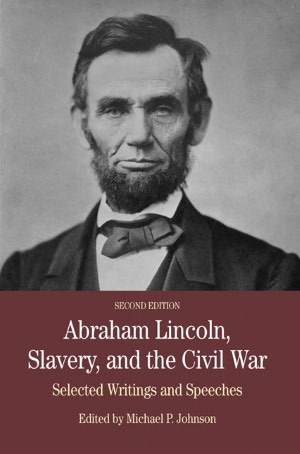
I'm using a lot of Bedford/St. Martin readers this semester, because I like their selection of primary sources, and I like the way that their editors frame the material. And because the readers are fairly cheap individually. My students only need to buy one of these books each. I also recommend they pick up this one:
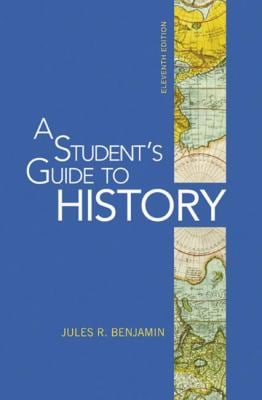
This is the single best text on studying history I've ever read - it's just amazing what Benjamin packs into it; instructions on taking notes, ideas on how to write basic papers, how to do comparisons between different types of sources, how to write essay type tests, how to write multiple choice type tests, how to do footnotes ... it's brilliant, and you really need a copy.

Students who want a traditional text are advised to consider this one. It's fairly unremarkable as far as text books go, but it's a Bedford/St.Martin - consistency isn't always a bad thing. I advise students to find three or four fellow students to split the cost of the text book - I have no idea how many, if any, students do as I advise, but it's good advice.
I believe my footnote is now officially longer than the post it's a footnote for.
Saturday, February 25, 2012
Witty Post Title Here
I made it to the library on Thursday, and picked up a couple of books:
Christopher Phillips - Constitution Cafe
Phillips tours around the US, talking to folks about the US constitution with the intention of writing a new draft of the document. Seems interesting.
Daniel O'Malley - The Rook
So, the tag is "On Her Majesty's Supernatural Secret Service" - beyond that, I didn't really need to read the dust jacket.
___________________
I also read five books this week. Well, four, and finished Dance With Dragons, but I had almost 200 pages of Dragons left to read, which is most of a novel all by itself, right? So, five.
George R.R. Martin - A Dance with Dragons
The most recent of the Song of Ice and Fire books. I said last week that this book was too long, and I really think it was. Martin's innovative bit in this series is the use of lots and lots of point of view characters. It's a big deal, and it's realistically what keeps me reading the books - Martin has this gift of making a whole array of characters work. But, in this book, it feels a little out of hand. There were several points where I felt that I didn't really need another character. There were several places where I would start a new chapter and say "c'mon, I want to find out what's happening with the chapter I just finished," and then I'd get into the new chapter, and then it would end, and I'd say "c'mon, I want to know what's happening with the chapter that I just finished." And yet, were there fewer characters, surely I would miss something. Plus, it's dangerous to wish that Martin had fewer characters, because he's inclined to kill characters, and, often, it's the character that you really care about. So.
Still, the fear that I felt through this book is this: What if, when I finish reading the series, I look back, and discover that I really don't like the cumulative effect? A strong element of the series is unpleasant people doing nasty things to each other; I think there's a strong chance that, when the series is done, I'm not going to like what's left - the characters I like will be dead, the message will be "a strong dictator is necessary to make society function," and that's not something I want to see. But there's only one way to find that out, and that's to finish the series.
This book in particular is about identity. Various characters put on false faces over the course of the novel in order to survive. Other characters find themselves doing what they think is right, even though they don't want to. The characters who do the best in this book are the ones who remain closest to their central identity; the others find themselves getting swallowed by the false identity they've created for themselves (or had created for them), or they end up stabbed in the back. "To thine ownself be true," I suppose.
I'm not going to avoid the next book; there are still characters in the series that I like, and I do want to know how the story ends. I'm not going to wish for fewer characters, because Martin is holding my favorites ransom. I don't know how assiduously I'll look for the next book, though. This one was a slog, and I only enjoyed about 70% of it - maybe 80%.
Henry Alford - Would it Kill you to Stop Doing That?
As a tonic for Martin's unrelenting grey world, Alford could not have been better. This book sparkles - an exploration of the idea of manners and etiquette with a delightfully light tone. The tone throughout is snarky in that way that only a gay New Yorker can be snarky (which is to say, slightly less snarky than someone from the 1940's - although, a gay New Yorker writing during the 1940s - perhaps that would be unsustainable levels of snark, I don't know...).
Despite the light tone, Alford tackles a serious issue - etiquette, and the way we teach it. He concludes that manners are, on an important level, entirely artificial, and yet, on another important level, entirely critical to our continued survival as a species. He ponders the way that manners have evolved over time, and the way in which they are under pressure in this world of electronic media. He looks at the writing of several etiquette columnists, and tries his hand at offering etiquette advice. He visits Tokyo, and describes his job as a visit coordinator in New York. There's a lot of stuff in this book!
All in all, a delightful read; light, but deep, and well worth a look.
Kevin Hearne - Hounded
The first of the Iron Druid series. Atticus O'Sullivan is a multi-centuries old Druid, living in Arizona, running a occult book shop, and hiding from the Celtic love god, Aengus Og, who wants Atticus' sword. And to run the Tuatha De Dannan.
This was a fun book, with lots of funny bits, and a bunch of action. Hearne has put a great deal of thought into how Atticus would approach the modern world, and has obviously done at least a little research on Iron Age druids and Celtic deities. Plus, there's a talking Irish Wolfhound, and I'm a sucker for a talking dog. Although my wife complained that the dog was too smart - I dunno.
First book in a series, but Hearne ends it solidly, with only the most basic of loose ends to tie into the next book. However, my local library system owns the second and third book, but the second book is being repaired, so I may have to wait some time before I get to find out what happens next.
Adam Selzer - Extraordinary
This is a world sequel from I Kissed a Zombie, and I Liked It - the book is set in the same Iowa setting, where zombies and vampires have "come out of the coffin," but a couple of years (I think, I haven't read the first one) later, and with a totally different cast of characters (except, possibly, Fred the vampire).
Jenny Van Der Burg narrates this book as a counter narrative to Born to Be Extraordinary, which is the "fictional" account of her encounter with a fairy godmother, as told by Eileen Codlin. I was hoping for a little more of "Codlin's" narrative, but Selzer gives enough - a passage or so before each chapter - for the counter-narrative to work. Van Der Burg insists that the way things happened is entirely different from what Codlin says, and that all of the girls who have started camping on her lawn in order to be turned into princesses should just get over themselves and go home...
Narratively, this is a relatively straight-forward YA high school novel, with vampires and a fairy god - well he's not a god mother. He prefers "godmofo." A performance of The Music Man features, as does a very smelly unicorn, and a young man named Mutual.
In the end, this is slightly deeper than the set up would suggest, but not much. It's a quick read; quirky and light, and an interesting addition to the "vampire at high school" ouvre. I'm happy to say, though, that my concept for a fairy godmother centered novel is firmly intact.
Ally Carter - Uncommon Criminals
Speaking of quirky and light - this is the sequel to Heist Society - a cute little caper novel with a high school aged girl as the protagonist. Katarina Bishop has decided, after the events of the previous novel, that she will only steal stuff that has been wrongfully taken from its owner - paintings stolen by Nazis, for instance. She is approached by a woman with a story about an emerald - supposedly once owned by Cleopatra, and discovered by the woman's archeologist parents, but then stolen by their unscrupulous assistant. She contracts Katrina to steal the emerald back. Of course, the emerald is cursed - what would be the point otherwise? - and also heavily guarded. Still, Kat puts together her string, and they (somewhat reluctantly) set out to steal the stone.
This has all of the elements of a good caper novel, with a little teen romance/angst thrown in for good measure. It has complex schemes with absurd names. It has flashy locations (Monte Carlo! Paris!). It has painstaking actions scenes where crooks have to work through a series of tasks under exacting conditions. It has double and triple crosses. It doesn't have the pratfall ending where everyone gets part of what they want, but no-one gets everything; I suppose I can't have everything. Anyway, it's delightful, a little silly, but generally good - I recommend it for fans of YA and fans of caper novels. A nice sequel.
Christopher Phillips - Constitution Cafe
Phillips tours around the US, talking to folks about the US constitution with the intention of writing a new draft of the document. Seems interesting.
Daniel O'Malley - The Rook
So, the tag is "On Her Majesty's Supernatural Secret Service" - beyond that, I didn't really need to read the dust jacket.
___________________
I also read five books this week. Well, four, and finished Dance With Dragons, but I had almost 200 pages of Dragons left to read, which is most of a novel all by itself, right? So, five.
George R.R. Martin - A Dance with Dragons
The most recent of the Song of Ice and Fire books. I said last week that this book was too long, and I really think it was. Martin's innovative bit in this series is the use of lots and lots of point of view characters. It's a big deal, and it's realistically what keeps me reading the books - Martin has this gift of making a whole array of characters work. But, in this book, it feels a little out of hand. There were several points where I felt that I didn't really need another character. There were several places where I would start a new chapter and say "c'mon, I want to find out what's happening with the chapter I just finished," and then I'd get into the new chapter, and then it would end, and I'd say "c'mon, I want to know what's happening with the chapter that I just finished." And yet, were there fewer characters, surely I would miss something. Plus, it's dangerous to wish that Martin had fewer characters, because he's inclined to kill characters, and, often, it's the character that you really care about. So.
Still, the fear that I felt through this book is this: What if, when I finish reading the series, I look back, and discover that I really don't like the cumulative effect? A strong element of the series is unpleasant people doing nasty things to each other; I think there's a strong chance that, when the series is done, I'm not going to like what's left - the characters I like will be dead, the message will be "a strong dictator is necessary to make society function," and that's not something I want to see. But there's only one way to find that out, and that's to finish the series.
This book in particular is about identity. Various characters put on false faces over the course of the novel in order to survive. Other characters find themselves doing what they think is right, even though they don't want to. The characters who do the best in this book are the ones who remain closest to their central identity; the others find themselves getting swallowed by the false identity they've created for themselves (or had created for them), or they end up stabbed in the back. "To thine ownself be true," I suppose.
I'm not going to avoid the next book; there are still characters in the series that I like, and I do want to know how the story ends. I'm not going to wish for fewer characters, because Martin is holding my favorites ransom. I don't know how assiduously I'll look for the next book, though. This one was a slog, and I only enjoyed about 70% of it - maybe 80%.
Henry Alford - Would it Kill you to Stop Doing That?
As a tonic for Martin's unrelenting grey world, Alford could not have been better. This book sparkles - an exploration of the idea of manners and etiquette with a delightfully light tone. The tone throughout is snarky in that way that only a gay New Yorker can be snarky (which is to say, slightly less snarky than someone from the 1940's - although, a gay New Yorker writing during the 1940s - perhaps that would be unsustainable levels of snark, I don't know...).
Despite the light tone, Alford tackles a serious issue - etiquette, and the way we teach it. He concludes that manners are, on an important level, entirely artificial, and yet, on another important level, entirely critical to our continued survival as a species. He ponders the way that manners have evolved over time, and the way in which they are under pressure in this world of electronic media. He looks at the writing of several etiquette columnists, and tries his hand at offering etiquette advice. He visits Tokyo, and describes his job as a visit coordinator in New York. There's a lot of stuff in this book!
All in all, a delightful read; light, but deep, and well worth a look.
Kevin Hearne - Hounded
The first of the Iron Druid series. Atticus O'Sullivan is a multi-centuries old Druid, living in Arizona, running a occult book shop, and hiding from the Celtic love god, Aengus Og, who wants Atticus' sword. And to run the Tuatha De Dannan.
This was a fun book, with lots of funny bits, and a bunch of action. Hearne has put a great deal of thought into how Atticus would approach the modern world, and has obviously done at least a little research on Iron Age druids and Celtic deities. Plus, there's a talking Irish Wolfhound, and I'm a sucker for a talking dog. Although my wife complained that the dog was too smart - I dunno.
First book in a series, but Hearne ends it solidly, with only the most basic of loose ends to tie into the next book. However, my local library system owns the second and third book, but the second book is being repaired, so I may have to wait some time before I get to find out what happens next.
Adam Selzer - Extraordinary
This is a world sequel from I Kissed a Zombie, and I Liked It - the book is set in the same Iowa setting, where zombies and vampires have "come out of the coffin," but a couple of years (I think, I haven't read the first one) later, and with a totally different cast of characters (except, possibly, Fred the vampire).
Jenny Van Der Burg narrates this book as a counter narrative to Born to Be Extraordinary, which is the "fictional" account of her encounter with a fairy godmother, as told by Eileen Codlin. I was hoping for a little more of "Codlin's" narrative, but Selzer gives enough - a passage or so before each chapter - for the counter-narrative to work. Van Der Burg insists that the way things happened is entirely different from what Codlin says, and that all of the girls who have started camping on her lawn in order to be turned into princesses should just get over themselves and go home...
Narratively, this is a relatively straight-forward YA high school novel, with vampires and a fairy god - well he's not a god mother. He prefers "godmofo." A performance of The Music Man features, as does a very smelly unicorn, and a young man named Mutual.
In the end, this is slightly deeper than the set up would suggest, but not much. It's a quick read; quirky and light, and an interesting addition to the "vampire at high school" ouvre. I'm happy to say, though, that my concept for a fairy godmother centered novel is firmly intact.
Ally Carter - Uncommon Criminals
Speaking of quirky and light - this is the sequel to Heist Society - a cute little caper novel with a high school aged girl as the protagonist. Katarina Bishop has decided, after the events of the previous novel, that she will only steal stuff that has been wrongfully taken from its owner - paintings stolen by Nazis, for instance. She is approached by a woman with a story about an emerald - supposedly once owned by Cleopatra, and discovered by the woman's archeologist parents, but then stolen by their unscrupulous assistant. She contracts Katrina to steal the emerald back. Of course, the emerald is cursed - what would be the point otherwise? - and also heavily guarded. Still, Kat puts together her string, and they (somewhat reluctantly) set out to steal the stone.
This has all of the elements of a good caper novel, with a little teen romance/angst thrown in for good measure. It has complex schemes with absurd names. It has flashy locations (Monte Carlo! Paris!). It has painstaking actions scenes where crooks have to work through a series of tasks under exacting conditions. It has double and triple crosses. It doesn't have the pratfall ending where everyone gets part of what they want, but no-one gets everything; I suppose I can't have everything. Anyway, it's delightful, a little silly, but generally good - I recommend it for fans of YA and fans of caper novels. A nice sequel.
Sunday, February 19, 2012
Not a Friday Review, 2/19/2012
So. We have begun the process of moving our stuff into the new apartment. Boxes that had previously been piled in the dining room here are now piled in the living room there. Bookcases have started their migration. Kitchen supplies too.
The youngest has developed a lovely habit - she won't go to sleep without spending time with me. This is endearing, but it limits what I can do before bed. A not-sleepy baby is conducive to watching tv, but not to reading (because she can't grab the tv out of my hands).
Also, Dance with Dragons is really really long. unnaturally, unnecessarily long. And I have not finished it yet. But I will finish it, and when I do, I'll post my review.
No library this week, probably - libraries are closed Monday for Presidents' Day, and the rest of the week seems busy. We shall see.
The youngest has developed a lovely habit - she won't go to sleep without spending time with me. This is endearing, but it limits what I can do before bed. A not-sleepy baby is conducive to watching tv, but not to reading (because she can't grab the tv out of my hands).
Also, Dance with Dragons is really really long. unnaturally, unnecessarily long. And I have not finished it yet. But I will finish it, and when I do, I'll post my review.
No library this week, probably - libraries are closed Monday for Presidents' Day, and the rest of the week seems busy. We shall see.
Tuesday, February 14, 2012
Library Tuesday, 2/14/2012
This week, I'm reading Dance With Dragons, which will probably take me all week, because it's massive. Then plan, at present, is to start moving things into the new apartment this weekend, and have completed the move by the end of the month, so there may be a gap coming up; I'll let you know. Today is, of course, Valentine's Day, or Lupercalia if you prefer. That means that tomorrow is the best time all year to buy chocolates...
Two books from the library yesterday:
A. Lee Martinez - Chasing the Moon
Diana moves into a new apartment only to discover that it is already inhabited by Vom the Hungering - a monster who will, probably, eat her. But he'll feel bad about it afterwards. Vom and Diana discover that there are bigger monsters intent on eating the Moon and Earth, and set out to prevent that, with lots of stops for snacks along the way. This could be quirky good times, like Christopher Moore or Tom Holt. It could also be a shambles with no real ending. Like Christopher Moore, or Tom Holt... Comedy is hard!
Myke Cole - Shadow Ops: Control Point
What would the US military do with a sorcerer? Come up with a bunch of regulations about the use of sorcery, probably. At least, that's Cole's view. Cole did a Big Idea about this book last week, and it sounded tasty, so I grabbed it.
Two books from the library yesterday:
A. Lee Martinez - Chasing the Moon
Diana moves into a new apartment only to discover that it is already inhabited by Vom the Hungering - a monster who will, probably, eat her. But he'll feel bad about it afterwards. Vom and Diana discover that there are bigger monsters intent on eating the Moon and Earth, and set out to prevent that, with lots of stops for snacks along the way. This could be quirky good times, like Christopher Moore or Tom Holt. It could also be a shambles with no real ending. Like Christopher Moore, or Tom Holt... Comedy is hard!
Myke Cole - Shadow Ops: Control Point
What would the US military do with a sorcerer? Come up with a bunch of regulations about the use of sorcery, probably. At least, that's Cole's view. Cole did a Big Idea about this book last week, and it sounded tasty, so I grabbed it.
Saturday, February 11, 2012
Saturday Review Post, 2/11/2012
The packing continues. By the end of the weekend, we will probably have packed all of the books. Probably.
Only one book this week:
William Fowler, Jr. - An American Crisis: George Washington and the Dangerous Two Years After Yorktown, 1781-1783
Non-fiction. More or less what it says on the box - a historical analysis of the end of the American War of Independence. The crisis in question is the lack of public interest in the war after Yorktown. Throughout the war, Congress had trouble convincing the various states to pay taxes, and thus struggled with paying the army, especially the officers. The British army was trying to leave the US, but didn't want to do it in such a way that they might get ambushed by the American army. The American army needed to stay in the field to make sure that the British didn't launch any further attacks. The army teetered on the edge of mutiny, as it was forced to sit around upstate New York not actually doing anything, but not getting paid. The country teetered on the edge of flying into pieces. Congress, increasingly, looked useless. All exciting stuff. So how did Fowler make the whole thing dry and boring?
Ok, dry and boring is a little harsh - the book wasn't that bad. I finished it after all. But it was a little dry. And a little circuitous. For instance, in the last chapter, Fowler tells us how Washington hired his personal secretary. But the secretary was hired in 1779, long before the events at the end of the book. Why wait until the end to introduce us to this guy, when it would work so much better at the beginning? As an historian, I felt inclined to "gut" the book (although I didn't). A lay reader might find the work a little dense. There's a lot of good stuff in there, but it's a little hard to get at.
As an historian, I'd like to have seen a little more "history from the bottom." Fowler focuses fairly heavily on Washington. This makes sense. Washington was prominent. He stood between Congress and the army, both calming the troops and trying to twist Congress' arms into paying for the army. He was also key in the negotiations with the British. At the same time, from my point of view, the story is really about the soldiers who have struggled through the war, and now demand, quite reasonably that they get paid for the work they've done. To be fair, the records on the soldiers are a little hard to pin down - soldiers involved in mutinies, or even proto-mutinies, are not inclined to sign their names on things. Still, a little more balance would have been nice.
So. There was, as I say, lots of good stuff in the book. I even pulled a reading for my students out of it. At the same time, it was dry, circuitous, and dangerously close to a "great man" history. Maybe dip into it, find the interesting bits, and ignore the rest - ie, gut it.
Only one book this week:
William Fowler, Jr. - An American Crisis: George Washington and the Dangerous Two Years After Yorktown, 1781-1783
Non-fiction. More or less what it says on the box - a historical analysis of the end of the American War of Independence. The crisis in question is the lack of public interest in the war after Yorktown. Throughout the war, Congress had trouble convincing the various states to pay taxes, and thus struggled with paying the army, especially the officers. The British army was trying to leave the US, but didn't want to do it in such a way that they might get ambushed by the American army. The American army needed to stay in the field to make sure that the British didn't launch any further attacks. The army teetered on the edge of mutiny, as it was forced to sit around upstate New York not actually doing anything, but not getting paid. The country teetered on the edge of flying into pieces. Congress, increasingly, looked useless. All exciting stuff. So how did Fowler make the whole thing dry and boring?
Ok, dry and boring is a little harsh - the book wasn't that bad. I finished it after all. But it was a little dry. And a little circuitous. For instance, in the last chapter, Fowler tells us how Washington hired his personal secretary. But the secretary was hired in 1779, long before the events at the end of the book. Why wait until the end to introduce us to this guy, when it would work so much better at the beginning? As an historian, I felt inclined to "gut" the book (although I didn't). A lay reader might find the work a little dense. There's a lot of good stuff in there, but it's a little hard to get at.
As an historian, I'd like to have seen a little more "history from the bottom." Fowler focuses fairly heavily on Washington. This makes sense. Washington was prominent. He stood between Congress and the army, both calming the troops and trying to twist Congress' arms into paying for the army. He was also key in the negotiations with the British. At the same time, from my point of view, the story is really about the soldiers who have struggled through the war, and now demand, quite reasonably that they get paid for the work they've done. To be fair, the records on the soldiers are a little hard to pin down - soldiers involved in mutinies, or even proto-mutinies, are not inclined to sign their names on things. Still, a little more balance would have been nice.
So. There was, as I say, lots of good stuff in the book. I even pulled a reading for my students out of it. At the same time, it was dry, circuitous, and dangerously close to a "great man" history. Maybe dip into it, find the interesting bits, and ignore the rest - ie, gut it.
Subscribe to:
Posts (Atom)
Subscribe To


 Posts
All Comments
Posts
All Comments